











Jewelry Glossary: Every Term You Need to Know in 2026
HyraModeThe jewelry industry uses a lot of words that sound impressive but mean nothing if you do not know the definitions. This glossary fixes that.
Whether you are shopping for your first pair of earrings or building your tenth collection, understanding jewelry terminology makes you a smarter buyer, a better stylist, and a more confident consumer. This A-to-Z glossary covers the most important terms in jewelry — from materials to styles to construction methods.
Bookmark this page. Come back whenever you encounter a term you do not recognize.

A
Alloy: A mixture of two or more metals. Most jewelry gold is an alloy (gold + copper + silver) because pure gold is too soft for daily wear.
Anklet: A chain or bracelet worn around the ankle. Traditionally symbolic in many cultures; in 2026, primarily a fashion accessory. (Read our complete Anklet Meaning guide)
B
Base Metal: The underlying metal that a plating or coating is applied to. Common base metals include brass, copper, zinc alloy, and stainless steel. The base metal determines durability and skin safety.
Bezel Setting: A metal rim that fully surrounds and holds a gemstone. Bezel settings protect the stone from scratches and are more secure than prong settings.
Box Chain: A chain made of square-shaped links that form a smooth, uniform tube. Known for strength and clean geometry. (See our Chain Types guide)
Brass: An alloy of copper and zinc. Commonly used as a base metal in everyday jewelry. Can cause green skin marks and tarnishes easily.
C
Cable Chain: The most basic chain type, made of identical oval or round links. Versatile, lightweight, and ideal for pendants.
Capsule Wardrobe (Jewelry): A small, curated collection of versatile jewelry pieces that cover every occasion. Typically 5-7 pieces. (Read our Capsule Wardrobe guide)
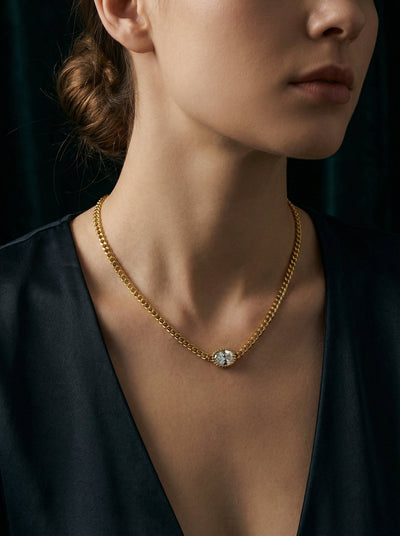
Choker: A necklace that sits closely around the base of the throat, typically 14-16 inches. (Read our Choker Meaning guide)
Clasp: The fastening mechanism on a necklace or bracelet. Common types include lobster clasp, spring ring, toggle, and magnetic.
Cost Per Wear (CPW): The true value of jewelry calculated by dividing the price by the number of times it is worn. A $15 piece worn 500 times = $0.03/wear.
Croissant Texture: A twisted, rope-like surface texture on metal jewelry. Popular in huggies and hoops in 2026.
Cubic Zirconia (CZ): A lab-created gemstone that resembles diamond. Rated 8.5 on the Mohs hardness scale. A legitimate, affordable alternative to diamond — not a "fake." (Read our CZ vs Diamond guide)
Curb Chain: A chain with interlocking, twisted flat links. One of the strongest chain types. Often associated with bold, street-inspired styling.

D
Drop Earrings: Earrings that hang below the earlobe, creating movement. Distinguished from "dangle" earrings (which swing more freely) and "stud" earrings (which sit flat).
E
Ear Cuff: A piece of jewelry that wraps around the ear without requiring a piercing. Increasingly popular in 2026 as a fashion-forward alternative to traditional earrings.
Ear Stack: The practice of wearing multiple earrings across different piercings to create a curated composition. (Read our Ear Stacking guide)
Electroplating: A process where gold is applied to a base metal using an electric current and a chemical solution. The resulting layer is typically 0.5-2.5 microns thick.
Extender Chain: A short additional chain attached to the clasp that allows adjustable length. HyraMode necklaces include a 2-inch extender for 16-18 inch adjustability.
F-G
Flash Plating: The thinnest type of gold plating (made for everyday styling.5 microns). Wears off in weeks. The cheapest and least durable option.
Gold Filled (GF): A thick layer of gold (at least 5% by weight) mechanically bonded to a base metal. Much more durable than plating. Lasts 10-30 years with care. (Read our comparison guide)
Gold Plated (GP): A thin layer of gold applied via electroplating to a base metal. Affordable but typically lasts 6-12 months. (Read our durability guide)
Gold Vermeil: Gold plating of at least 2.5 microns on a sterling silver base. A regulated term with specific quality requirements.
H
Hallmark: A stamp on jewelry indicating the metal purity (e.g., 925 for sterling silver, 585 for 14k gold). (Read our 925 Meaning guide)
Herringbone Chain: A flat chain made of V-shaped links that lay flush against the skin. Known for its liquid-metal look and high shine. Must be stored flat to prevent kinking.
Hoop Earrings: Circular or oval earrings that form a loop from front to back of the earlobe.
Huggie Earrings: Small hoop earrings that "hug" the earlobe closely. The most popular everyday earring style in 2026 due to comfort, versatility, and security.
skin-conscious: A term meaning "less likely to cause an allergic reaction." Not regulated by the FDA — always check the actual material rather than relying on this label. (Read our skin-conscious guide)

K-L
Karat (K): A measure of gold purity expressed as parts per 24. 24k = pure gold; 18k = 75% gold; 14k = 58.3% gold. (Read our Karat guide)
Layering: Wearing multiple necklaces at different lengths to create depth and visual interest. Requires 2+ inches of spacing between each piece.
M-N
Matinee Length: A necklace that hangs 20-24 inches, sitting at the center of the chest.
Micron: A unit of measurement (1/1000th of a millimeter) used to describe plating thickness. Standard gold plating is 0.5-2.5 microns.
Nickel: A metal commonly used in jewelry alloys. The primary cause of contact dermatitis (metal allergy) in jewelry wearers. 316L stainless steel is nickel-safe.
O-P
Opera Length: A necklace that hangs 28-30 inches, below the bust line.
Oxidation: A chemical reaction where metal reacts with oxygen or sulfur, creating tarnish. Silver tarnish is silver sulfide; copper oxidation creates the green patina that causes green skin marks.
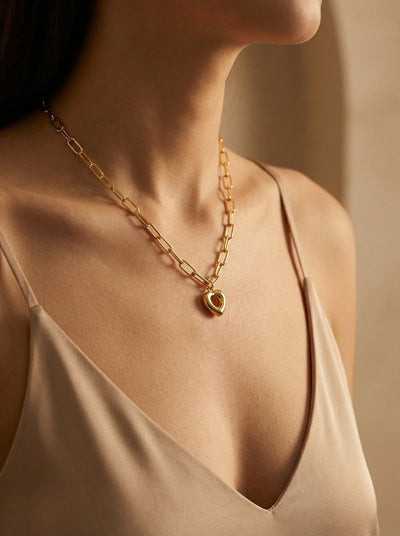
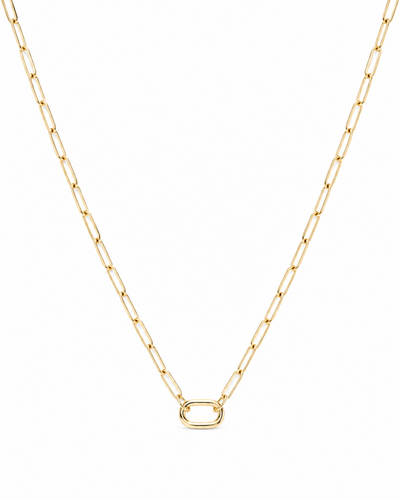
Paperclip Chain: A chain with elongated rectangular links resembling paperclips. A 2020s trend that has transitioned into a modern classic.
Pendant: A decorative piece that hangs from a chain. Distinguished from a "charm" (which hangs from a bracelet).
Princess Length: A necklace that hangs at 18 inches, sitting at the collarbone. The most universal and popular length.
PVD (Physical Vapor Deposition): A vacuum process where gold is vaporized and deposited onto a base metal atom by atom. Creates a significantly stronger bond than traditional electroplating. Waterproof and tarnish-proof. The technology behind all HyraMode jewelry.

R-S
Rope Chain: A chain with twisted, interlocking links that resemble a rope. High sparkle due to multiple facets.
Snake Chain: A smooth, round chain made of tightly linked plates. Has a distinctive silky feel and continuous surface.
Stacking: Wearing multiple bracelets on the same wrist to create a layered composition. (Read our Bracelet Stacking guide)
Stainless Steel (316L): Surgical-grade steel alloy containing iron, chromium, nickel, and molybdenum. skin-conscious, waterproof, tarnish-proof, and the ideal base metal for PVD gold jewelry. The same material used in surgical instruments.
Station Necklace: A chain with decorative elements (stones, beads, or charms) spaced evenly along its length.
Sterling Silver (925): An alloy of 92.5% pure silver and 7.5% other metals (usually copper). The international standard for silver jewelry. Tarnishes over time. (Read our 925 guide)
T-Z
Tarnish: A dark, dull layer that forms on metal surfaces due to chemical reactions with air, moisture, and sulfur. Primarily affects silver and brass. (Read our Tarnish Removal guide)
Toggle Clasp: A fastening mechanism where a bar passes through a ring to close. Decorative but less secure than lobster clasps.
Vermeil: See "Gold Vermeil" above.
Waterproof (Jewelry): A piece that can withstand prolonged water exposure (showers, pools, ocean) without degradation. Not the same as "water resistant." True waterproof jewelry is made from stainless steel, solid gold, or PVD-coated metals. (Read our Waterproof Earrings guide)

Why This Glossary Matters
The jewelry industry relies on consumers not knowing what terms mean. When you understand the difference between gold plated and gold filled, between PVD and electroplating, between skin-conscious and material-transparent — you stop being a passive buyer and start being an informed one.
Knowledge is the best protection against bad purchases. Use this glossary to decode marketing, ask better questions, and choose jewelry that matches your expectations.
Conclusion: Speak the Language, Own Your Choices
Jewelry is a language. The more terms you understand, the more fluently you can navigate the market. This glossary is your dictionary — refer to it whenever you encounter a term you do not recognize, and share it with anyone who wants to become a smarter jewelry buyer.
According to Vogue, the most stylish women treat jewelry as an extension of their personality rather than a mere accessory.
Harper's Bazaar consistently highlights that quality jewelry styling is about intention and curation, not quantity.
As Who What Wear notes, the modern jewelry philosophy is about building a collection of versatile pieces that reflect your authentic style.
Frequently Asked Questions
What does PVD mean in jewelry?
PVD stands for Physical Vapor Deposition. It is a vacuum process where gold is vaporized and deposited onto a base metal atom by atom. It creates a waterproof, tarnish-proof bond that is much stronger than traditional plating.
What does 925 mean on jewelry?
925 means sterling silver — an alloy of 92.5% pure silver and 7.5% other metals. It is the international standard for quality silver jewelry.
What is the difference between gold plated and gold filled?
Gold plated has a thin layer (0.5-2.5 microns) applied via electrochemical bath. Gold filled has a much thicker layer (50+ microns) mechanically bonded with heat and pressure. Gold filled lasts 10-30 years; standard plating lasts 6-12 months.
What are huggie earrings?
Huggie earrings are small hoop earrings that "hug" the earlobe closely. They are the most popular everyday earring style in 2026 due to comfort, versatility, and secure closure.
What does skin-conscious mean?
skin-conscious means "less likely to cause an allergic reaction." However, the term is not FDA-regulated. Always check the actual material rather than relying on this label alone.