










Choker Necklace Meaning: The History, the Symbolism, and Why It Never Goes Out of Style
HyraModeNo necklace has been more misunderstood, more debated, or more persistently fashionable than the choker.
The choker has been worn by Egyptian queens, French aristocrats, Victorian rebels, 1990s supermodels, and 2026 minimalists. It has meant royalty, rebellion, romance, and restriction — sometimes all at once. And yet, despite centuries of shifting cultural interpretation, it keeps coming back.
If you have ever wondered what a choker actually means, why it is so polarizing, or whether it is "appropriate" to wear one — this guide answers all of it with history, context, and zero judgment.

The Ancient Origins: Power and Protection
Chokers are among the oldest necklace forms in human history. Evidence of close-fitting neck jewelry dates back to ancient Sumer, Egypt, and the Indus Valley — civilizations where neck adornment carried deep social and spiritual significance.
Ancient Egypt: Both men and women wore broad collar necklaces that sat tightly against the neck. These were symbols of divine protection and social status. The more elaborate the collar, the higher the rank.
Ancient Rome: Choker-style gold bands were worn by women of wealth. They signaled prosperity and were often given as gifts by husbands.
Native American cultures: Bone and bead chokers were worn for spiritual protection, identity, and tribal affiliation. These traditions continue today and carry deep cultural meaning.
In all of these contexts, the choker was not decorative. It was meaningful.
The French Revolution: Rebellion and Remembrance
One of the most dramatic chapters in choker history happened during the French Revolution. After the Reign of Terror (1793-1794), when thousands were executed by guillotine, survivors and sympathizers began wearing thin red ribbons tied closely around their necks as a symbol of solidarity with those who had been beheaded.
This macabre fashion statement was called a "parure à la victime" (victim's adornment). It transformed the choker from a symbol of status into a symbol of political rebellion and mourning.
This is one reason the choker has always carried a slightly subversive edge — it has been associated with defiance since the 18th century.
The Victorian Era: Romance and Class
In the late 1800s, chokers became a staple of Victorian fashion. Alexandra of Denmark, Princess of Wales and later Queen of England, famously wore multi-strand pearl chokers to hide a scar on her neck. Her choice sparked a fashion trend that swept through European aristocracy.
During this period, chokers carried dual meanings:
- For the upper class: pearl and velvet chokers signaled elegance, wealth, and refinement
- For working-class women: simple ribbon chokers were affordable decorations, but were sometimes associated with "loose" morals by judgmental Victorians
This class-based double standard is one of the earliest roots of the "what does a choker mean?" debate that persists today.

The 1990s: The Choker Goes Mainstream
The 1990s brought the choker into mainstream pop culture with a vengeance. Thin black velvet chokers, plastic tattoo chokers, and simple metal bands became defining accessories of the decade.
Key cultural moments:
- Supermodels like Kate Moss and Naomi Campbell wore chokers on runways
- Buffy the Vampire Slayer made the black choker part of Gen X aesthetic
- Drew Barrymore, Winona Ryder, and Courtney Love cemented the choker as a symbol of 90s cool
In the 90s, the choker meant confidence, alternative style, and a rejection of overly polished femininity. It was the anti-pearl.
What Does a Choker Necklace Mean in 2026?
In 2026, the choker has shed most of its historical baggage and become a versatile style choice rather than a cultural statement.
Modern choker meanings:
- Confidence: wearing something close to the throat draws attention to the neck and jawline — one of the most vulnerable parts of the body
- Fashion awareness: chokers signal that you pay attention to styling trends and neckline architecture
- Sensuality: the neck is an intimate area, and adorning it carries subtle romantic energy
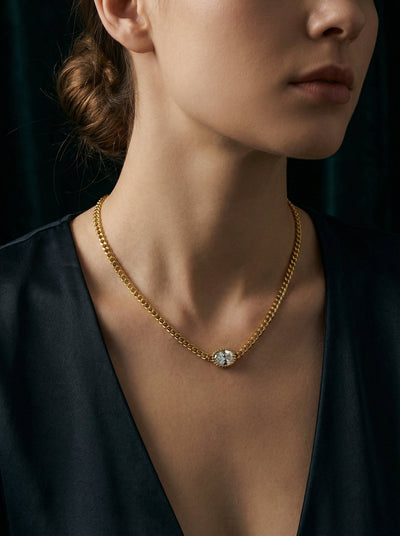
- Minimalism: a thin gold or silver choker is one of the cleanest, most modern necklace styles in fashion right now
- Versatility: chokers work with crew necks, V-necks, off-shoulder tops, and strapless dresses
The honest answer: in 2026, a choker means you like chokers. The old cultural and moral judgments are fading fast.

Choker Myths That Need to Die
Myth: "Chokers mean something sexual."
Reality: This is an internet myth with no historical basis. Chokers have been worn by queens, politicians, nuns, and children throughout history. They are a necklace style, not a signal.
Myth: "Chokers only look good on thin necks."
Reality: Chokers look good on every neck. The key is choosing the right width and material. Thinner chains flatter wider necks; wider bands work on longer necks.
Myth: "Chokers are outdated."
Reality: Chokers cycle in and out of peak trendiness, but they have never fully disappeared from fashion since ancient Egypt. In 2026, minimal gold and silver chain chokers are very much current.
Types of Chokers and What They Communicate
| Type | Vibe | Best For |
|---|---|---|
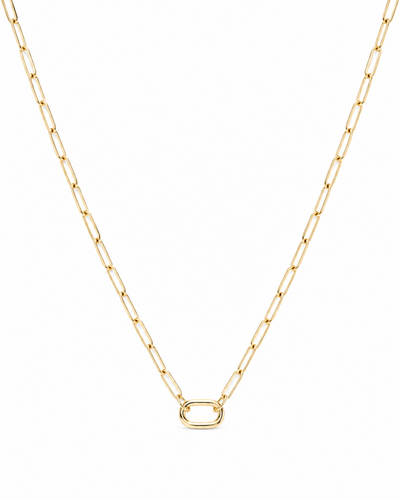
| Thin gold chain | Minimal, modern, elevated | Everyday wear, office, dates |
| Silver chain | Cool, editorial, sharp | Monochrome outfits, modern styling |
| Velvet ribbon | Romantic, vintage, feminine | Evening wear, special occasions |
| Pearl strand | Classic, elegant, heritage | Formal events, weddings |
| Pendant choker | Symbolic, personal, intentional | Daily wear, layering base |
| Wide metal band | Bold, statement, architectural | Fashion events, editorial styling |
How to Style a Choker in 2026
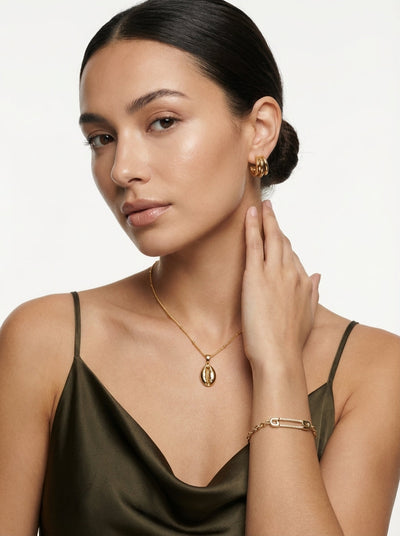
The modern choker is not the thick plastic band of the 1990s. In 2026, the trend is thin, metallic, and refined.
Best styling approaches:
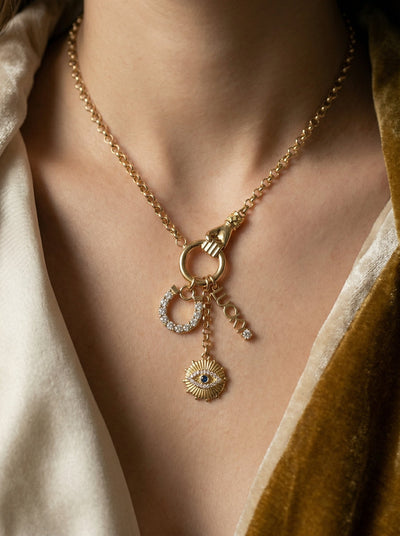
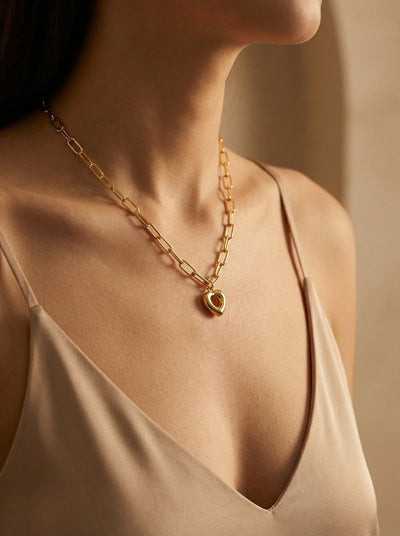
- Solo choker + open neckline: the cleanest look. One thin chain at the base of the throat.
- Choker + longer pendant: creates a layered "V" that elongates the neck and chest.
- Choker + high neckline: creates a modern tension between the fabric and the metal.
The choker works best when it feels intentional — not when it fights the neckline for attention.

Who Can Wear a Choker?
Everyone. The idea that chokers only work on certain body types is outdated. The secret is finding the right proportions:
- Shorter necks: choose thin, delicate chains that do not add visual width
- Longer necks: you can handle wider bands and more dramatic styles
- Average necks: almost any choker width works — experiment freely
The most important factor is comfort. If the choker feels too tight or restrictive, it will affect your posture and confidence. Always choose a fit that sits gently at the base of the throat without pressing.
The Psychology of Wearing a Choker
The throat is one of the most psychologically significant parts of the body. It is associated with voice, vulnerability, and self-expression. Adorning the throat with a choker is, on a subconscious level, an act of claiming that space.
This is part of why chokers feel so powerful. They do not just sit on the body — they frame a part of the body that is deeply tied to identity and confidence. A choker says: "I am comfortable being noticed at the most vulnerable point of my silhouette."
That psychological weight is what makes the choker endlessly compelling — and endlessly debated.
Why Chokers Keep Coming Back
Every decade has its "choker moment." The 1860s, the 1920s, the 1960s, the 1990s, the 2010s, and now the 2020s. The choker never fully disappears because it occupies a unique position in jewelry: it is both minimal and bold, both ancient and modern, both intimate and visible.
No other necklace style creates the same visual effect. A pendant hangs. A chain drapes. But a choker defines. It creates a line where the body meets the face, and that line has fascinated humans for 6,000 years.

Conclusion: A Choker Means What You Choose It to Mean
The choker has been a symbol of royalty, rebellion, romance, mourning, and mainstream fashion — sometimes within the same century. Its meaning has never been fixed, and in 2026, it is less fixed than ever.
If you wear a choker because it makes you feel confident, it means confidence. If you wear it because you love the clean line it creates at your neckline, it means great styling. If you wear it because it reminds you of the 90s, it means nostalgia.
The real meaning of a choker is whatever meaning you bring to it. That is what makes it one of the most personal — and one of the most powerful — pieces of jewelry you can own.

According to Vogue, a well-chosen necklace is the fastest way to elevate a simple outfit into something memorable.
Harper's Bazaar style editors consider necklace layering one of the defining jewelry trends of the decade.
As Who What Wear puts it, the modern approach to necklaces is about personal curation rather than following rigid rules.
Frequently Asked Questions
What does a choker necklace mean?
Historically, chokers have symbolized everything from royalty and protection to rebellion and romance. In 2026, wearing a choker is primarily a fashion and personal style choice with no single fixed meaning.
Do chokers have a sexual meaning?
No. This is an internet myth with no historical basis. Chokers have been worn by queens, children, nuns, and fashion icons throughout history. They are a necklace style, not a signal.
Are chokers still in style in 2026?
Yes. Thin gold and silver chain chokers are currently very popular, fitting the broader trend toward minimal, refined jewelry.
Who can wear a choker?
Everyone. The key is finding the right width for your neck. Thinner chains work on shorter necks; wider bands suit longer necks. Comfort is the most important factor.
How should I style a choker in 2026?
Pair a thin chain choker with an open neckline for a clean look, or layer it with a longer pendant for depth. The modern choker is thin, metallic, and intentional rather than bulky.