










Jewelry Storage Ideas That Actually Protect Your Pieces (and Look Beautiful Doing It)
HyraModeThe way you store your jewelry says as much about your style as the jewelry itself.
Here is the truth most people learn the hard way: buying great jewelry is only half the equation. How you store it determines whether those pieces still look great in six months, a year, or a decade. A beautiful necklace tangled in a drawer loses its magic fast. A pair of earrings that you cannot find when you need them might as well not exist.
In 2026, jewelry storage is not just about preventing damage. It is about creating a system where every piece is visible, accessible, and protected — so getting dressed becomes faster and your jewelry actually gets worn instead of forgotten.

The 3 Enemies of Jewelry: Moisture, Friction, and Chaos
Before you buy any storage solution, understand what you are protecting against:
1. Moisture — humidity causes tarnish on silver, dulling on plated metals, and cloudiness on stones. Storing jewelry in a bathroom is one of the worst things you can do.
2. Friction — when pieces rub against each other, they scratch. Gold scratches gold. Silver scratches silver. And plated jewelry can lose its coating faster when constantly rubbing against harder metals.
3. Chaos — when jewelry is tangled, piled, or invisible, it does not get worn. The best storage system is one that makes every piece immediately accessible.
Best Storage for Necklaces: Hang or Separate
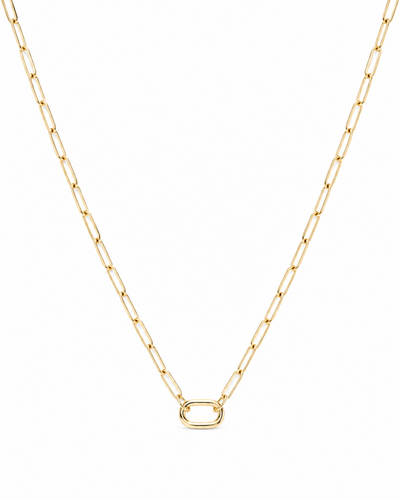
Necklaces are the most tangle-prone jewelry category. If you throw two necklaces into the same compartment, they will become a single, knotted unit within 24 hours.
Best solutions:
- Wall hooks or a jewelry tree: hanging necklaces prevents tangles and makes them instantly visible
- Individual velvet pouches: for travel or drawer storage, keep each necklace in its own soft pouch
- Drawer dividers with separate channels: lay each necklace flat in its own lane
The worst solution: a communal jewelry box where all necklaces share one compartment. This guarantees tangles.
For flat chains like the Hana Herringbone or the Stelle Multi-Star Necklace, lying flat is actually better than hanging because it prevents kinking.

Best Storage for Earrings: Visibility Is Everything
The most common earring problem is not damage — it is losing one of a pair. When earrings are tossed into a bowl or mixed into a drawer, finding the right pair becomes a daily frustration.
Best solutions:
- Earring stands or boards: display earrings in organized rows so you can see everything at a glance
- Compartmentalized trays: one pair per slot, ideally lined with felt or velvet
- Small ziplock bags: for travel, put each pair in its own bag to prevent tangling and loss
Pro tip: keep your most-worn earrings in the most accessible location. If your daily huggies are buried made for everyday styling other pairs, you will stop reaching for them.

Best Storage for Bracelets: Flat Over Stacked
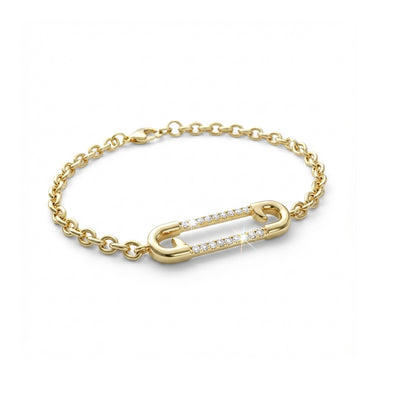
Bracelets should be stored flat whenever possible. Stacking bracelets on top of each other — especially chains — leads to tangling and surface scratches.
Best solutions:
- Velvet-lined trays: lay each bracelet in its own channel
- Small individual pouches: especially useful for delicate chain bracelets
- Bracelet bars: for stiff bangles and cuffs, these keep the shape intact
Chain bracelets like the Arlo Slim Flat Box Bracelet and the Evia Charm Bracelet should always be stored flat and separated to prevent links from interlocking.

The Anti-Tarnish Strategy
Tarnish happens when metals react with sulfur and moisture in the air. It primarily affects silver and traditional gold plating.
How to prevent tarnish:
- Anti-tarnish strips: place one strip in each storage compartment. They absorb sulfur and moisture from the air. Replace every 6-12 months.
- Silica gel packets: the small desiccant packets you find in shoe boxes. Keep a few in your jewelry box to reduce humidity.
- Avoid storing jewelry in bathrooms: steam from showers creates exactly the environment tarnish loves.
- Keep pieces dry before storing: always wipe down jewelry with a microfiber cloth before putting it away.
Important note: 18k Gold PVD jewelry (like HyraMode's collection) is naturally tarnish-proof, so it needs less protective storage than traditional plated pieces. But separating pieces still matters to prevent scratching.
The "Daily Tray" System
One of the best storage habits you can build is the daily tray. This is a small, open tray that sits on your dresser or nightstand. It holds only the 3-5 pieces you wear most often.
Why it works:
- You always know where your daily jewelry is
- Getting dressed is faster because you are not digging through boxes
- It keeps your most-worn pieces visible and top-of-mind
Your daily tray might hold: one pair of huggies, one pendant necklace, and one bracelet. Everything else stays in your main storage system. This simple separation makes a huge difference in daily efficiency.

Travel Storage: Different Rules Apply
Travel storage is about protection and compactness, not display.
Best travel solutions:
- Pill organizers: each compartment holds one pair of earrings or a small pendant
- Small ziplock bags + straws: thread necklaces through straws to prevent tangling
- Hard sunglasses cases: great for bracelets and watches
- Compact travel pouches with individual slots: the gold standard if you travel often
For a complete travel jewelry guide, read our How to Travel With Jewelry article.
What to Never Do When Storing Jewelry
- Never store all jewelry in one pile — this causes tangles, scratches, and lost pieces
- Never use tissue paper for long-term storage — it traps moisture and can leave residue
- Never keep jewelry near perfume or chemicals — the fumes accelerate tarnish
- Never leave earrings without backs — they fall out of storage, roll under furniture, and disappear
- Never store jewelry in direct sunlight — UV exposure can fade certain finishes over time
The One-In-One-Out Rule
If your storage system is overflowing, you do not need more storage. You need fewer pieces.
The one-in-one-out rule helps keep your collection curated: every time you add a new piece, consider donating, gifting, or retiring one you have not worn in six months.
This keeps your storage clean, your daily choices simpler, and your collection aligned with your current style — not the style you had three years ago.

Why Storage Is Part of Your Style
How you store your jewelry directly affects how you style yourself. If your pieces are invisible, tangled, or forgotten, you default to the same one or two items every day — even if you own 30 pieces.
Good storage makes your full collection visible and accessible. That means more variety, more outfit possibilities, and more value from every piece you own. The best investment you can make for your jewelry is not another necklace. It is a system that lets you actually use what you already have.
Storage by Collection Size
Your storage needs depend on how much jewelry you own.
5-10 pieces (minimalist): a single daily tray is enough. Keep everything visible and accessible on your dresser.
10-25 pieces (moderate): a compartmentalized jewelry box or a small drawer organizer. Separate by type: earrings in one section, necklaces in another, bracelets in a third.
25+ pieces (collector): a multi-tier jewelry armoire or dedicated drawer system with individual slots. Consider wall-mounted hooks for necklaces and a standing earring board for quick selection.
The key at every size is the same principle: if you cannot see it, you will not wear it.
How PVD Jewelry Changes the Storage Equation
One of the underrated advantages of 18k Gold PVD jewelry is that it dramatically simplifies storage requirements. Because PVD is tarnish-proof and water-resistant, you do not need anti-tarnish strips, silica gel packets, or airtight containers for these pieces.
That means you can store PVD jewelry in an open tray, on a hook, or even in a simple pouch without worrying about environmental degradation. The main concern is still preventing scratches from metal-on-metal contact, but the chemical protection that traditional plating requires is no longer necessary.
This is yet another way that PVD-coated pieces from the HyraMode collection make your jewelry routine easier — not just in wearing, but in keeping.
Conclusion: Protect It Like the Investment It Is
Your jewelry collection — whether it is five pieces or fifty — represents real investment. Investment of money, of taste, of the moments those pieces represent.
Storing it well is not fussy or excessive. It is practical. It protects your pieces, speeds up your mornings, and ensures that every item in your collection is ready to wear the moment you reach for it.
Good storage does not just prevent damage. It makes your style sharper, your mornings faster, and your jewelry collection feel twice as big.

According to Vogue, the most stylish women treat jewelry as an extension of their personality rather than a mere accessory.
Harper's Bazaar consistently highlights that quality jewelry styling is about intention and curation, not quantity.
As Who What Wear notes, the modern jewelry philosophy is about building a collection of versatile pieces that reflect your authentic style.
Frequently Asked Questions
What is the best way to store necklaces?
Hang them on individual hooks or lay them flat in separate channels. The key is keeping each necklace isolated so chains do not tangle or knot.
How do I prevent my jewelry from tarnishing?
Store in a dry, cool place with anti-tarnish strips and silica gel packets. Avoid bathrooms. Wipe pieces dry before storing. PVD-coated jewelry is naturally tarnish-proof and needs less protection.
Should I store gold and silver jewelry together?
Ideally, no. Different metals can scratch each other. Use separate compartments or pouches for each metal type.
How often should I clean my jewelry storage?
Every 3-6 months. Wipe down trays and boxes, replace anti-tarnish strips, and reorganize pieces that have shifted out of place.
What is the best travel jewelry storage solution?
A pill organizer for earrings and small pieces, plus ziplock bags with straws for necklaces. For bracelets, a hard sunglasses case provides crush protection.