













How to Untangle a Necklace: The Step-by-Step Guide That Actually Works
HyraModeThere are few things more quietly infuriating than reaching for your favorite necklace and finding it knotted into an impossible ball of chain.
Tangled necklaces are one of the most universally frustrating jewelry problems. It does not matter how carefully you stored it. It does not matter how gently you placed it in the drawer. Chains find each other and knot themselves with an enthusiasm that borders on malicious.
The good news: almost every tangled necklace can be untangled. The bad news: it requires patience, the right technique, and resisting the urge to yank. This guide gives you the step-by-step method that professionals use, plus how to prevent tangles from ever happening again.

What You Need
You do not need special tools. Gather these items:
- A flat, hard surface (table, desk, or countertop)
- Two straight pins or sewing needles
- A small drop of baby oil or olive oil (optional but helpful for tight knots)
- Good lighting
- Patience
That is it. No pliers. No scissors. No force.
Step 1: Unclasp Everything
Open every clasp. If multiple necklaces are tangled together, open all of their clasps. This immediately frees the ends, which gives you something to pull through the knots later.
If a necklace does not have a clasp (like a continuous chain), skip this step and move to Step 2.
Step 2: Lay It Flat
Place the tangled chain on a flat, hard surface. Do not try to untangle it while holding it in the air. Gravity and dangling only make things worse.
The flat surface gives you control. It prevents the chain from swinging, rotating, or re-tangling as you work.
Step 3: Spread the Knot Gently
Use your fingers to gently spread the knotted area apart. Do not pull the chains tight — this makes knots tighter. Instead, push the chains away from the center of the knot, loosening the cluster.
Think of it like untying a shoelace, not pulling a rope.
Step 4: Use Needles to Pick the Knot Apart
Insert a straight pin or sewing needle into the center of the knot. Gently wiggle it to create space between the chain links. Once you have a small opening, use a second needle to hold it open while you guide the chain through.
Work from the center of the knot outward. The center is where the chain loops are tightest. Once you loosen the center, the outer loops often fall apart on their own.
Step 5: Apply Oil for Stubborn Knots
If the knot is extremely tight and the needles cannot create enough space, apply a tiny drop of baby oil or olive oil directly to the knot. The oil lubricates the chain links and allows them to slide past each other more easily.
Important: use only a tiny amount. Too much oil makes the chain slippery and hard to grip. After untangling, wash the necklace with mild soap and water to remove the oil.
Step 6: Thread the Free End Through
Once you have loosened the knot enough, find the free end of the chain and thread it back through the loops. Work slowly. If you pull too fast, you risk re-tangling a section you already freed.
This is the step where patience matters most. Go slowly, follow the chain with your eyes, and guide it through one loop at a time.

Step 7: Straighten and Check
Once the chain is free, hold it up and let gravity straighten it. Run your fingers down the length to check for any remaining kinks or small loops. If you used oil, wash the necklace now.
Why Necklaces Tangle
Understanding why tangles happen helps you prevent them:
- Multiple chains stored together: the #1 cause. Chains interlock naturally when they touch.
- Thin, flexible chains: thinner chains tangle more easily than thick, rigid ones
- Movement during storage: chains in a bag, drawer, or travel pouch shift and knot
- Open clasps: an unclosed clasp allows the chain to thread through itself
- Gravity: hanging chains can swing into each other and loop
How to Prevent Necklace Tangles
Prevention is infinitely easier than untangling. Here are the most effective methods:
1. Store Each Necklace Separately
The simplest and most effective rule. One necklace per compartment, pouch, or hook. If chains cannot touch, they cannot tangle.
2. Use the Straw Method for Travel
Thread the chain through a plastic drinking straw and clasp it. The straw prevents the chain from folding, looping, or knotting. This is especially useful for packing.
3. Close the Clasp Before Storing
Always close the clasp when you take a necklace off. An open clasp allows the chain to thread through its own links, creating the worst kind of tangles.
4. Hang Necklaces on Individual Hooks
Wall hooks, jewelry trees, or over-the-door organizers keep necklaces separated and straight. Hanging is one of the best storage methods for preventing tangles.
5. Store Flat Chains Flat
Herringbone and snake chains should be stored flat in a drawer or tray, never coiled or bundled. These chain types can kink permanently if they tangle.
For a complete storage guide, see our Jewelry Storage Guide.

Which Chain Types Tangle Most?
Not all chains are equally prone to tangling:
| Chain Type | Tangle Risk | Why |
|---|---|---|
| Cable chain | High | Thin, flexible, links interlock easily |
| Box chain | Medium | Slightly stiffer, fewer interlocking points |
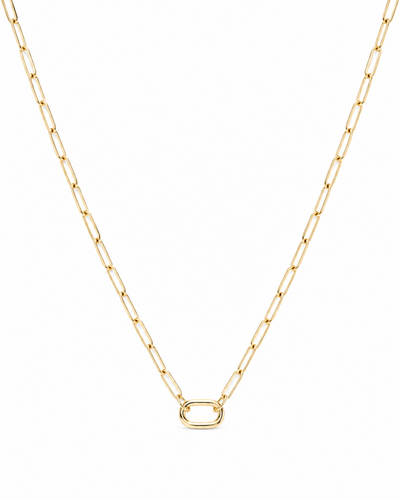
| Paperclip chain | Low | Large links do not interlock easily |
| Herringbone | Low (but kinks) | Flat profile prevents looping, but kinks if twisted |
| Snake chain | Low (but kinks) | Smooth, continuous surface resists tangling |
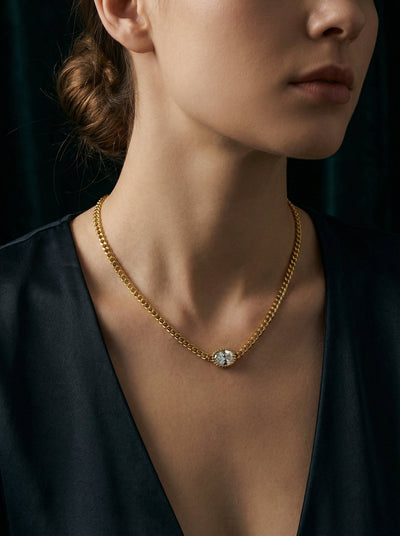
| Curb chain | Low | Flat, heavy, interlocking links resist tangling |
If tangles are a recurring problem, consider switching to a chain type with lower tangle risk. Paperclip chains, herringbone chains, and box chains all tangle less than traditional cable chains.
For a complete chain guide, see our Types of Necklace Chains article.
What NOT to Do When Untangling
- Do not pull hard. This tightens knots and can break thin chains.
- Do not use pliers. They can scratch, bend, or crush delicate links.
- Do not cut the chain. Almost every tangle can be undone without cutting.
- Do not try to untangle while wearing the necklace. Lay it flat.
- Do not rush. A 5-minute tangle solved with patience takes 30 seconds. A 5-minute tangle attacked with force becomes a 30-minute disaster.
When a Necklace Cannot Be Untangled
In very rare cases, a necklace is so severely tangled that home methods fail. This usually happens when:
- Multiple very thin chains have been stored together for months
- The chain has small pendants or charms that create additional catching points
- The tangle has been pulled tight before attempting to untangle
In these cases, a professional jeweler can usually untangle it using specialized tools and magnification. This is a common service and is typically inexpensive ($5-$15).

The Best Tangle-Resistant Necklaces
If you are tired of dealing with tangles, choose chains designed to resist them:
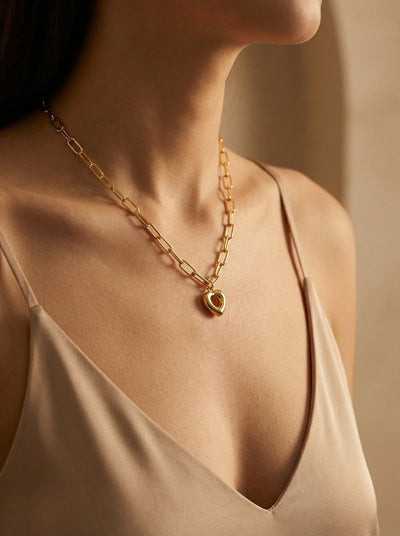
- Remy Paperclip Heart Necklace — large links, low tangle risk
- Stelle Multi-Star Station Necklace — station spacing prevents chain overlap
- Hana Herringbone — flat profile resists looping entirely
These pieces spend less time tangled and more time on your body — which is the whole point.
The Psychology of Tangled Necklaces
There is a reason tangled necklaces feel so disproportionately frustrating. Psychologically, tangles represent disorder in something that should be beautiful and orderly. They turn a moment of self-care (choosing jewelry) into a problem-solving task. And when you are already running late in the morning, that small frustration gets amplified.
This is one reason why prevention matters so much more than repair. A well-organized jewelry system is not just about protecting your pieces. It is about protecting your morning routine. When every necklace is right where you left it, clasp closed and tangle-free, getting dressed becomes a pleasure instead of a problem.
Why Tangle-Resistant Chains Are Worth the Investment
If tangles are a recurring frustration, the problem may not be your storage — it may be the chain type itself. Thin cable chains with small links are inherently prone to tangling because the links interlock easily. Switching to a wider link style (paperclip, box, or curb) or a flat profile (herringbone) dramatically reduces tangle frequency.
This is another example of how choosing the right jewelry upfront saves time, money, and frustration in the long run. The best jewelry is not just the jewelry that looks good. It is the jewelry that makes your life easier.
Conclusion: Patience Beats Force Every Time
A tangled necklace is not ruined. It is just temporarily knotted. With a flat surface, two needles, and five minutes of patience, almost every tangle comes apart.
And once it is free, store it right. One necklace per compartment. Clasp closed. Flat if herringbone. Hung if cable. The easiest tangle to fix is the one that never happens.

According to Vogue, a well-chosen necklace is the fastest way to elevate a simple outfit into something memorable.
Harper's Bazaar style editors consider necklace layering one of the defining jewelry trends of the decade.
As Who What Wear puts it, the modern approach to necklaces is about personal curation rather than following rigid rules.
Frequently Asked Questions
How do you untangle a badly knotted necklace?
Lay it flat, unclasp all ends, use two straight pins to pick the knot apart from the center, and apply a drop of baby oil if needed. Work slowly and never pull hard.
What is the easiest way to untangle a necklace chain?
Use two sewing needles on a flat surface. Insert one needle into the knot to create space, then use the second to hold it open while guiding the chain through.
Can you use oil to untangle a necklace?
Yes. A tiny drop of baby oil or olive oil lubricates tight knots and makes links slide past each other. Wash the necklace with soap and water afterward.
How do I stop my necklaces from tangling?
Store each necklace separately, always close the clasp, and use hooks or individual compartments. For travel, thread chains through drinking straws.
Which necklace chains tangle the least?
Paperclip chains, herringbone chains, and curb chains tangle the least due to their larger links, flat profiles, and stiffer construction.