











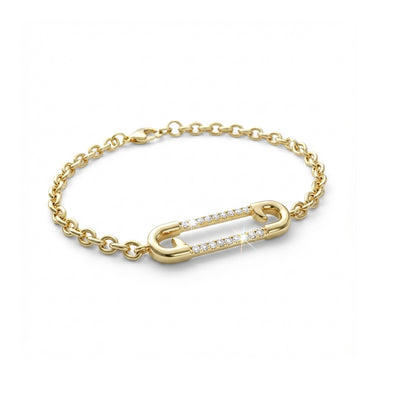


How to Tell If Jewelry Is Real: The Complete Guide to Spotting Fake Gold, Silver, and Stones
HyraModeThe most common question in jewelry is not "Does it look good?" It is "Is it real?"
With the explosion of online jewelry shopping, affordable gold brands, and social media advertising, more people than ever are asking whether the jewelry they bought (or are about to buy) is genuine. Is the gold real? Is the silver sterling? Is the stone CZ or diamond? Is the brand honest?
In 2026, knowing how to authenticate jewelry is not just for collectors and gemologists. It is a basic consumer skill. This guide teaches you the simple, at-home methods to check if your jewelry is real — plus what to look for before you buy to avoid fakes in the first place.

What Does "Real" Even Mean in Jewelry?
Before we test anything, we need to define terms. "Real" in jewelry can mean several different things:
- Solid gold (10k, 14k, 18k, 24k): the entire piece is made of a gold alloy. This is the strictest definition of "real gold."
- Gold filled: a thick layer of real gold mechanically bonded to a base metal. Legally regulated — must be at least 5% gold by weight.
- Gold plated: a thin layer of real gold applied to a base metal. The gold is real, but the layer is very thin.
- Gold PVD: real 18k gold vapor-deposited onto stainless steel. The gold is real, the base is steel.
- Gold tone: no real gold at all — just a color treatment.
All of the first four contain real gold. The difference is how much, how it is applied, and how long it lasts. A piece can contain "real gold" and still not be "solid gold." Understanding this distinction is the first step to avoiding confusion.
How to Test Gold at Home
These are the most reliable at-home methods for checking if gold jewelry is genuine:
1. The Hallmark Test
Look for a stamp inside the piece — usually on the clasp, inside a ring band, or on the back of a pendant. Common markings:
- 375 = 9k gold
- 585 = 14k gold
- 750 = 18k gold
- 925 = sterling silver
- SS or 316L = stainless steel
No hallmark does not automatically mean fake — some small brands skip it — but it is a yellow flag.
2. The Magnet Test
Real gold, silver, and stainless steel are not magnetic. Hold a strong magnet (not a fridge magnet — use a neodymium magnet) against the piece. If it sticks, the jewelry contains iron or nickel and is likely a lower-quality alloy pretending to be gold.
Caveat: this test eliminates obvious fakes but cannot confirm real gold. Many non-gold metals are also non-magnetic.
3. The Skin Test
Wear the piece for a full day. If your skin turns green, the base metal is likely copper or brass — not gold, silver, or stainless steel. (See our complete guide to green skin from jewelry.)
4. The Water Test
Drop the piece into a glass of water. Real gold is dense and sinks quickly. Most fake gold alloys are lighter and may float, sink slowly, or hover mid-water.
Caveat: this works best for solid pieces. Hollow jewelry or very thin chains may behave differently regardless of material.

How to Test Silver at Home
1. The Hallmark Test
Look for "925," "Sterling," or "SS" stamped on the piece. This indicates sterling silver (92.5% pure silver).
2. The Ice Test
Silver has the highest thermal conductivity of any metal. Place an ice cube on the piece. If the ice melts unusually fast, the metal is likely real silver. Fake silver conducts heat much more slowly.
3. The Tarnish Test
Real silver tarnishes over time when exposed to air and sulfur. If a "silver" piece has never tarnished after months of wear, it may be stainless steel or a non-silver alloy.
Note: stainless steel jewelry intentionally looks like silver but does not tarnish — and it is not trying to deceive. Stainless steel is a legitimate, high-quality material in its own right.
How to Tell CZ from Diamond
Cubic Zirconia (CZ) is not "fake diamond" — it is a different material entirely. But many people want to know the difference.
1. The Sparkle Test
Diamonds produce white light dispersion (brilliance) with flashes of color (fire). CZ tends to produce more rainbow colors and slightly less white brilliance. In person, this difference is subtle.
2. The Weight Test
CZ is about 1.7x heavier than diamond for the same size. If two stones look the same size but one feels noticeably heavier, it may be CZ.
3. The Fog Test
Breathe on the stone like you are fogging a mirror. A real diamond clears almost instantly because it disperses heat rapidly. CZ holds the fog for a few seconds longer.
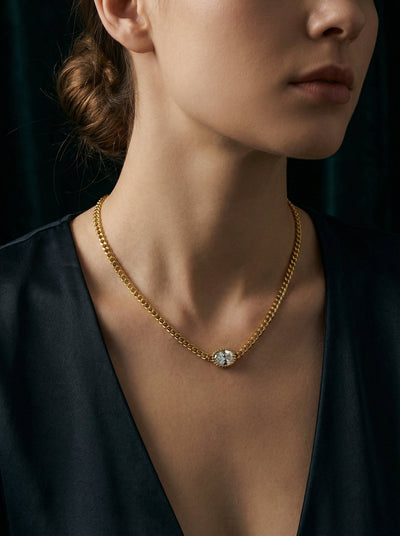
Important note: For most people in 2026, CZ is not a problem to solve — it is a smart choice. High-grade CZ like the stones used in the Vela Oval CZ Pendant looks virtually identical to diamond to the naked eye and costs a fraction of the price.

The Tests That Do NOT Work
Some widely shared "tests" are unreliable or outright wrong:
- Biting gold: real gold is soft, but biting damages the piece and is not a reliable indicator
- The vinegar test: sometimes shared online, but vinegar can damage plating and does not provide a definitive answer
- The "scratching on ceramic" test: real gold leaves a gold streak on unglazed ceramic, but this damages both the jewelry and the ceramic
- Color alone: gold-tone brass can look identical to real gold. Color is not proof.
The safest tests are non-destructive: hallmark, magnet, water, skin reaction, and professional appraisal.
Red Flags When Buying Jewelry Online
The best way to avoid fake jewelry is to avoid buying from dishonest sources. Here are the red flags:
- "Gold" with no karat or material specification
- No base metal listed anywhere on the product page
- Prices that seem impossibly low for the claimed material (solid 18k gold earrings for $8 is a red flag)
- Stock photos with no real customer images
- Customer reviews mentioning tarnishing, green skin, or "not as described"
- No return policy or very restrictive return terms
For a complete buyer protection framework, read our Complete Jewelry Buying Guide.

When to Get a Professional Appraisal
At-home tests are useful for basic screening, but they are not foolproof. Get a professional appraisal if:
- The piece has significant monetary or sentimental value
- You are buying pre-owned or vintage jewelry
- You need documentation for insurance
- The at-home tests gave mixed results
- The piece was inherited and you are unsure of its origin
A professional jeweler can use acid tests, electronic gold testers, and X-ray fluorescence to determine the exact composition of your piece.
The Honesty Factor: Transparent Brands vs Misleading Ones
The best protection against fake jewelry is buying from brands that are transparent about their materials. A good brand will tell you:
- The exact base metal
- The plating method
- The karat of the gold (if applicable)
- Whether the piece is waterproof
- What will happen with long-term wear
At HyraMode, every product page specifies: surgical-grade 316L stainless steel base + 18k Gold PVD coating. No hidden brass. No vague "alloy." No surprise green marks after a month. That transparency is not marketing — it is respect for the buyer.
"Real" Is Not Always Better
Here is a perspective most jewelry guides will not give you: "real" gold is not always the smartest purchase.
A $300 solid gold necklace that you are afraid to wear in the shower, at the gym, or on vacation may deliver less daily value than a $15 PVD-coated necklace that you wear confidently every single day.
"Real" matters for investment, inheritance, and formal occasions. For daily wear, lifestyle compatibility, and style versatility, the best jewelry is the jewelry you actually wear — regardless of whether it is solid gold or smart engineering.

Conclusion: Knowledge Is the Best Protection
You do not need expensive tools or gemology training to avoid fake jewelry. You need three things: basic material literacy, simple at-home tests, and the willingness to buy from transparent brands.
The goal is not to obsess over whether every piece in your collection is "real" in the strictest sense. The goal is to know what you are buying, know what to expect, and never be surprised by a green mark, a faded chain, or a tarnished pendant.
That knowledge — not the karat number — is what makes you a smart jewelry buyer in 2026.
According to Vogue, gold jewelry remains the most versatile and universally flattering metal choice across all skin tones.
As Harper's Bazaar reports, warm gold tones continue to dominate fine and fashion jewelry collections worldwide.
Forbes notes that gold-toned jewelry consistently outperforms silver in consumer preference surveys.
Frequently Asked Questions
How can I tell if my gold jewelry is real?
Check for hallmarks (375, 585, 750), use a magnet test (real gold is not magnetic), and monitor for green skin marks (real gold does not cause them). For definitive results, visit a professional jeweler.
Does real gold stick to a magnet?
No. Real gold, silver, and stainless steel are not magnetic. If jewelry sticks to a strong magnet, it likely contains iron or nickel and is not genuine gold.
How can I tell if silver is real?
Look for "925" or "Sterling" stamps, try the ice test (silver melts ice faster than other metals), and check for natural tarnishing over time.
Is CZ fake diamond?
CZ (Cubic Zirconia) is a different material from diamond, not a "fake" version of it. High-grade CZ looks virtually identical to diamond to the naked eye and is a legitimate, affordable alternative.
How do I avoid buying fake jewelry online?
Buy from brands that specify their base metal, plating method, and material composition. Read customer reviews, check for return policies, and be skeptical of prices that seem too low for the claimed materials.