











Bracelet Size Guide: How to Measure, Choose, and Get the Perfect Fit Every Time
HyraModeA bracelet that is too loose slides off. A bracelet that is too tight digs in. A bracelet that fits perfectly disappears — until you catch a glimpse of it catching light, and you remember why you love it.
Bracelet sizing is one of the most overlooked aspects of jewelry buying. Most people either guess their size and hope for the best, or they buy whatever looks good in the photo without considering how it will actually feel on their wrist.
In 2026, with the rise of online jewelry shopping, knowing your bracelet size is not optional — it is essential. This guide teaches you how to measure your wrist, understand bracelet sizing, and choose the right fit for every type of bracelet.

How to Measure Your Wrist at Home
You do not need special tools. Here is the simplest method:
- Use a flexible tape measure, a strip of paper, or a piece of string.
- Wrap it around your wrist just below the wrist bone (where you would normally wear a bracelet).
- Mark where the end meets the beginning of the loop.
- Measure the length with a ruler. This is your wrist circumference.
Important: do not pull the tape tight. It should sit comfortably around the wrist with enough room to slide a finger underneath.
The Bracelet Size Chart
| Wrist Size | Bracelet Size | Fit Description |
|---|---|---|
| 5.5"-6" | 6.5"-7" | Small / Petite |
| 6"-6.5" | 7"-7.5" | Small-Medium |
| 6.5"-7" | 7.5"-8" | Medium (most common) |
| 7"-7.5" | 8"-8.5" | Medium-Large |
| 7.5"-8" | 8.5"-9" | Large |
The general rule: add 0.5"-1" to your wrist measurement to get your ideal bracelet size. This gives you a comfortable fit with a small amount of movement.
For a snug fit: add 0.5"
For a comfortable fit: add 0.75"
For a loose fit: add 1"
How Fit Varies by Bracelet Type
Not all bracelets fit the same way, even at the same length.
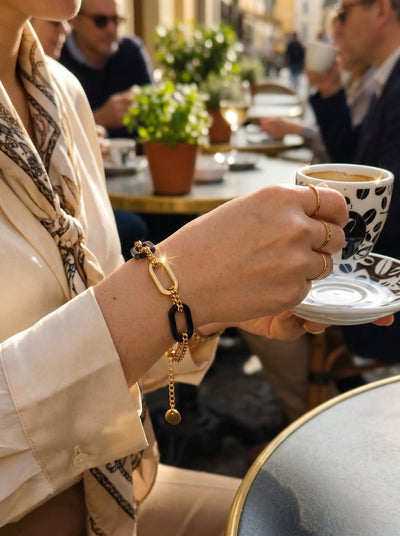
Chain Bracelets
Chain bracelets drape naturally around the wrist. They need enough slack to move freely but not so much that they slide over the hand. Add 0.75" to your wrist measurement for the ideal chain bracelet length.
HyraMode picks: Hana Herringbone, Arlo Slim Box Chain, Tali Wide Box Chain

Charm and Station Bracelets
Charm bracelets have more visual elements along the chain. They benefit from a slightly looser fit so the charms can move and catch light. Add 1" to your wrist measurement.
HyraMode picks: Nilo Star Charm, Evia Charm Bracelet, Mavi Butterfly
CZ Station Bracelets
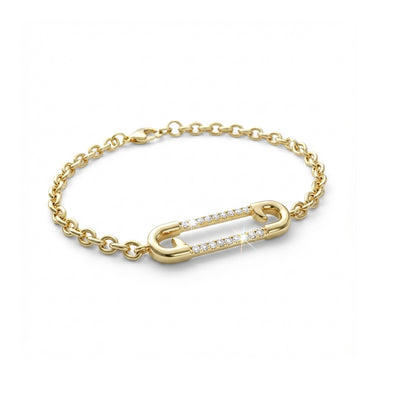
Bracelets with stone stations sit better with a moderate fit — not too tight (which hides the stones under the wrist) and not too loose (which causes the chain to twist). Add 0.75" to your wrist measurement.
HyraMode pick: Dalis Multi-Strand CZ Station
Layered/Multi-Chain Bracelets
Multi-chain bracelets already have built-in volume. They do not need much extra length. Add 0.5" to your wrist measurement.
HyraMode pick: Suri Layered Multi-Chain

What If My Bracelet Is Too Big?
A bracelet that is too big is one of the most common jewelry complaints. Here is how to fix it:
- Use the extender trick: if the bracelet has a lobster clasp, attach it to a link further up the chain (closer to the end) to shorten it
- Add a jump ring at the clasp: a jeweler can remove one or two links to tighten the fit
- Wrap it twice: some longer chain bracelets can be doubled around the wrist for a layered look
- Stack it with other bracelets: a slightly loose bracelet feels more intentional when it is part of a stack
What If My Bracelet Is Too Tight?
A tight bracelet is uncomfortable and can leave marks on the skin. Solutions:
- Look for an extender chain: many bracelets include a 1-2 inch extender that adds adjustability
- Ask a jeweler to add links: for chain bracelets, adding 1-2 links is usually inexpensive
- Switch to an adjustable style: sliding-knot or pull-through closures allow custom sizing
Bracelet Fit for Stacking
When stacking bracelets, fit becomes even more important. If all bracelets are the same length, they pile on top of each other and look messy. If they vary slightly in length, they sit at different points on the wrist and create a more dynamic, layered look.
Stacking fit tips:
- Include at least one bracelet that fits snugly (anchor)
- Include at least one that has a bit of movement (accent)
- Vary the widths so they do not all stack in the same groove
For a complete stacking guide, see our How to Stack Bracelets article.

How Wrist Size Changes
Your wrist size is not always constant. It can fluctuate based on:
- Temperature: wrists swell slightly in heat and contract in cold
- Time of day: wrists tend to be slightly larger in the evening than in the morning
- Water retention: salt, hormones, and hydration levels affect wrist circumference
- Activity: after exercise, wrists may be temporarily larger due to increased blood flow
Pro tip: measure your wrist in the afternoon or evening for the most accurate daily-wear size. Morning measurements tend to run slightly small.
Bracelet Sizing for Gifts
Buying a bracelet as a gift? Here is how to estimate size without asking:
- Borrow one of her existing bracelets and measure it
- Use wrist circumference averages: the average adult woman's wrist is 6"-7" (most common bracelet size is 7"-7.5")
- Choose adjustable bracelets: pieces with extender chains or sliding closures eliminate sizing risk entirely
When in doubt, 7.5" with a 1" extender covers most adult women comfortably.
Why Flat Chains Fit Differently
Flat chain bracelets (herringbone, flat box) sit closer to the skin than round chains. This means they often feel tighter even at the same measured length. If you are buying a flat chain, consider going 0.25" longer than you would for a standard cable or link chain.
The Hana Herringbone and Tali Wide Box Chain both benefit from this slight size adjustment.

The Perfect Fit Test
After putting on a bracelet, check these three things:
- Can you slide one finger under the bracelet? (If yes, the fit is comfortable. If you can fit two fingers, it may be too loose.)
- Does it stay on the wrist when you shake your hand gently? (If it slides to your fingers, it is too big.)
- Can you see the clasp easily? (If the clasp keeps rotating to the front, the bracelet may be too loose.)
A well-fitted bracelet stays in position, moves slightly when you gesture, and never requires adjustment during the day.
Bracelet Sizing by Metal Type
Different metals behave differently on the wrist, which affects perceived fit:
Stainless steel chains: hold their shape well and sit consistently. What you measure is what you get. The weight adds a satisfying presence without being heavy.
Brass-based chains: slightly lighter and more flexible. They can stretch or deform over time, which may cause a gradual loosening of fit.
Sterling silver chains: medium weight, flexible. Prone to slight bending with daily wear.
For the most consistent long-term fit, stainless steel with PVD coating maintains its shape and length the best. It does not stretch, bend, or deform under normal daily wear — which means the size you buy is the size you keep.
The Online Bracelet Buying Checklist
Before clicking Buy on any bracelet online, confirm these four things:
- Your wrist measurement (taken in the afternoon)
- The total bracelet length listed on the product page
- Whether it includes an extender chain (adds adjustability)
- The closure type (lobster clasp, toggle, sliding knot — each affects how tight you can make it)
If the product page does not list the total length, that is a yellow flag. A reputable brand will always tell you the exact measurement.
Conclusion: Fit Is the Foundation of Great Bracelet Style
You can own the most beautiful bracelet in the world, but if it does not fit, it will not feel right. And if it does not feel right, you will stop wearing it.
Take two minutes to measure your wrist, use the size chart above, and always consider the bracelet type before committing to a size. When the fit is right, the bracelet becomes part of you — not something you are constantly adjusting.
According to Vogue, bracelets are the most underrated jewelry category—subtle but impactful in every gesture you make.
Harper's Bazaar notes that the bracelet stacking trend continues to evolve with mixed textures and metals.
Who What Wear recommends building a bracelet collection around one anchor piece and layering from there.
Frequently Asked Questions
How do I measure my wrist for a bracelet?
Wrap a flexible tape measure, string, or paper strip around your wrist just below the bone. Mark where it meets and measure the length. Add 0.5"-1" for your ideal bracelet size.
What is the average bracelet size for women?
The average adult woman's wrist is 6"-7", making 7"-7.5" the most common bracelet size. This provides a comfortable fit with slight movement.
How much bigger should a bracelet be than my wrist?
Add 0.5" for a snug fit, 0.75" for a comfortable fit, or 1" for a loose fit. The right amount depends on the bracelet type and your preference.
What if my bracelet is too big?
Use the lobster clasp to attach to a closer link, have a jeweler remove links, or stack it with other bracelets to make a loose fit look intentional.
Should I measure my wrist in the morning or evening?
Measure in the afternoon or evening for the most accurate daily-wear size. Wrists tend to be slightly smaller in the morning due to lower fluid retention.