










What Jewelry Looks Good in Photos: How to Shine On Camera in 2026
HyraModeYou finally found the perfect angle, the lighting is chef's kiss, and then you look at the photo — and your jewelry has completely vanished. Or worse, it's so shiny it's blowing out the whole frame. Sound familiar?
Whether you're shooting content for Instagram, updating your LinkedIn headshot, or just trying to capture a great photo at a friend's wedding, the jewelry you choose makes a bigger difference than most people realize. The camera doesn't see the world the way your eyes do — and some pieces that look stunning IRL photograph like a disco ball, while others that look a bit plain in person turn into the most effortlessly polished thing in the frame.
After years of watching jewelry shoot (and not shoot) on camera, here's everything you need to know.

Why Your Jewelry Choice Matters More Than You Think on Camera
Cameras compress depth and contrast. What reads as intricate and dimensional to your naked eye often flattens on a phone screen or digital image. A camera sensor has a narrower dynamic range than the human eye, which means the subtle glimmer of a very fine chain or the slight texture of a plain metal band can completely disappear — especially in natural daylight or bright studio lighting.
The flip side is also true: highly reflective, smooth surfaces can blow out under direct flash or harsh overhead light, creating hot spots that look unflattering and overwhelming on camera. This is why choosing the right jewelry for photos is its own skill — one that professional stylists and photographers obsess over on every shoot.
The good news? Once you understand the principles, it's surprisingly simple. You don't need expensive pieces. You need the right pieces.
The Golden Rule: Contrast and Dimension Win Every Time
The single most important thing your jewelry can do on camera is create contrast against your skin and outfit. This means pieces that have either visual weight (presence), texture, or movement — ideally all three.
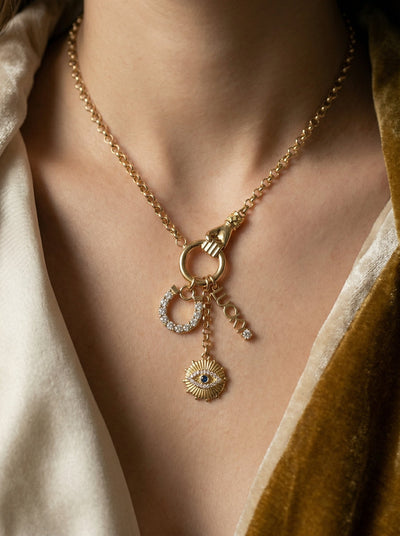
Textured pieces are the camera's best friend. Think ribbed or fluted metal, hammered surfaces, braided chains, herringbone patterns, or anything with micro-detail that catches light at different angles as you move. These pieces create what photographers call "micro-contrast" — tiny highlights and shadows that give jewelry a three-dimensional presence on a flat image.
Pieces with stones are equally powerful. Even a small CZ pendant reflects light in ways that say "expensive" on camera at a fraction of the cost of real diamonds. According to Vogue's jewelry photography guides, faceted stones are consistently recommended by stylists for their camera-friendliness precisely because of how they interact with light sources.
Which Metals Photograph Best?
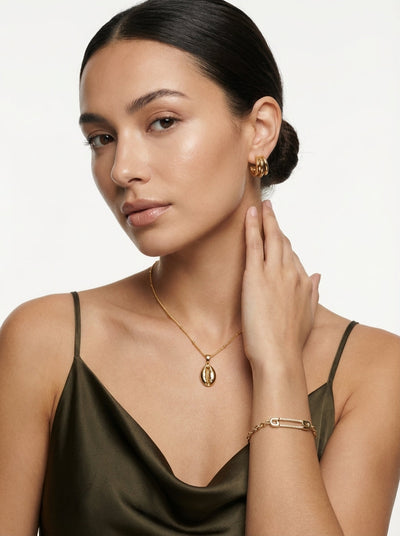
Let's be honest: gold is the undisputed queen of the camera. Warm gold tones photograph beautifully in the lighting conditions most of us actually shoot in — natural window light, golden hour, coffee shops, warm-toned indoor lighting. Gold has an inherent warmth that makes skin glow, regardless of skin tone.
Gold also sits in the middle of the reflectivity spectrum. It's bright enough to catch the eye without blowing out the frame — which happens far more easily with highly polished silver, especially under flash. If you're shooting outdoors during golden hour, gold jewelry will literally glow alongside the light. That's not an accident; it's physics.
Silver absolutely works too — particularly under cooler, overcast daylight, blue-toned studio light, or for a more editorial, high-fashion look. The key with silver is texture: go for brushed or matte finishes over highly polished, or pair it with stones or charms to add visual complexity. Highly polished silver under direct flash is the most common jewelry mistake in photos.
Rose gold lands somewhere in between — warmer than silver but softer than yellow gold, making it particularly beautiful for close-up portrait shots and more intimate, lifestyle-style imagery. Harper's Bazaar's jewelry editors frequently call out rose and warm gold tones as the most photogenic metal choices for editorial content.

Earrings That Were Born for the Camera
Earrings are the most important jewelry decision you can make for a photo, because they frame your face — the main event of any portrait or selfie. The wrong earrings can shrink your face, draw the eye in the wrong direction, or simply disappear into your hair. The right earrings do something magical: they lift the whole composition.
For headshots and professional photos: Small-to-medium textured studs or huggies are your best bet. They add polish without screaming for attention. The Fern Textured Stud Earrings are exactly the kind of piece professional stylists reach for — subtle enough for a corporate headshot, interesting enough for lifestyle content. The textured surface catches light in a way that reads as intentional and put-together without any effort.
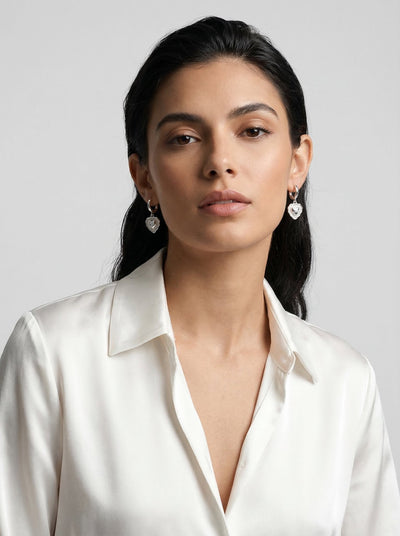
For Instagram and lifestyle content: Huggie earrings with drop elements or slightly larger hoops hit a sweet spot of visual presence without overwhelming a frame. The Gela Huggie Drop Earrings are a perfect example — the drop creates gentle movement and catch light differently as you turn your head, giving the camera something dynamic to work with. Similarly, the Nelo Huggie Earrings have just enough presence to read on camera while remaining elegant and non-distracting.
One important note: avoid very large, chandelier-style statement earrings for close-up shots unless the earrings are genuinely the focus of the photo. When a massive earring competes with your face in a tight crop, neither wins.

Necklaces That Read Beautifully On Screen
Necklaces are trickier on camera than earrings because they sit further from your face and need to compete with your clothing for visual real estate. The biggest mistake people make is wearing a necklace that's too fine. That 1mm cable chain you love IRL? It will vanish entirely against most skin tones and necklines on camera, leaving you looking like you're wearing nothing at all.
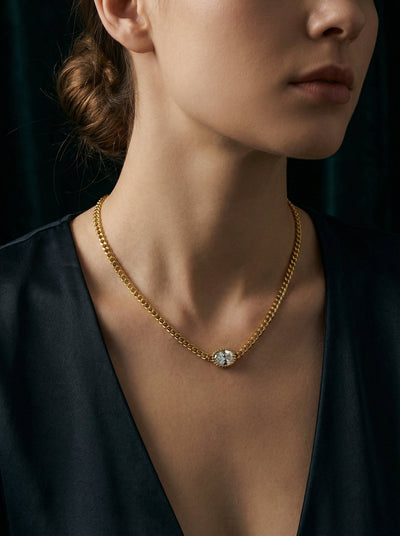
For photos, aim for necklaces that have at minimum one of these: a pendant with visual weight, a chain with structural interest (paperclip, snake, herringbone), or a chain that sits at a flattering length for your neckline. The Mevi Dainty CZ Pendant Necklace is a masterclass in photogenic necklace design — the CZ stone catches light and creates a sparkle point that anchors the whole neckline in photos. It sits at 16" + 2" extender, landing right at the collarbone for maximum visual impact in both portraits and three-quarter shots.
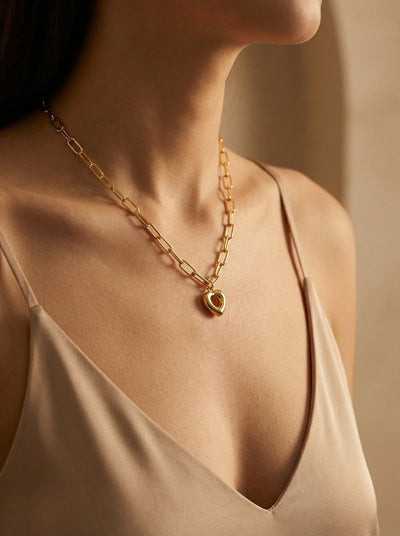
The Kaia Heart Key Pendant Necklace brings a romantic, editorial quality to photos — the key pendant has just enough whimsy and weight to read clearly on camera without needing to be enormous. Pendants with negative space (like keys, stars, or geometric cutouts) photograph particularly well because the shadow within the piece creates contrast against your skin.
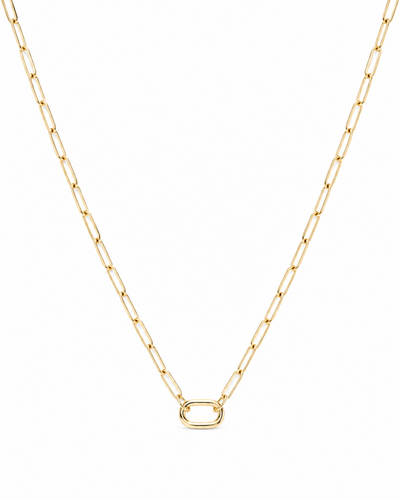
For longer, layered necklaces or more statement pieces, the Remy Paperclip Chain Heart Necklace hits that sweet spot of chain structure that reads on camera. Paperclip chains photograph with beautiful dimension because each link catches light differently — you get a whole constellation of tiny highlights that looks effortlessly luxe on screen.

What to Avoid: Jewelry That Disappears or Overwhelms
Every photographer has a mental list of jewelry that causes problems on set. Knowing what doesn't work is just as useful as knowing what does.
Avoid these for photos:
- Very fine chains made for everyday styling.5mm without pendants — they vanish on camera
- Highly polished, smooth silver under flash or direct sunlight — creates overexposed hot spots
- Oversized statement pieces in close-up headshots — they compete with your face
- Noisy bangles or large charm bracelets for video or reels — the sound tells before you even start
- Jewelry that clashes with your outfit's pattern or print — keep one zone simple if your clothing is busy
And one that surprises people: mixing too many metals in a photo can read as confused rather than intentionally mixed, especially in a small frame. If you want to mix gold and silver, make one dominant and treat the other as an accent — and learn more about doing it well in our guide on how to mix gold and silver without looking mismatched.

Lighting, Angles, and How They Interact with Your Jewelry
Even the most photogenic jewelry needs the right light to truly sing. Understanding light is the difference between a photo where your jewelry looks like a lower-quality afterthought and one where it looks like a magazine editorial.
Natural window light is your best friend. Position yourself facing a large window (not with the sun coming from behind you) and your jewelry will catch soft, even light that shows its texture and detail without harsh shadows or overexposure. This is how most jewelry brands shoot their lifestyle imagery — and it works because it's forgiving.
For golden hour photos, warm light interacts with gold jewelry in an almost magical way. According to photography resource PetaPixel's jewelry photography guide, the warm spectrum of golden-hour light brings out the richness in gold-tone metals while creating beautiful, dimensional shadows that make even simple pieces look three-dimensional.
Angle matters enormously for necklaces. Shooting slightly above creates a flattering neckline that shows pendants and chains in their best light. Shooting straight on is fine for earrings and stud shots. Avoid shooting from below — it foreshortens necklaces and makes them disappear into your chest.
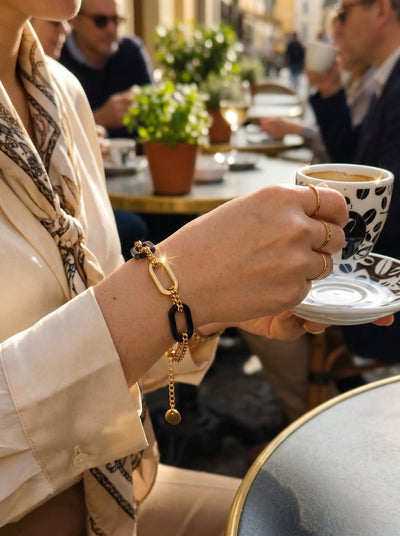
For ring and bracelet shots: The classic "hand up, soft fist" pose lets bracelets and rings catch overhead light and read clearly on camera. Avoid clenched fists — they crinkle the skin and create unflattering shadows around your jewelry.
The Art of Stacking for the Camera
Jewelry stacking photographs beautifully when it's done with intention. The secret? Create a visual story with a beginning, middle, and end — don't just pile on everything and hope for the best.
For necklace stacking on camera, layer necklaces with varying lengths (16", 18", 20") and at least one piece with visual weight like a pendant or a structurally interesting chain. The Mevi CZ Pendant as a shorter piece and the Remy Paperclip Heart Necklace at a longer length is a stack that photographs with real editorial impact.
For ear stacking, the layered ear is one of the most clicked-on aesthetics in jewelry photography right now. Read our full guide on how to stack earrings for a flawless ear party for the step-by-step process.

The Best HyraMode Pieces for Camera-Ready Looks
Based on everything above, here's an edited shortlist of HyraMode pieces that consistently photograph beautifully — whether you're doing a LinkedIn headshot, a brand collab shoot, or just trying to look stunning in your best friend's candid:
For headshots and professional photos: The Fern Textured Stud Earrings — textured surface catches light without overwhelming, in gold or silver.
For Instagram lifestyle content: The Gela Huggie Drop Earrings paired with the Mevi CZ Pendant Necklace — the combination of drop movement and a sparkle focal point is a content creator's dream.
For editorial or fashion photography: The Mara Ribbed Open Hoop Earrings — the ribbed texture creates stunning dimensional shadows in any directional light, and open-design hoops are one of the most editorial-looking styles you can wear.
For necklace-focused shots: The Kaia Heart Key Pendant — the key silhouette reads unmistakably on camera and has the kind of romantic, storytelling quality that makes people stop scrolling. All pieces feature skin-conscious construction and are built to last — no rushing to the bathroom before your shoot to wipe off tarnish.

The Quick Camera-Ready Jewelry Checklist
Before your next shoot, run through this fast mental checklist:
- Does the piece have visual weight or texture? If it's completely flat and featureless, it may disappear.
- Is it gold or warm-toned? Gold photographs more consistently well across lighting conditions.
- Does it have at least one focal point? A stone, charm, or structured shape gives the eye somewhere to land.
- Does it complement or compete with my outfit? If your top is busy, keep jewelry simple and structured.
- Is the size appropriate for the shot type? Close-up = smaller. Full-body = you can go bolder.
The goal is always the same: your jewelry should feel effortless, not like it's trying. The best-photographed jewelry looks like it belongs — like it was always part of the story you're telling.

FAQ: Jewelry and Photography
What kind of jewelry shows up best in photos?
Gold-tone jewelry with texture, dimension, or movement photographs the best. Pieces with catching facets — like CZ pendants, ribbed hoops, or herringbone chains — reflect light beautifully on camera. Flat, matte, or very delicate jewelry can disappear in photos unless you're shooting with professional macro lighting.
Does gold or silver look better in photos?
Gold generally photographs warmer and more luxurious under natural or warm artificial light — perfect for Instagram and lifestyle shots. Silver can look stunning under cooler or studio lighting. For outdoor and golden-hour photos, gold almost always wins.
What earrings look best for headshots?
For professional headshots, medium-sized studs or small huggies are ideal. They add polish without distracting from your face. Avoid large chandeliers or dangles that compete for attention with your expression. Textured gold studs or simple CZ pieces are the go-to — the Fern Textured Studs are a personal favorite for this exact reason.
Why does my jewelry disappear in photos?
Very fine or minimalist chains can vanish against skin tones in photos because cameras compress contrast. Size up slightly when shooting — a 1.5mm chain looks invisible on camera, but a 2–3mm chain reads clearly. Choosing pieces with texture, stones, or structured shapes also helps dramatically.
Can I wear stacked jewelry in photos?
Absolutely — layered necklaces and stacked bracelets read beautifully on camera when done intentionally. Stick to 2–3 pieces per zone, mix textures (chain + pendant + charm), and make sure at least one piece has a focal point like a stone or charm so the eye has somewhere to land.
Recommended Reading: