










Mixed Metal Jewelry Trend April 2026: 10 Contrast-First Layering Looks to Wear on Repeat
HyraModeOpen Pinterest for five minutes in April 2026 and one thing is obvious: jewelry stacks look less matchy and more personal. The cleanest way to get that look is mixed metal jewelry—pairing warm gold and cool silver in one outfit so your stack feels collected, not bought as a set. This is exactly why the mixed metal jewelry trend is surging right now: it solves real-life styling. You can wear your favorite old silver hoops, add a new gold pendant, and still look intentional.
Trend coverage from ELLE, Marie Claire, and Who What Wear keeps repeating the same direction: texture, contrast, and personality are beating ultra-minimal uniform sets. The Pinterest 2026 conversation summarized by National Jeweler reinforces that people are searching for statement-led but wearable styling, while Google Trends shows consistent spring demand around jewelry, earrings, and necklaces in the U.S.
If your goal is everyday luxury made for everyday styling, mixed metal is your best friend. It expands what you already own, lowers cost-per-wear, and makes a small jewelry wardrobe look much bigger. In this guide, you’ll get practical formulas, outfit pairings, and product-level examples you can copy in two minutes before leaving the house.

Why Mixed Metals Are Winning April 2026
For years, style advice pushed a single-metal rule: choose gold or silver and stay loyal. In practice, that rule creates friction. Real closets are mixed. Real jewelry boxes are mixed. And real people want speed in the morning. Mixed metals remove that friction by turning contrast into the point, not the mistake.
There’s also a visual reason this trend photographs so well. Gold brings warmth and softness; silver brings edge and clarity. Together, they create depth near your face and neckline, especially in natural light. That contrast reads premium on camera and in person, which is why creators and editors keep coming back to it this season.
The Contrast-First Rule: Build Around Temperature
The easiest way to style mixed metal jewelry is to think in temperature. Start with one "warm" anchor (gold) and one "cool" anchor (silver). Your anchors should be the biggest pieces in your stack, because larger forms set the color balance from a distance. Then fill in with smaller connectors—huggies, chains, cuffs—that echo one side without overpowering the other.
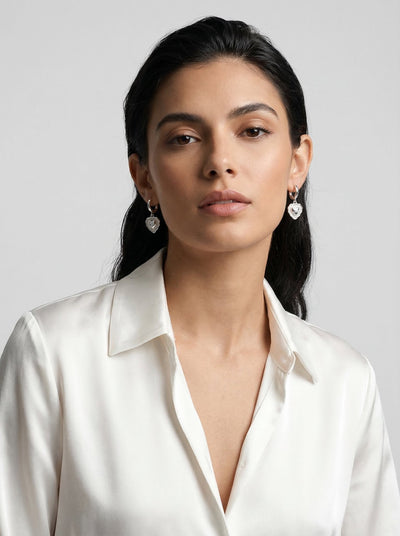
For example, pair the cool geometry of Hex Square Huggie Earrings with the warm fluid shape of Deva Liquid Metal Water Drop Earrings. One gives structure, one gives movement. You get an intentional contrast, not random noise.

Formula 1: Clean Workday Stack (2 Earrings + 2 Chains + 1 Bracelet)
For office hours, mixed metal should look precise. Use compact silhouettes and limit your stack to five pieces total:
- Silver base earring: Aura Oval Hoop Earrings
- Gold accent earring: Fern Textured Huggie Earrings
- Fine silver chain close to neck
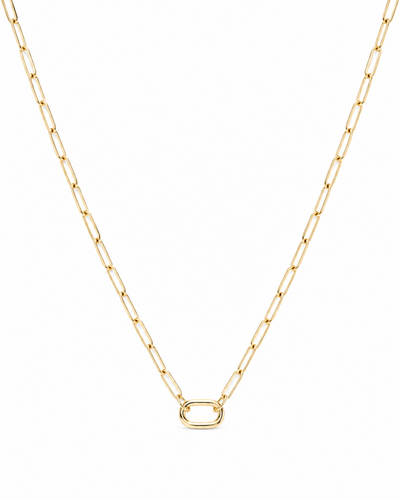
- Short gold pendant or textured mini chain
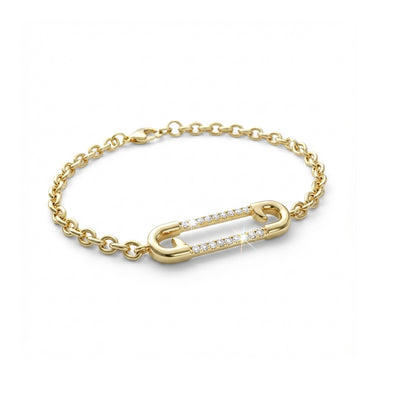
- Flat silver bracelet like Hana Herringbone Flat Chain Bracelet
Stick to polished fabrics (button-down, blazer, knit shell) and let your jewelry create the contrast. This formula works because it keeps metal switching predictable: ear, neck, wrist. It looks curated even when you’re rushing.

Formula 2: Weekend Contrast Stack (Statement Drop + Quiet Basics)
Weekends allow more movement. Start with one expressive drop earring such as Fova Huggie Drop Earrings or Gela Huggie Drop Earrings, then support it with quieter pieces. Add a silver hoop on the second piercing and one slim necklace so the statement still breathes.
To avoid overstyling, follow a 60/40 split: 60% of visible metal in one tone, 40% in the other. It’s enough contrast to read modern, but still coherent. With denim, white tees, and linen shirts, this ratio gives effortless "I just threw this on" energy.

Formula 3: Date-Night Light Play (Sculptural Gold + Crisp Silver)
Date-night styling in 2026 is less about sparkle overload and more about reflective surfaces. Sculptural gold catches warm indoor light, while silver gives crisp contrast under restaurant lighting and flash photos. Pair Deva with a sharper silver hoop like Hex to frame the face from both sides of the tone spectrum.
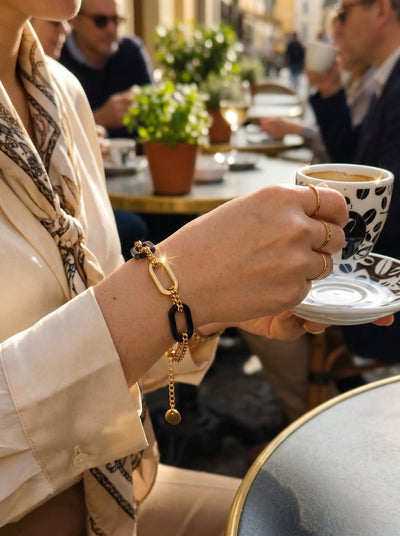
Add one bracelet with texture—Davi Black Bead Station Bracelet works because the dark bead detail visually "bridges" gold and silver. You end up with a stack that looks dimensional, not busy.
How to Keep Mixed Metals from Looking Random
Most styling mistakes come from mixing shape language, not color. If your gold piece is organic and fluid, choose silver pieces that are either similarly organic or intentionally geometric—but repeat at least one design cue across the stack: texture, thickness, or curve profile.
Example: If you wear the molten lines of Deva earrings, support with rounded silhouettes like Aura hoops instead of extremely sharp spikes. If you choose square Hex huggies, echo that precision with flatter chains and crisp neckline cuts.

10 Copy-and-Go Mixed Metal Looks made for everyday styling
- Silver hoop + gold textured huggie + white tee + blazer
- Gold drop earring + silver mini stud + slick ponytail
- Two silver chains + one short gold pendant + ribbed tank
- Gold sculptural earring + silver cuff + black slip dress
- Silver herringbone bracelet + gold bead bracelet stack
- Gold huggie + silver square hoop + oversized button-down
- Gold drop + silver hoop + denim jacket + clean bun
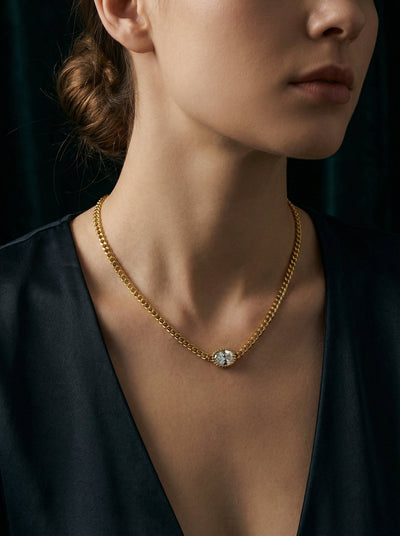
- Silver neck base + gold accent chain + V-neck knit
- Gold earring focus + silver ring set + monochrome outfit
- Balanced ear stack: silver first hole, gold second hole, mixed cuff
Each look can be built with pieces made for everyday styling, so you can test the trend without overcommitting. This is the practical luxury angle: style range without luxury markups. More importantly, these formulas are modular. You can swap one earring, one bracelet, or one chain and generate a completely new visual identity without replacing your whole jewelry drawer. That is exactly why mixed metals are converting trend curiosity into daily habit.
The Material Pairing Matrix: Which Pieces Work Fastest Together
When people say mixed-metal styling feels "hard," they usually skip this step: assigning function to each piece. Use a matrix mindset. Pick one face-framing piece for shine, one neckline piece for line, and one wrist piece for rhythm. For face framing, start with Gela Huggie Drop Earrings or Fova Huggie Drop Earrings; their movement keeps your look alive. For neckline linework, combine a slim silver chain with a shorter warm-toned pendant. For wrist rhythm, layer Hana Herringbone Bracelet with a textured accent like Davi Black Bead Station Bracelet.
This matrix helps you avoid the most common mismatch: stacking too many hero pieces in one area and leaving other zones empty. Balanced distribution makes your outfit look editorial even in basics. If your top is high-neck, prioritize earrings and wrist contrast. If your neckline is open, push contrast into the chain stack and keep ears cleaner. Think of your body as three style zones, not one cluttered canvas.
Another practical rule: repeat one finish. If your gold is brushed or textured, let at least one silver piece echo that tactile character. If your silver is mirror-polished, choose a polished gold counterpart. Finish consistency is the difference between intentional contrast and random leftovers.

Waterproof, Tarnish-Resistant Matters More in Mixed Styling
Mixed metal looks rely on contrast. If one piece fades faster than another, the whole stack starts to look off. That’s why durability matters even more than usual. When pieces are worn daily together, they should age at a similar visual pace.
HyraMode’s everyday-wear positioning—18K gold-plated, waterproof-friendly, tarnish-resistant direction—is ideal for trend cycling because it supports repeat wear. You’re not saving pieces for "special occasions." You’re building reliable daily uniforms.

How This Trend Connects to Other April 2026 Jewelry Signals
Mixed metals doesn’t exist alone. It overlaps with April’s biggest categories: bold gold, liquid textures, and updated hoop shapes. If you want more direction, start with our related reads: Bold Gold Jewelry Trend, Liquid Metal Jewelry Trend, and Oval Hoop Earrings Trend. These guides layer directly into the contrast-first method.
Think of mixed metal as the operating system. Other trends are just apps. Whether you add tassels, beads, sculptural cuffs, or charm details, the warm/cool contrast keeps your look grounded and expensive-looking.
A Simple 2-Minute Routine Before You Leave Home
- Choose your dominant tone for today (gold or silver).
- Add one opposite-tone anchor near your face.
- Repeat the opposite tone once at neck or wrist.
- Check mirror balance from 3 feet away.
- Remove one piece if everything feels equally loud.
This routine prevents over-layering and keeps your stack intentional. Most importantly, it makes getting dressed faster—which is the real reason this trend sticks.

FAQ: Mixed Metal Jewelry Trend 2026
1) Is it still stylish to mix gold and silver in 2026?
Yes. In April 2026, mixed metal styling is one of the most wearable mainstream jewelry directions because it looks personal and modern while expanding what you already own.
2) What is the easiest way to start mixed metal styling?
Start with one dominant tone and add one opposite-tone anchor in earrings. Then repeat that opposite tone once at neck or wrist for balance.
3) How many mixed metal pieces should I wear at once?
For everyday wear, five pieces is a strong ceiling: two earrings, two neck elements, one wrist element. That gives contrast without visual overload.
4) Can mixed metal jewelry look minimal, not maximal?
Absolutely. Keep silhouettes clean, use small-to-medium sizes, and rely on temperature contrast instead of volume. Minimal mixed stacks often look more premium than heavy matching sets.
5) Does mixed metal work with warm or cool skin tones?
Yes. That’s one of the biggest advantages. Mixed metals let you tune your look around makeup, outfit color, and lighting instead of locking into one permanent tone family.
Mixed metals are not a trend you "try once." They are a smarter styling framework that gives your wardrobe more mileage. If you want everyday luxury without the guesswork, build your stack around contrast, keep shapes consistent, and choose pieces you can wear on repeat.