










Sculptural Cuff Jewelry Trend April 2026: How to Style Soft-Statement Layers This Season
HyraModeIn short: the sculptural cuff jewelry trend is one of April 2026’s most wearable style shifts. Instead of heavy statement sets, the new mood is soft-structured: rounded ear cuffs, fluid mini hoops, and clean bracelet layers that feel intentional but easy. The result is modern and expressive without looking overdressed for everyday life.
You can see this direction across trend media, search behavior, and social styling boards. People still want personality in jewelry, but they want it in pieces that move with real outfits—linen shirts, white tanks, denim, blazers, and slip dresses. Sculptural cuffs deliver exactly that: one focal point near the face, then quieter anchors that keep the look polished.
The best part for HyraMode shoppers is access. You don’t need a luxury everyday to wear this trend well. When the shape language is right—curved edges, fluid contours, balanced scale—under-$20 pieces can look elevated fast. This guide breaks down what’s trending, how to style it step by step, and which combinations look expensive in real life.

Why Sculptural Cuffs Are Surging in April 2026
After seasons of ultra-minimal chains, 2026 jewelry trends are shifting toward shape and surface. Editors at Marie Claire and Who What Wear both highlight a move toward sculptural forms, rounded metals, and pieces that read as styling tools—not just accessories.
Pinterest reporting also supports the same direction, with rising interest in bold details, statement accents, and personality-led styling. The important nuance is this: people are not dressing louder everywhere. They are dressing smarter. One strong shape near the face can lift the whole outfit without requiring ten pieces.
That’s why cuffs are outperforming harder-to-style statement categories. They are compact, versatile, and easy to pair with basics. They also help bridge aesthetics: quiet luxury, clean-girl minimal, modern vintage, and coastal capsule wardrobes can all use the same cuff with different anchors.
There is also a practical behavior shift behind this trend: shoppers are prioritizing pieces that solve weekday styling problems, not just “occasion” looks. A sculptural cuff works in office lighting, daylight, and dinner settings without needing a full accessory swap. That one-piece adaptability increases cost-per-wear, which is exactly why this category keeps converting.
Another hidden reason for growth is camera readability. On short-form video and mirror photos, cuffs create visible shape near the face even when the outfit itself is simple. That means less effort for a stronger styling signal. In content-driven shopping behavior, pieces that read clearly on camera almost always outperform subtle items that disappear at normal viewing distance.
The 2026 Formula: 1 Sculptural Hero + 2 Clean Anchors
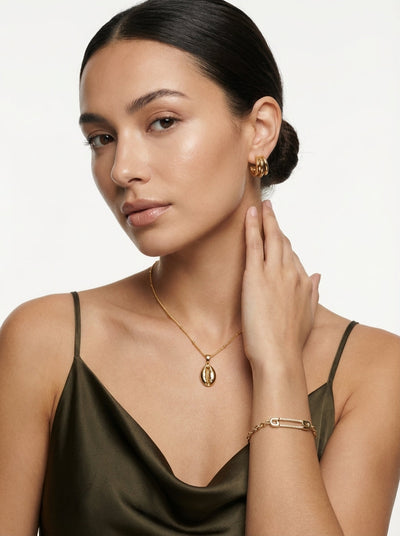
If you want this trend to look refined, follow one ratio: 1 hero piece + 2 support pieces. Your hero is the cuff. Your anchors are clean hoops, huggies, or slim wrist layers that frame the look.
- Hero: one curved cuff like Livo Ear Cuff or Orin Ear Cuff.
- Anchor 1: one compact hoop/huggie like Avi Huggie Earrings.
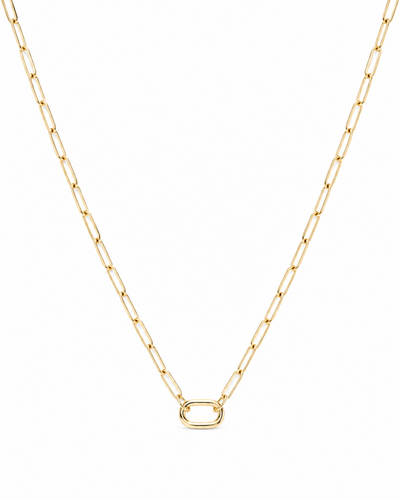
- Anchor 2: one slim bracelet stack with clean chain lines.
This ratio prevents the most common mistake: treating every item like a statement piece. When everything competes, nothing feels intentional. A single sculptural lead with two controlled anchors creates hierarchy, and hierarchy is what makes affordable styling look editorial.
Another practical advantage of this formula is consistency. You can reuse the same cuff across workdays, weekends, and evening looks by only switching your anchors. That gives you more outfit variety with less buying.
For example, keep the same cuff all week and rotate only one companion piece: Monday with a polished huggie, Thursday with an oval hoop, Saturday with a slightly playful bracelet motif. The cuff acts as your signature while the support pieces adjust to mood and setting. This “anchor-and-rotate” method is one of the easiest ways to build a recognizable personal style without overspending.

How to Build an Ear Stack Around a Cuff
Ear stacks are still strong in 2026, but the structure is evolving. Instead of many tiny pieces, the trend is now “edited stack”: fewer elements, clearer shape contrast, better spacing.
- Start with the cuff as your highest visual point.
- Add one close-to-lobe anchor (huggie or mini hoop).
- Optional third point: one softly curved hoop if your hair is tied back.
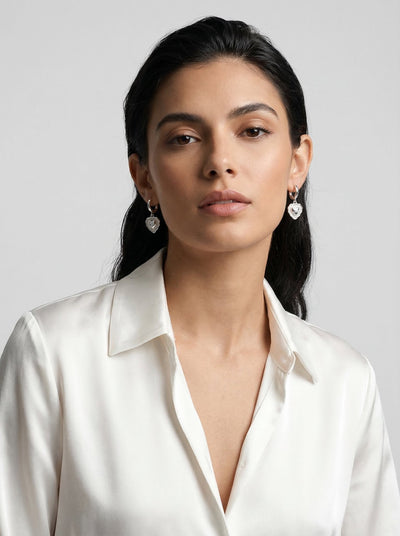
Try this real-life combination: Savi Ear Cuff + Avi huggies + Aura Oval Hoop Earrings in the second piercing. It reads styled but never crowded.
If your style is ultra-minimal, wear the cuff on one side only. That small asymmetry makes basics feel deliberate. If you want symmetry, use the same hoop scale on both ears and keep the cuff clean rather than embellished.
Hair and neckline should guide your ear-stack intensity. With hair down, choose a brighter cuff finish and keep hoop size controlled so details still show through movement. With slicked-back hair or tucked styles, you can scale up one element because the ear area has more visual space. For high-neck tops, a cleaner ear stack usually looks sharper; for open necklines, you can add one extra ear layer or wrist accent without crowding the look.


Wrist Styling That Supports (Not Fights) Ear Focus
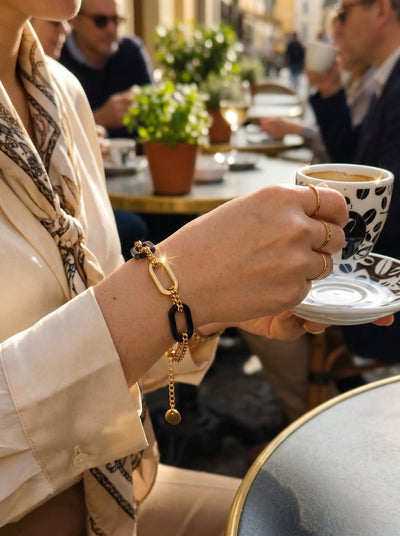
Because cuffs draw attention upward, your wrist stack should support the look, not compete with it. The easiest way is to keep wrist lines flat and fluid: one slim chain plus one subtle texture accent.
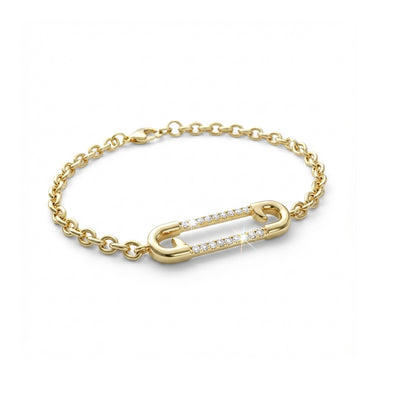
A reliable pairing is Arlo Slim Flat Box Chain Bracelet with Dalis Multi-Strand CZ Station Bracelet. You get reflection and movement without adding a second focal war near the face.
For playful days, add a small motif bracelet such as Mavi Chain Butterfly Bracelet. Keep it to one motif only so the cuff remains the visual lead.
Think of your wrist as rhythm, not headline. Gentle repetition of lines and light catches movement in photos and in person, while keeping the outfit readable at a glance.
A useful trick is to mirror one shape quality between ears and wrist. If your cuff has fluid curves, choose bracelets with softer chain flow rather than sharp geometric links. If your cuff is sleek and minimal, use flatter bracelet lines for continuity. These micro-connections create a styled feel that people notice subconsciously, even if they cannot name why the outfit looks balanced.
Also watch sleeve interaction. Wide cuffs and heavy bracelet stacks can snag or visually bunch with knit sleeves and oversized cuffs. On long-sleeve days, keep wrist layering lighter and let the ear focus carry the look. On sleeveless days, wrist texture can come forward naturally because there is more visible arm space.


Gold vs Silver: Choosing the Right Metal for Your Outfit Mood
Both gold and silver are trend-relevant for sculptural styling in 2026. The difference is emotional tone:
- Gold cuffs feel warmer, softer, and slightly romantic.
- Silver cuffs feel cleaner, cooler, and more directional.
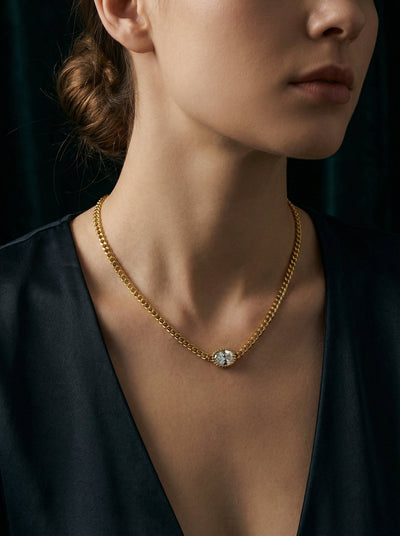
If your closet leans cream, camel, beige, or warm denim washes, gold usually integrates faster. If you wear black, gray, crisp white, or blue-heavy palettes, silver tends to look sharper. You can also mix metals, but keep one dominant tone at roughly 70% to avoid visual noise.
Need a deeper metal-balancing framework? Read our related guide: Mixed Metal Jewelry: How to Wear Gold and Silver Together.
Five Outfit Formulas That Make Cuffs Wearable Daily
Trend adoption is easiest when the outfit formulas are simple. Use these combinations:
- Workday polish: blazer + tee + cuff + one huggie + slim chain bracelet.
- Weekend casual: knit tank + jeans + cuff + oval hoops + one motif bracelet.
- Date-night clean: black top + straight denim + cuff + mini drop + CZ station bracelet.
- Travel light: button-down + shorts + silver cuff + compact hoops + one chain.
- Event minimal: slip dress + sculptural cuff + two-tone wrist stack.
If you want a broader ear-focused strategy, pair this article with Ear Stacking Trend 2026. The stack rules are the same; the cuff simply becomes your lead character.
These formulas work because they remove decision fatigue. You’re not asking, “What matches what?” You’re asking, “Which single shape do I want to lead today?” That shift makes daily styling faster and more consistent.
If you’re building a travel capsule, this approach is even more valuable. Pack one sculptural cuff, one compact hoop, one huggie, and two bracelets in the same metal family. You can create multiple combinations across day and night without overpacking. For many shoppers, this is the exact sweet spot: enough variation for style, small enough to stay practical.
How to Make Under-$20 Sculptural Jewelry Look Premium
Price is less visible than proportion, finish harmony, and styling discipline. To make affordable pieces read expensive:
- Repeat one shape language across all pieces (rounded, fluid, or geometric).
- Keep one focal area per outfit (ears or wrist, not both shouting).
- Use clean fabrics when jewelry texture is high (cotton, linen, satin, fine knits).
- Edit aggressively: remove one piece before leaving.
The secret isn’t “more jewelry”; it’s better spacing and hierarchy. One curved cuff with a precise stack often looks more elevated than six unrelated pieces.
Durability matters too. Pieces that keep their finish and structure over repeated wear always look more expensive. For care and material guidance, see our waterproof jewelry guide.
Storage discipline makes a bigger difference than most people expect. Keep cuffs separated from hard-edged rings and chunky chains so curved surfaces stay smooth. A soft pouch with individual compartments is enough. Five seconds of post-wear storage can protect the visual finish that gives sculptural jewelry its premium effect.
Finally, rotate hero pieces across the week instead of repeating one item daily. Rotation reduces friction wear while preserving the freshness of your styling. Two or three hero options are usually enough to make your jewelry wardrobe feel intentionally curated.
Common Styling Mistakes to Avoid with the Cuff Trend
- Too many statement points: cuff + huge hoops + heavy necklace + chunky bangles usually feels chaotic.
- No anchor piece: without one clean huggie or hoop, cuff styling can look unfinished.
- Ignoring neckline: high-neck outfits need tighter ear edits; open necklines can support more wrist texture.
- Over-mixing metal finishes: mirror silver, matte gold, rose tone, and rhinestones together can read accidental.
- Wrong scale for face framing: petite features often need compact curves; larger profiles can carry bolder lines.
The easiest fix is to test your look from two distances: mirror-close and room-distance. If the silhouette feels clear from both, your stack is balanced.


FAQ: Sculptural Cuff Jewelry Trend April 2026
1) Are ear cuffs still in style in 2026?
Yes. 2026 cuffs are softer and more sculptural, making them easier to wear with everyday outfits than sharp, ultra-edgy versions.
2) How do I style a sculptural cuff without overdoing it?
Use one cuff as the hero, then add one clean hoop/huggie and one slim wrist anchor. Keep everything else minimal.
3) Can this trend work for office outfits?
Absolutely. A polished cuff with compact huggies and one flat bracelet gives personality while still looking professional.
4) Which metal is better for this trend: gold or silver?
Neither is “better.” Gold reads warmer and softer; silver reads cooler and more modern. Match your outfit undertone.
5) How many pieces should I wear with an ear cuff?
For daily wear, 3-4 visible pieces usually looks best: cuff, one ear anchor, and one or two slim wrist layers.