











Is Gold Plated Jewelry Worth It? An Honest Buyers Guide (2026)
HyraModeGold hit $2,700 an ounce in late 2024. A simple 14K solid gold chain necklace now runs $800 to $1,200 at most jewelers. A pair of solid gold hoops? Easily $500+.
Meanwhile, the global fashion jewelry market crossed $36 billion in 2024 and is projected to nearly double by 2030. That growth isn't coming from solid gold — it's being driven by women who realized there's a smarter way to build a jewelry wardrobe.
This article breaks down exactly why quality gold plated jewelry has become the go-to choice for style-conscious women, what separates good plating from bad, and how to spot the difference before you buy.
The Old Reputation vs. The New Reality
Let's be honest about why gold plated jewelry has a reputation problem.
For decades, "gold plated" meant a thin electrochemical bath over brass or zinc alloy. The gold layer was often made for everyday styling.5 microns thick — so thin it would wear through in weeks. The brass underneath would oxidize against skin, leaving green marks on fingers and wrists. It was lower-quality in every sense of the word.
That experience taught an entire generation of shoppers to distrust anything that wasn't solid gold. And at the time, that instinct was correct.
But materials science didn't stand still. The jewelry industry borrowed a finishing technique from industries where failure isn't an option — medical devices, aerospace components, and luxury watchmaking. That technique is PVD coating.
What Actually Changed: PVD Coating
PVD (Physical Vapor Deposition) works differently from traditional electroplating. Instead of dipping metal into a chemical bath, PVD uses a vacuum chamber to bond gold particles directly onto the surface at an atomic level. The result is a finish that's several times harder than traditional plating.
To put that in context: Swiss watchmakers like TAG Heuer and Citizen have used PVD coating for years on watches designed to withstand daily professional use. The same technology now makes gold jewelry that genuinely handles real life — showers, workouts, beach days, and everything in between.
This isn't a marketing gimmick. It's a materials upgrade that fundamentally changed what "gold plated" means.

The Real Cost Comparison (With Actual Numbers)
Here's where it gets interesting. Let's compare what $300 actually buys you:
Option A: Solid Gold
$300 gets you one thin 14K gold chain necklace. Maybe. Depending on length and gold prices that week. No earrings, no bracelet, no variety. One piece, one look.
Option B: Quality Gold Plated (PVD over Stainless Steel)
$300 gets you a full capsule collection. We're talking:
- 2-3 pairs of earrings (huggies, hoops, studs)
- 2 layering necklaces at different lengths
- 1-2 bracelets
- Possibly a matching set or two
That's 7-8 pieces that mix and match into dozens of different looks. Same visual impact as solid gold. Different outfit every day of the week.
A 2024 McKinsey State of Fashion report noted that consumers increasingly value "cost-per-wear" over price tags — meaning they think about how many times they'll actually wear something relative to what they paid. By that math, a $25 pair of PVD gold hoops you wear 200 times costs 12 cents per wear. A $500 solid gold pair worn just as often costs $2.50 per wear.
Both look identical on your ears. Only one makes financial sense for most people.
What to Actually Look For (A Buyer's Checklist)
Not all gold plated jewelry is created equal. Here's how to tell quality from junk before you spend a dollar:
1. Check the Base Metal
Good: Stainless steel (often called 316L in technical specs). It's the same grade used in surgical instruments and high-end watches. It doesn't corrode, doesn't contain nickel in reactive amounts, and provides a solid foundation for plating.
Avoid: Brass, zinc alloy, or "metal alloy" with no further detail. These are the materials behind the old green-skin horror stories.
2. Look for the Coating Method
Good: PVD coating or "vacuum plating." These terms indicate the newer, more durable bonding process.
Mediocre: "Gold plated" with no further detail. Could be fine, could be the old electroplating. If the brand doesn't specify, that's usually a red flag.
3. Read the Care Instructions
This is a surprisingly reliable quality signal. If a brand says "remove before showering, swimming, or exercising," the plating probably can't handle those things. Brands that use PVD coating tend to say the opposite — because their product can back it up.
4. Price Isn't Everything, But It's a Clue
A $3 "gold" ring from a fast fashion site is not using PVD coating. The process costs more than that to run. Quality gold plated pieces typically start around $15-$30 for earrings and $20-$40 for necklaces. That's the range where brands can actually afford decent materials and processes.

The Skin Sensitivity Factor
According to the North American Contact Dermatitis Group, nickel is the most common cause of contact dermatitis from jewelry, affecting an estimated 10-20% of women in North America.
This is where base metal matters enormously. Brass and zinc alloy jewelry often contains nickel, which migrates to the surface as plating wears off. The result: red, itchy skin, sometimes within hours of wearing a piece.
Stainless steel contains trace nickel, but it's locked within the alloy structure and doesn't leach onto skin in meaningful amounts. That's why it's the standard material for surgical implants and body piercings — and why it's become the preferred base for quality fashion jewelry.
If you've ever written off gold jewelry because "my ears are too sensitive," the issue was almost certainly the base metal, not the gold itself.
How HyraMode Approaches This Differently
Most brands in this price range lead with durability specs. We get it — and yes, our stainless steel + PVD process is built to last.
But that's table stakes. The reason people actually buy jewelry isn't because of a coating process. It's because a piece catches their eye and makes them feel something.
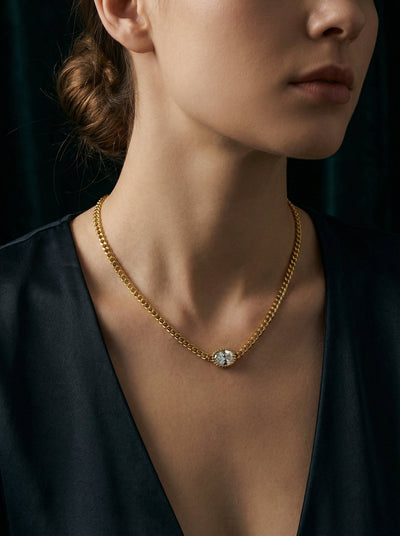
Every HyraMode design starts with style first. The Bora Chunky Hoops exist because chunky square hoops look incredible with a blazer and a messy bun — not because we wanted to showcase PVD technology. The Mevi CZ Pendant is designed to sit perfectly at the collarbone with a V-neck, not to demonstrate stainless steel properties.
The durability? That's the background promise. You buy it because it's beautiful. You keep wearing it because it holds up.

The "When Should I Actually Buy Solid Gold?" Honest Answer
We sell gold plated jewelry, so you might expect us to say "never." But here's the honest take:
Buy solid gold when:
- It's a once-in-a-lifetime piece (engagement ring, heirloom necklace)
- You want something with intrinsic resale value
- everyday genuinely isn't a constraint
- You want one signature piece you'll wear for decades without variety
Buy quality gold plated when:
- You want a full collection, not just one piece
- You like switching up your jewelry to match outfits and moods
- You want the gold look for everyday wear without babying your jewelry
- You'd rather invest your money elsewhere and still look put-together
Most women land on a mix: one or two solid gold "forever" pieces, and a rotating collection of quality plated pieces for daily styling. That's not a compromise — that's a strategy.
The Bottom Line
The old binary of "real gold or fake gold" doesn't apply anymore. Quality gold plated jewelry — specifically PVD coated over stainless steel — is its own legitimate category. It looks like solid gold, handles real life, and costs a fraction of the price.
The question isn't "is gold plated jewelry worth it?" The question is "does this specific piece use quality materials and processes?" If the answer is yes, you're getting one of the best value propositions in fashion right now.
Curious to see the difference quality makes? Browse HyraMode's full collection — everything is PVD coated over stainless steel, designed to wear daily, and priced made for everyday styling.
Frequently Asked Questions
Is gold plated jewelry worth buying?
Yes — if the plating is PVD over stainless steel. This combination produces jewelry that's visually identical to solid gold, handles daily wear including water and sweat, and costs 90-95% less. The key is checking what base metal and coating process a brand uses, not just whether something is "gold plated."
How long does PVD gold plated jewelry last?
With daily wear, PVD coated jewelry typically lasts 2-5 years before showing any noticeable wear, compared to weeks or months for traditional electroplating. Some wearers report their PVD pieces still looking new after 3+ years of never taking them off.
Can you shower with gold plated jewelry?
With PVD coated stainless steel pieces, yes. The coating is resistant to water, soap, and normal shower products. Avoid prolonged exposure to harsh chemicals like bleach or heavily chlorinated pool water, but daily showers are perfectly fine.
Why does lower-quality gold jewelry turn your skin green?
The green color comes from copper in the base metal (usually brass) reacting with moisture and acids on your skin. It's not harmful, but it's a clear sign of low-quality materials. Stainless steel bases don't contain reactive copper, which is why quality gold plated jewelry doesn't cause this reaction.
What's the difference between gold plated, gold vermeil, and gold filled?
Gold plated uses the thinnest layer (can vary widely in quality). Gold vermeil requires a sterling silver base with at least 2.5 microns of gold — it's skin-conscious but silver can tarnish if the plating wears. Gold filled has a much thicker gold layer mechanically bonded to base metal — it's more durable than traditional plating but pricier. PVD gold over stainless steel is a newer category that competes with gold filled on durability at gold plated prices.
Is gold plated jewelry skin-conscious?
It depends entirely on the base metal. Gold plating over brass or zinc alloy can cause reactions once the plating wears through, exposing nickel. Gold plating over stainless steel is considered skin-conscious because stainless steel has properties that depend on its grade and formulation — the same reason it's used in medical implants.