










What Hand Do You Wear a Bracelet On? The Stylish Answer
HyraModeIf you have ever stood in front of a mirror and wondered, what hand do you wear a bracelet on?, you are very much not alone. It sounds like a tiny style question, but it changes the whole feel of your look—especially when you are mixing a watch, stacking multiple chains, or trying to make one delicate piece feel intentional instead of random.
The short answer? There is no single rule. Most women wear a bracelet on their non-dominant hand because it feels easier, looks more balanced, and gets less daily wear. But style is a little more interesting than a one-line answer, and the best wrist often depends on comfort, proportion, occasion, and the kind of bracelet you are wearing.
The chic answer is this: wear your bracelet on the hand that makes it feel effortless, visible, and naturally part of your outfit.
Whether you love a sleek herringbone, a charm bracelet with personality, or a refined chain that lives on your wrist every day, this guide breaks down exactly how to choose the right hand, how to style it, and when to break the so-called rules on purpose.

Why this question matters more than people think
Bracelets sit in one of the most active places on your body. Your hands are always moving—texting, opening doors, holding coffee, gesturing mid-story—so placement changes both how a bracelet looks and how it wears throughout the day.
That is why the same bracelet can feel elegant on one wrist and slightly annoying on the other. It is not about superstition or a rigid fashion code. It is about how your jewelry interacts with your real life.
The right wrist makes a bracelet feel like part of you instead of something you are constantly adjusting.
The simplest rule: start with your non-dominant hand
If you want the most practical answer, start with your non-dominant hand. Right-handed? Try your left wrist first. Left-handed? Try your right.
This works for one very real reason: your non-dominant hand usually does less work. That means less friction against desks, keyboards, steering wheels, and bag straps. According to the Gemological Institute of America’s jewelry care guidance, reducing impact and abrasion helps jewelry stay beautiful longer.
For everyday wear, the non-dominant hand is usually the easiest, safest, and most flattering starting point.
If you are trying a sleek chain style, the Hana Herringbone Flat Chain Bracelet looks especially elegant on the quieter wrist because the flat profile catches light without twisting as much.
When your dominant hand is actually the better choice
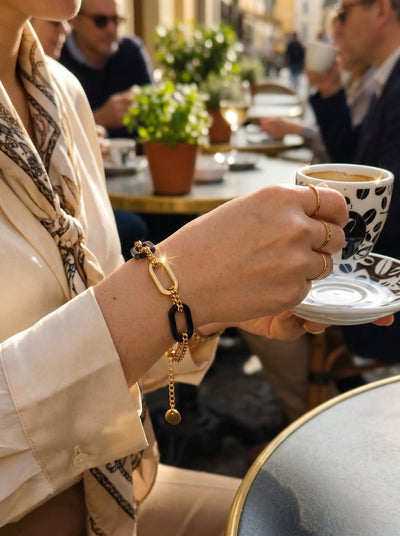
Now for the fun part: sometimes your dominant hand is exactly where the bracelet belongs. If you talk with your hands, post outfit videos, or want a bracelet to read as part of your signature gesture, the active wrist can feel more expressive.
Charm styles, textured links, and statement pieces often look more alive on the hand people notice first. Fashion magazines like Vogue and Harper’s Bazaar regularly frame jewelry as movement-driven styling, and bracelets are a perfect example of that.
If you want your bracelet to feel visible and personality-forward, your dominant hand can be the more fashionable move.
A playful piece like the Mavi Chain Butterfly Bracelet or the Nilo Paperclip Star Charm Bracelet can look especially pretty on the wrist that is always in motion.

What if you wear a watch?
This is where most bracelet decisions get real. If you wear your watch every day, you have two classic options: stack your bracelet with the watch, or keep the bracelet on the opposite wrist for a cleaner balance.
If your watch is substantial, give it space and wear your bracelet on the other hand. If your watch is slim, minimalist, or more jewelry-like, a delicate bracelet stack can look incredibly polished. Byrdie’s styling coverage often points back to balance and visual weight, which is exactly the secret here.
When a watch is already making one wrist busy, let the other wrist bring either balance or a softer echo—not competition.
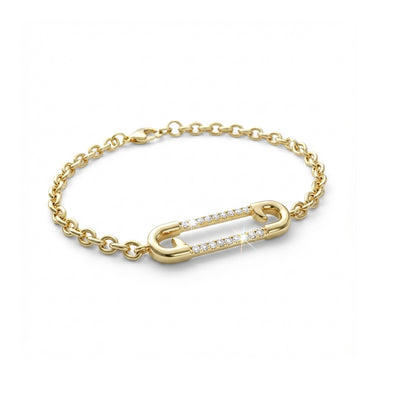
If you love a clean, paired look, try the Roux Bar Station Chain Bracelet beside a slim watch, or wear it solo on the opposite wrist for understated symmetry.
Does the type of bracelet change the answer?
Absolutely. Different silhouettes behave differently, and that changes which wrist feels best after a full day.
Smooth chain bracelets usually work on either hand. Flat herringbone styles tend to look better on the wrist that sees less hard movement. Charm bracelets feel more animated on the more expressive hand. Structured cuffs often sit best on the wrist where they will not knock into everything.
The more delicate or flat the bracelet, the more it benefits from your less active wrist.
If you like fluid chain styles, the Evia Dainty Chain Snake Reversible Charm Bracelet feels soft and easy on the wrist. If you want stronger shine, the Gova Wide Herringbone Chain Bracelet gives a bolder finish with a more editorial feel.

Is there a meaning behind the left wrist vs the right wrist?
In some cultures and personal traditions, yes—but in modern styling, meaning is usually personal rather than fixed. Some people associate the left side with receiving and the right side with action or giving. Others choose a wrist based on habit, religion, comfort, or sentimental rituals.
Historically, jewelry meaning has always shifted with context, which is part of what makes adornment so personal. Institutions like the Victoria and Albert Museum note that jewelry has long carried both decorative and symbolic weight.
If a bracelet has emotional meaning, the “right” hand is the one that feels personally significant to you.
This is especially true for giftable, symbolic pieces with charms or motifs. A bracelet does not need a universal rule when it already has your own story attached to it.
How tight or loose should a bracelet fit?
No matter which hand you choose, fit changes everything. A bracelet that is too tight looks stiff and feels restrictive. Too loose, and it flips, slides, and catches on sleeves or laptop edges.
The sweet spot is movement without chaos. You want enough room for the bracelet to shift naturally, but not so much that it constantly rotates to the least flattering angle. For everyday styling, a bracelet should skim the wrist rather than squeeze it.
The best bracelet fit is relaxed, secure, and easy enough that you forget you are wearing it.
If you like a neat everyday profile, start with one refined piece, then layer only if the base bracelet already feels comfortable on that wrist.

How to style a bracelet stack without making your wrist look busy
If you wear more than one bracelet, think in layers of texture, not chaos. Start with one anchor piece, then add one or two slimmer bracelets that support it. Mixing widths usually looks more elevated than stacking identical shapes.
A wide bracelet like the Gova Wide Herringbone Chain Bracelet works best with quieter companions, while a playful style like the Nilo Paperclip Star Charm Bracelet pairs well with a clean chain. If you want a deeper stacking tutorial, read How to Stack Bracelets: A Beginner’s Guide to Arm Candy.
The most expensive-looking bracelet stacks usually stop one layer earlier than you think.
And if you are deciding between silhouettes before you stack at all, Chain Bracelet vs Bangle: Which Everyday Style Is Best? makes the choice much easier.

What hand should you wear a bracelet on for work, dates, and events?
For work, your non-dominant wrist is usually the least distracting choice—especially if you type a lot. For dates, the more expressive hand can feel softer and more flirtatious because it moves naturally as you talk. For events, choose the wrist that balances your clutch, rings, and watch.
Think about the whole visual line. If one hand already has stacked rings, a bracelet on the opposite wrist can make the outfit feel more editorial. If your neckline is simple and your sleeves are clean, a bracelet on the active hand can bring the outfit to life.
The best event styling is not about a fixed bracelet rule; it is about keeping the whole look in proportion.
For a polished occasion piece that still feels wearable, the Mavi Chain Butterfly Bracelet adds charm, while the Hana Herringbone Flat Chain Bracelet reads sleek and modern.

Can you wear bracelets on both hands?
Yes—and when it is done with restraint, it looks incredibly cool. The trick is not making both wrists equally loud. Let one side lead and the other side whisper.
You might wear a watch and slim chain on one wrist, then a single charm bracelet on the other. Or one wrist can carry a refined herringbone, while the other stays almost bare except for rings. The asymmetry is what makes it feel styled instead of overdone.
Both wrists can work beautifully when one side acts as the statement and the other side keeps the balance.
For more silhouette ideas, our guide to Gold Chain Bracelet Types is a helpful next step.
The bracelet rule worth keeping
So, what hand do you wear a bracelet on? The one that makes the piece feel easy. Start with your non-dominant hand for comfort, move to your dominant hand for visibility, and let your watch, outfit, and bracelet style decide the rest.
That is the real secret: the best bracelet styling never looks overthought. It looks like you put it on without hesitation and somehow got it exactly right.
If your bracelet feels comfortable, balanced, and a little bit like you never want to take it off, it is on the right hand.

Frequently asked questions
Do most women wear bracelets on the left or right hand?
Most women start with the non-dominant hand, so right-handed people often wear bracelets on the left wrist. But there is no strict rule, and many people switch depending on comfort, outfit, or whether they are wearing a watch.
Should you wear a bracelet on the same hand as your watch?
You can, especially if both pieces are delicate. If your watch is chunky or sporty, the opposite wrist usually looks cleaner and feels more comfortable.
What hand should a charm bracelet go on?
Charm bracelets often look best on the more expressive wrist because the movement helps them feel lively and visible. If the charms are heavy, though, the non-dominant wrist may be more comfortable for all-day wear.
Can you wear bracelets on both wrists at the same time?
Yes. The key is balance. Let one wrist carry the main visual weight and keep the other side lighter so the overall styling still feels chic.
How do you know if a bracelet is on the wrong hand?
If it keeps hitting your desk, catching on sleeves, twisting constantly, or distracting you all day, try the other wrist. Comfort is usually the clearest styling signal.