










Tennis Bracelet Guide: What It Is, How to Stack It, and Why It's Still the Most Elegant Bracelet of 2026
HyraModeThere are certain pieces of jewelry that exist outside of trends. The tennis bracelet is one of them. It's been on the wrists of Hollywood stars, Olympic athletes, and your most stylish coworker — and somehow it never looks like it's trying too hard. If you've been quietly wondering whether a tennis bracelet is right for you, how to wear one without looking like you're going to a gala at 10am, or what even makes a good one, this is the guide you've been waiting for.
We're breaking down everything — the history, the fit, the stacking rules, the outfit pairings, and yes, the most gorgeous affordable versions that will have people asking where you got it. Let's get into it.

What Exactly Is a Tennis Bracelet?
A tennis bracelet is defined by its design: a flexible chain of individually set stones — typically diamonds or CZ — running in a continuous, symmetrical line around the wrist. No charms, no padding, no asymmetry. Just stone after stone, uniform and uninterrupted, catching light from every angle.
The defining characteristic of a tennis bracelet is that clean, unbroken line of sparkle — it looks simultaneously understated and incredibly polished.
What separates a tennis bracelet from other diamond or crystal bracelets is the setting structure. Each stone sits in its own prong or bezel setting, connected by tiny links that allow the bracelet to flex naturally with your wrist. That flexibility is key — it's what gives tennis bracelets their signature drape and why they sit so flat and elegant on the skin.
In 2026, the style has expanded beyond the classic single-row diamond line. Multi-strand versions, station designs with CZ clusters, and mixed-metal takes have all joined the conversation while keeping the original's elegant DNA intact.
The Origin Story: From the Tennis Court to Your Wrist
The "tennis bracelet" name has a genuinely great backstory. During the 1987 US Open, tennis champion Chris Evert — who was known for wearing a delicate diamond line bracelet during matches — had it snap off mid-game. She stopped play and asked officials to pause the match while she searched for it on the court. The moment went viral before "going viral" was a thing, and jewelers started calling the style a "tennis bracelet" almost immediately.
Before Evert's court moment, the style was simply called an "eternity bracelet" or "line bracelet" — names far less memorable than what it became.
The style had been popular since the 1920s Art Deco era, when geometric precision and sparkle were everything. But the Evert story gave it a personality — athletic, effortless, worth stopping a tournament for. That's exactly the energy a tennis bracelet still carries today.
According to the Gemological Institute of America (GIA), diamond line bracelets remain one of the most consistently requested fine jewelry styles year over year — and the CZ and PVD versions have made that same look accessible to a much wider audience. (GIA Jewelry Trends)

Tennis Bracelet vs. CZ Station Bracelet: What's Actually Different?
Here's where it gets practical. A classic tennis bracelet has one continuous row of stones — that's the traditional form. But today's "tennis bracelet aesthetic" includes multi-strand and station styles that capture the same energy with a slightly different structure.
HyraMode's Dalis Multi-Strand CZ Station Bracelet is a perfect example. Instead of one row, it features multiple delicate chains with CZ stations set at intervals — the result is that same luxurious, all-over-sparkle effect, but with a bit more texture and dimension. **It reads as a tennis bracelet at first glance but has a more modern, layered feel up close.**
The real-world difference comes down to three things:
- Single-row tennis bracelet: cleaner, more formal, easier to stack against chunky pieces
- Multi-strand station bracelet: more texture, slightly more casual-luxe, incredible on its own
- CZ vs. diamond: visually identical at conversation distance; the stone itself differs in hardness and finish and feel
Vogue has noted that CZ and lab-grown stone bracelets are increasingly the choice of style-forward women who want the look without the fine jewelry price tag — and without the anxiety of wearing something irreplaceable to brunch. (Vogue on Accessible Diamond Jewelry)
How to Choose the Right Fit for Your Wrist
Sizing matters more with tennis bracelets than almost any other bracelet style, because the whole point is that elegant, just-snug-enough drape across the wrist. Too tight and it looks like a medical bracelet. Too loose and it slides around awkwardly.
The golden rule: you should be able to slip one finger comfortably between the bracelet and your wrist — that's your ideal fit.
Measure your wrist at the narrowest point, then add about half an inch (1.2cm) for that ideal drape. Most women fall between 6.5" and 7.5" — if you're on the edge, go larger. A tennis bracelet that's slightly loose looks intentionally cool; one that's too tight looks uncomfortable and risks clasp strain.
If you're stacking your tennis bracelet with other pieces — more on that in a minute — you'll want it to sit a little lower on your wrist so there's room for other bracelets above it. This means your stack size might benefit from sizing up a hair.
Check out our full Bracelet Size Guide for exact measuring instructions and what to do if you're between sizes.

Can You Wear a Tennis Bracelet Every Day?
Short answer: yes, and that's actually the point. Tennis bracelets are designed for movement — the flexible link construction means they move with your wrist rather than against it. Unlike rigid bangles that can catch on things or stud earrings that require some care, a tennis bracelet is genuinely wearable from morning coffee to evening plans.
The best tennis bracelets are the ones you forget you're wearing until someone asks about them.
The everyday caveats are practical rather than style-based: remove it before heavy gym work (weights can stress the clasp), be cautious with chlorine pools (it can affect finishes over time), and give it a quick wipe with a soft cloth every week or so. Other than that? Wear it constantly.
For maximum longevity, look for PVD-finished or high-quality plating rather than basic gold-dipped styles. The Dalis CZ Station Bracelet uses a finish designed for extended wear — you're not babying this one.
Harper's Bazaar has called the tennis bracelet "the closest thing to a daily uniform piece in fine jewelry," noting that its simplicity is exactly why it survives every style era. (Harper's Bazaar on Tennis Bracelets)
How to Stack It Without Looking Like You Got Dressed in the Dark
The tennis bracelet's secret superpower? It plays well with almost everything. Here's how to stack without the chaos:
The 3-piece rule: one tennis/CZ piece, one chain, one textured or charm piece — in different weights so they don't compete.
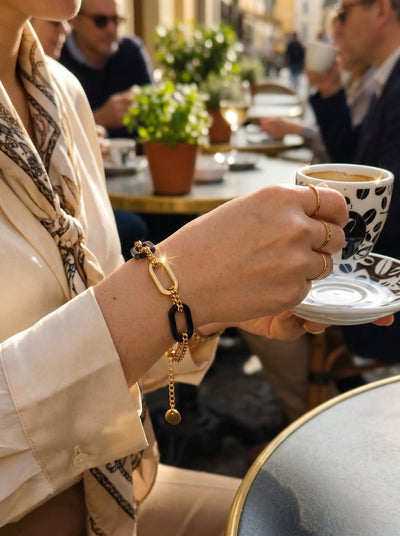
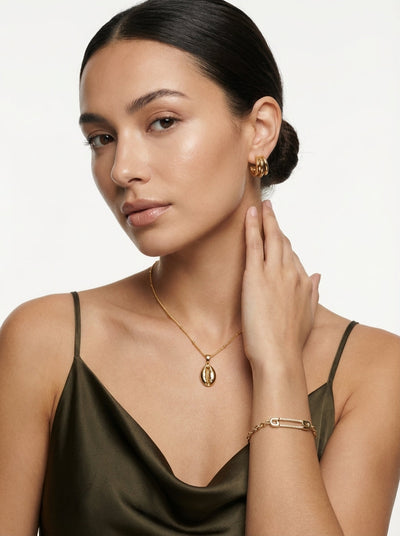
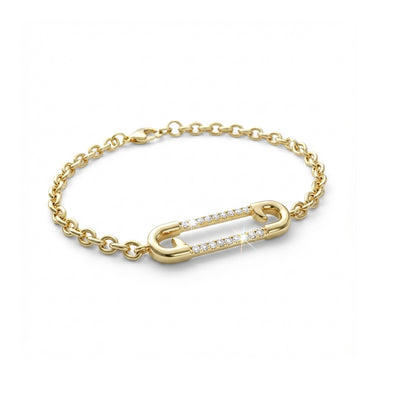
Try layering the Dalis Multi-Strand CZ Station Bracelet with a herringbone like the Hana Herringbone Flat Chain Bracelet — the flat, liquid texture of the herringbone contrasts beautifully with the CZ sparkle. Add the Luna Dainty Safety Pin Chain Bracelet as a third piece if you want a bit of playful edge.
Stack tips:
- Wear your tennis/CZ bracelet closest to your hand — it's the hero piece
- Layer chains and textured pieces above it, moving up the wrist
- Mix metals intentionally: gold CZ with a yellow gold chain reads "curated," not "confused"
- Keep the total stack to 3-4 pieces maximum for elegance; more than that and you're in festival territory
For a deep dive into arm candy architecture, read our full bracelet stacking guide — it covers every combination from minimalist to maximalist.

What to Wear It With: Outfit Pairings That Actually Work
Here's the thing about tennis bracelets — they're one of those rare pieces where the outfit does the talking and the bracelet does the finishing. Unlike statement earrings or a bold pendant necklace, a tennis bracelet whispers. And sometimes, that's exactly the right volume.
A tennis bracelet is the jewelry equivalent of a white button-down shirt: works with everything, elevates everything.
Some pairings worth noting:
- White tee + jeans: The contrast between ultra-casual clothing and sparkle on your wrist is genuinely chic. This is the "I woke up like this" of jewelry dressing.
- Blazer outfits: A tennis bracelet peeking out from a blazer sleeve is practically a style cliché at this point — but it's a cliché for a reason. It works every single time.
- Little black dress: If the LBD is your base, the tennis bracelet is the only accessory you actually need.
- Athleisure: A sleek tennis bracelet against a sport sleeve is having a huge moment in 2026 — sporty-luxe is a real aesthetic.
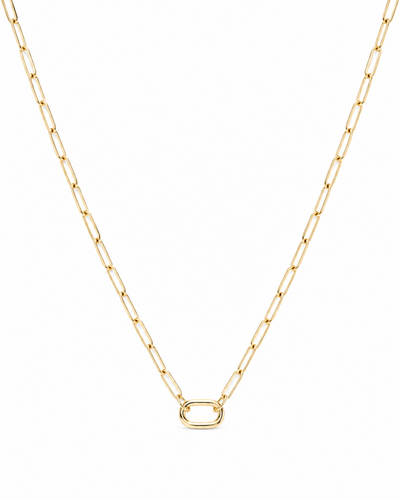
Pair it with the Mevi Dainty CZ Pendant Necklace for a coordinated CZ moment from neck to wrist — all sparkle, no overwhelm.

Tennis Bracelet Moments: From Casual Errands to Black Tie
One of the best things about a tennis bracelet is its range. It genuinely works across more occasions than almost any other bracelet style — which makes the cost-per-wear math extremely favorable.
A single tennis bracelet can carry you from the farmers market on Saturday to a wedding on Saturday evening without missing a beat.
Here's the occasion breakdown:
- Everyday errands and work: Single bracelet, no stack. Clean and intentional.
- Office: Stack it with one chain for a polished, put-together wrist that reads as jewelry-aware without being flashy.
- Date night: Full three-piece stack, possibly matched with a CZ pendant. The sparkle does the work.
- Weddings and formal events: Wear it solo against a formal dress. Nothing is more classic.
- Beach or vacation: Keep it on — that flash of sparkle against a tan wrist is genuinely beautiful. Just rinse after saltwater exposure.
For more occasion-based styling inspiration, check out our Chain Bracelet vs. Bangle guide to understand where different bracelet types shine.
How to Care for Your Tennis Bracelet So It Actually Lasts
Tennis bracelets have one structural vulnerability: the clasp. Because they're worn constantly and flex with every wrist movement, clasp integrity matters. Here's how to protect your investment:
Check your clasp monthly — a loose clasp is how tennis bracelets get lost, and Chris Evert already proved that's a real risk.
Practical care steps:
- Remove before lifting weights, manual labor, or any activity that involves gripping tightly
- Keep away from harsh chemicals: bleach, chlorine, acetone (nail polish remover)
- Clean gently with warm water and a soft toothbrush every few weeks to remove buildup around the stone settings
- Store flat or hanging — not in a pile with other jewelry that can scratch the stones or snag the chain
- If a prong catches on fabric, stop and carefully unhook rather than pulling — yanking is how stones come loose
According to the International Gem Society, CZ stones maintain their clarity and brilliance significantly longer when cleaned regularly and kept away from oils that can build up in the settings. (International Gem Society CZ Care Guide)

The Best Affordable Tennis Bracelets That Look Expensive in 2026
The fine jewelry version of a tennis bracelet can run from a few thousand to tens of thousands of dollars. The good news is that the look — that continuous sparkle, that elegant drape — translates incredibly well to CZ and PVD-finished styles at a fraction of the price.
In 2026, the smartest jewelry buys are the ones where no one can tell the difference from two feet away — and with CZ, that's genuinely achievable.
Our top picks from the HyraMode catalog for that tennis bracelet energy:
- Dalis Multi-Strand CZ Station Bracelet — The statement piece. Multiple strands of CZ stations give you maximum sparkle with a modern, editorial feel. Available in gold and silver. This is the one.
- Hana Herringbone Flat Chain Bracelet — Not a tennis bracelet, but the perfect stacking companion. That flat, liquid gold sits beautifully alongside any CZ piece.
- Gova Wide Herringbone Chain Bracelet — Wider, bolder, for when you want the stack to make a statement.
- Evia Dainty Chain Snake Reversible Charm Bracelet — For the stack's personality piece. The snake chain adds texture; the reversible charm adds a conversation starter.
All necklaces at HyraMode come on a 16" chain with a 2" extender. Bracelets are sized for standard women's wrists with adjustment options — check each product page for sizing details.

FAQ: Tennis Bracelet Answers You Actually Need
What is the difference between a tennis bracelet and a CZ bracelet?
A tennis bracelet is a style — a flexible line of identically-set stones running continuously around the wrist. CZ (cubic zirconia) refers to the stone type. A CZ tennis bracelet gives you the same elegant silhouette as a diamond version at a fraction of the cost, with no visible difference from everyday distances.
Can you wear a tennis bracelet in the shower?
Fine diamond tennis bracelets should be removed before showering. CZ and PVD-finished styles like HyraMode's are more water-resistant, but to maximize longevity, remove any jewelry before prolonged water exposure, harsh soaps, or chlorine.
What wrist do you wear a tennis bracelet on?
There's no rule. Most people wear bracelets on their non-dominant wrist for comfort — left wrist if you're right-handed — but wear it wherever it feels right and looks best with your stack.
How tight should a tennis bracelet fit?
A tennis bracelet should have about one finger's worth of slack — loose enough to slide slightly when you move your wrist, but not so loose it spins freely or slides over your hand. Too tight restricts movement and puts stress on the clasp.
Are tennis bracelets still in style in 2026?
Absolutely. Tennis bracelets are one of those rare jewelry styles that never actually leave — they just cycle in and out of the spotlight. In 2026, they're showing up in minimalist single-bracelet looks, layered arm candy stacks, and even as bridal jewelry alternatives.