










The Psychology of Why Women Never Take Off Certain Jewelry
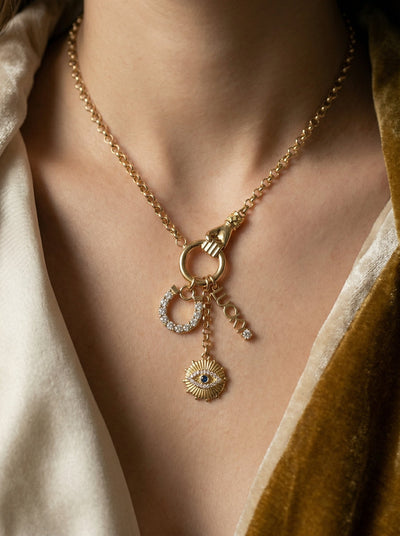
HyraModeYou know that necklace you sleep in, shower in, and would genuinely panic if you lost? The one that's been on your body so long it has a tan line? Yeah. Let's talk about that.
Every woman has at least one piece of jewelry she never takes off. Not because she's lazy. Not because she forgot. Because removing it would feel like removing a part of herself.
This phenomenon is more than habit — it's psychology. Researchers have studied why humans form attachments to objects, and jewelry triggers almost every mechanism in the book: identity, ritual, emotional memory, sensory comfort, and social signaling. Understanding why we cling to certain pieces might help you choose your next one more intentionally — or finally understand why that $15 necklace matters more to you than the $200 bracelet you never wear.

The Science of Object Attachment
Psychologists call it "extended self" theory — first proposed by Russell Belk in 1988. The idea is that our possessions aren't just things we own — they become part of who we are. We literally incorporate objects into our sense of self.
Jewelry is uniquely powerful here because:
- It touches your body. Unlike a handbag or shoes, jewelry makes constant skin contact. That tactile connection activates the same neural pathways as human touch. According to research in Psychological Science, objects that touch our skin are processed differently by the brain — we perceive them as more "ours."
- It's always visible. You see it in every mirror, every photo, every glance at your hands. It becomes part of your visual identity.
- It has emotional provenance. Who gave it to you? When did you buy it? What were you going through? Jewelry absorbs these stories and carries them forward.
This is why losing a piece of everyday jewelry feels disproportionately devastating. You're not mourning the object — you're mourning the part of your identity that was wrapped up in it.
The 21-Day Rule: When Jewelry Becomes Part of You
Behavioral psychologists have long cited the "21 days to form a habit" framework (though more recent research suggests 66 days for complex habits). For jewelry, the attachment window is surprisingly short — often under two weeks.
Here's what happens:
- Days 1-3: You're aware of the piece. You adjust it, check it, touch it consciously.
- Days 4-7: It starts feeling normal. You stop adjusting. Your body adapts to the weight.
- Days 8-14: You stop noticing it's there — until someone else notices. "Cute necklace!" Oh right, I'm wearing that.
- Days 15-21: You feel naked without it. The one morning you forget it, something feels wrong all day. The piece has crossed from accessory to identity.
This is why the best everyday jewelry needs to be comfortable enough to survive those first 14 days without being removed. If a piece pinches, catches, or irritates during the habituation period, it'll never make it to "forever piece" status.
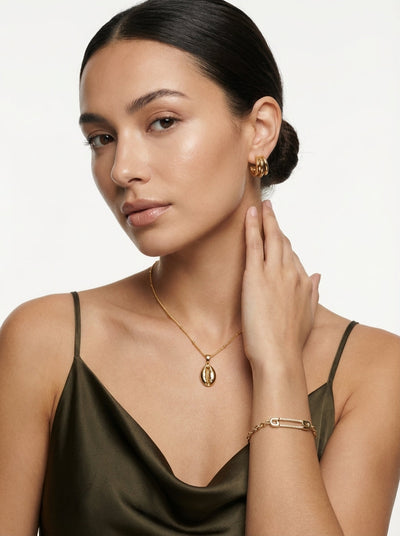
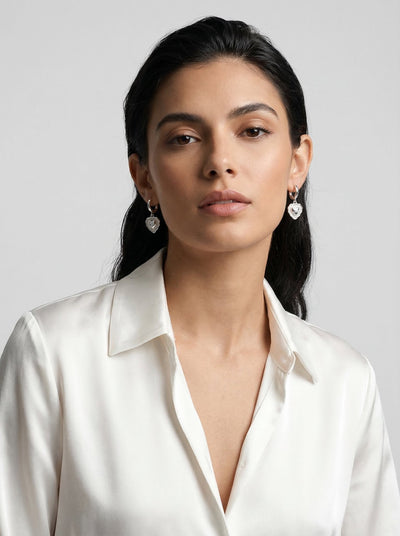
The Pilo Huggie Earrings are our most-cited "never take off" earring — because the huggie design sits flush against the ear with zero catch points. Women report reaching the "forgot I'm wearing them" stage within 3-4 days.

Why Some Pieces Make the Cut (and Others Don't)
You've bought dozens of pieces in your life. Only a few became "forever jewelry." What's different about those pieces?
The research points to five factors:
1. Physical Comfort
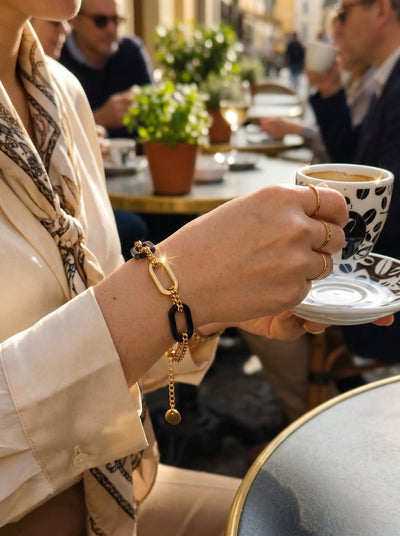
If it's uncomfortable for even five minutes, it'll never be a forever piece. Weight, clasp design, metal reactivity, and catch points all determine comfort. Flat chains like the Hana Herringbone Bracelet become forever bracelets specifically because herringbone lies smooth against skin — no edges, no pinching, no catching on fabric.
2. Emotional Timestamp
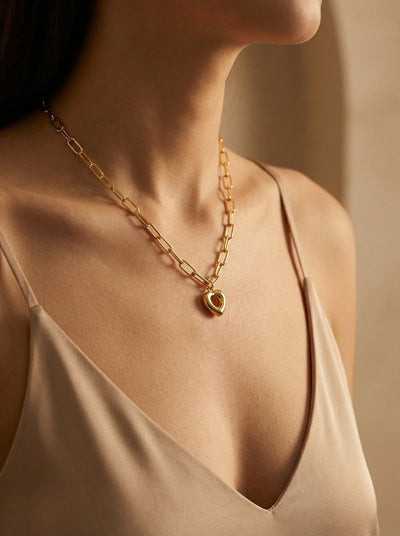
Pieces associated with significant moments have dramatically higher retention. A necklace bought on vacation, a bracelet given at graduation, earrings from a partner — these carry emotional weight that transcends the object itself. The Kaia Heart Key Pendant becomes a forever piece more often when given as a meaningful gift than when self-purchased — because the story amplifies the attachment.
3. Versatility
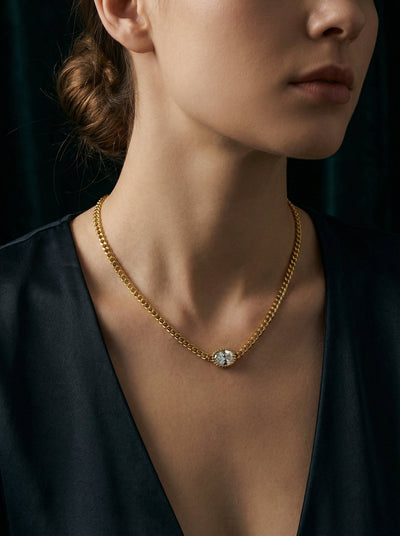
If you have to think about whether a piece "works" with an outfit, it won't survive daily wear. The pieces that never come off are the ones that work with literally everything — gym clothes, work blazers, cocktail dresses, pajamas. The Mevi CZ Pendant is the textbook example: a tiny sparkle that disappears into any context.
4. Sensory Reward
Many women unconsciously fidget with their jewelry — touching a pendant, spinning a ring, running a chain through their fingers. This is a self-soothing behavior that neuroscience links to anxiety reduction. Pieces with tactile interest (textured surfaces, smooth chains, flippable charms) become sensory anchors. The Evia Reversible Snake Bracelet with its flippable charm is designed for exactly this kind of fidget comfort.
5. Material Resilience
A forever piece must survive forever-piece treatment: showers, sleep, sunscreen, sweat. If it tarnishes or fades after a month of constant wear, the attachment breaks. This is the functional reason PVD gold on stainless steel matters — it's the only affordable material that can actually handle being worn 24/7 without degrading.


The Ritual Effect: Why the Morning Put-On Matters
For pieces you DO remove at night, the morning ritual of putting them back on is psychologically significant. Psychologists call this "self-completion theory" — the idea that we use symbolic actions to affirm our identity.
Putting on your jewelry every morning is a micro-ritual that says: "I'm me today. I'm ready."
Some women have described the feeling as:
- "Like putting on armor" (confidence)
- "Like turning on a switch" (transitioning from private to public self)
- "Like seeing an old friend" (comfort and continuity)
Women who wear the same pieces daily report higher scores on self-consistency measures — meaning they feel more "like themselves" throughout the day. That's not a small thing. In a world that constantly asks you to be different things to different people, your jewelry is the constant.
What Your Never-Take-Off Piece Says About You
| Your Forever Piece | What Psychology Says |
|---|---|
| Simple studs/huggies | You value consistency and reliability. You'd rather be quietly excellent than loudly impressive. |
| A pendant necklace | You're emotionally grounded. The pendant near your heart isn't accidental — you lead with feeling. |
| A bracelet you never remove | You're tactile and present. You use physical sensation to stay grounded in the moment. |
| Layered pieces | You're multifaceted and comfortable with complexity. One layer = one dimension of your personality. |
| A gift from someone | Your relationships are your anchor. The person matters more than the piece. |
| Something you bought yourself | You're self-sufficient and intentional. Your identity is self-authored, not given. |

How to Choose Your Forever Piece (If You Don't Have One Yet)
Not everyone has found their never-take-off piece yet. If that's you, here's how to find it:
- Start with what you touch. When you're anxious or thinking, where do your hands go? Your ears? Your neck? Your wrist? Put your forever piece where your hands naturally rest.
- Choose comfort over beauty. The most gorgeous earring in the world is useless if it hurts after an hour. Try before committing to 24/7 wear.
- Go smaller than you think. Forever pieces tend to be subtler than "going out" pieces. You want something that enhances without competing for attention, because it needs to work in literally every context.
- Give it the 14-day test. Wear it every day for two weeks without removing it. If on day 15 it feels like part of you, you've found it. If it still feels like an accessory, keep looking.
- Don't overthink the meaning. Some forever pieces have deep stories. Some are just a necklace you bought on a random Tuesday that happened to fit perfectly. The meaning develops through wearing — you don't need it upfront.
Our most-chosen forever pieces:
- Earrings: Pilo Huggies — smallest, most comfortable, most "forgettable" (in the best way)
- Necklace: Mevi CZ Pendant — one tiny sparkle that works with everything, forever
- Bracelet: Hana Herringbone — flat, silent, feels like a second skin
Start building your everyday rotation with our collection-building guide.


The Loss Effect: Why Losing Everyday Jewelry Hurts So Much
Behavioral economists call it "loss aversion" — the pain of losing something is psychologically about twice as powerful as the pleasure of gaining it. For everyday jewelry, the effect is amplified because:
- The piece has been incorporated into your identity (extended self)
- It carries accumulated emotional associations (every day you wore it)
- The habituation means its absence is felt physically — like a phantom limb
This is actually a strong argument for affordable forever jewelry. When your everyday necklace costs $12 instead of $1,200, losing it still hurts emotionally — but it doesn't hurt financially. You can replace the object immediately and begin rebuilding the attachment. The irreplaceable part was never the metal and stone — it was the wearing.
Read about why everyday jewelry can look and feel expensive.
According to Vogue, the most stylish women treat jewelry as an extension of their personality rather than a mere accessory.
Harper's Bazaar consistently highlights that quality jewelry styling is about intention and curation, not quantity.
As Who What Wear notes, the modern jewelry philosophy is about building a collection of versatile pieces that reflect your authentic style.
Frequently Asked Questions
Why do I feel weird without my everyday jewelry?
Your brain has incorporated the jewelry into your sense of self. After about 2 weeks of daily wear, the piece becomes part of your body image. Removing it triggers a subtle identity disruption — your brain notices something is "missing" even though you're physically fine. This is normal and documented in psychology research.
How long does it take for jewelry to feel like part of you?
Typically 10-21 days of continuous wear. The first week involves conscious awareness, the second week becomes habitual, and by the third week, the piece feels integrated into your identity. Comfortable, low-profile pieces reach this stage faster.
Is it OK to sleep and shower in jewelry?
With the right material, yes. PVD gold plating on stainless steel is specifically designed for 24/7 wear — it resists water, soap, sweat, and sleep. Regular gold plating or sterling silver should be removed for showers and sleep to extend their life.
What makes a piece of jewelry become a "forever piece"?
Five factors: physical comfort, emotional significance, versatility, tactile satisfaction, and material durability. A piece needs all five to survive as a 24/7 companion. Miss one — especially comfort or durability — and the attachment breaks.
Why does lower-quality jewelry never become a forever piece?
Because it fails the durability test. When a piece tarnishes, turns skin green, or breaks after a month, the physical deterioration breaks the psychological attachment. Your brain can't incorporate something unreliable into your identity. This is why material quality matters for everyday pieces more than for occasion pieces.