











How to Buy Jewelry Online Without Getting Scammed (2026 Guide)
HyraMode"It looked so good on the website. Then it arrived and it looked like it came from a vending machine."
We've all seen the ads. Beautiful gold jewelry. Gorgeous model. Incredible price. You click, you buy, and three weeks later a tiny plastic bag arrives from a warehouse in Shenzhen with something that looks nothing like the photo. The earrings are the wrong color. The chain is already tangled. And it smells like metal.
Online jewelry shopping is a minefield — but it doesn't have to be. If you know what to look for (and what to run from), you can find genuinely beautiful, durable jewelry online at prices that would shock your friends. The trick is knowing the difference between a deal and a scam.
Here are the 10 red flags, 7 green flags, and everything you need to buy jewelry online with confidence.

10 Red Flags That Scream "Don't Buy This"
1. The Price Is Suspiciously Low
A "14K gold necklace" for $3.99? That's not gold. That's spray paint on mystery metal. Real gold plating — even on a base metal — has a cost floor. If a piece is made for everyday styling and claims to be gold-plated, the plating is so thin it'll rub off before your order confirmation email arrives.
2. No Material Information
If a listing doesn't tell you exactly what the jewelry is made of, that's a deliberate omission. Trustworthy sellers specify: base metal (stainless steel, brass, copper), plating type (PVD, electroplated, dipped), and plating thickness. Vague terms like "gold color" or "gold tone" without further detail = proceed with extreme caution.
3. Stock Photos That Look Too Perfect
If every photo looks like it was shot for Vogue but the brand has 12 followers on Instagram, those aren't their photos. Dropshippers and scam sites steal images from legitimate brands constantly. Reverse image search (Google Lens) any photo that looks too polished for the finish and feel.
4. No Return Policy (or a Buried One)
Legitimate jewelry brands have clear, easy-to-find return policies. If you can't find one within 30 seconds, the brand doesn't want you to return anything — because they know you'll want to.
5. Reviews That All Sound the Same
"Great product! Fast shipping! Love it!" repeated 47 times with slightly different names? Those are bought reviews. Real reviews mention specifics: "The clasp is a little tricky but the chain is beautiful" or "Smaller than I expected but the color is perfect." Imperfect details = real humans.

6. "Limited Time" Pressure That Never Ends
"Only 3 left! Sale ends in 2 hours!" — and it's been saying that for six weeks. Scarcity manipulation is the oldest trick in dropshipping. Legitimate brands run real sales with real end dates. If the countdown timer resets when you refresh, it's fake.
7. No Physical Address or Contact Info
Scroll to the bottom of the website. Is there a real address? A real email? A phone number? If the only "contact" option is a form that emails into the void, that's a red flag. Real businesses have real locations and real humans you can reach.
8. "Free" Jewelry (Just Pay Shipping)
This is the classic bait: "FREE necklace, just cover $7.99 shipping!" The necklace costs the seller $0.30. The $7.99 is pure profit. And now they have your credit card for future charges. Don't fall for it.
9. Wildly Inconsistent Photos
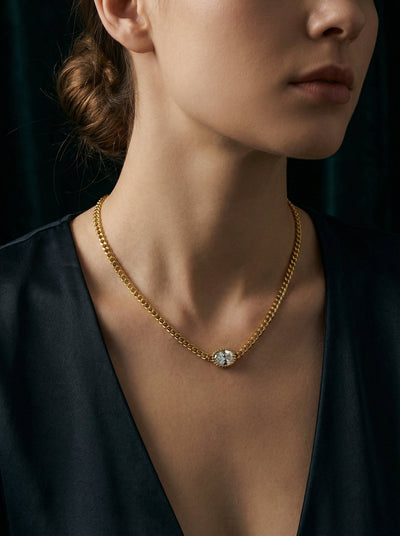
The model photo shows a thick, luxurious gold chain. The product photo shows a thin, yellowish wire. When the model shots and product shots don't match, the product shot is the truth. Always look for the least flattering photo — that's what's arriving at your door.
10. No Social Media Presence
A legitimate jewelry brand in 2026 has an Instagram, at minimum. If the brand has no social media, no customer photos, and no community, they're probably not planning to be around long enough to build one.
7 Green Flags of a Trustworthy Online Jewelry Store
Now the good news — here's what to look for when a brand is actually legit:
- Detailed material descriptions. "Stainless steel base with 18K gold PVD plating" is specific. "Gold-colored" is not.
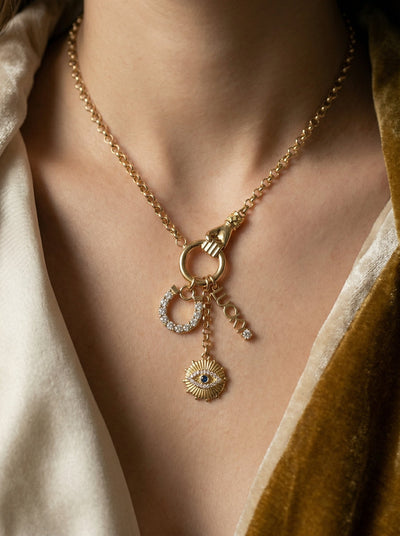
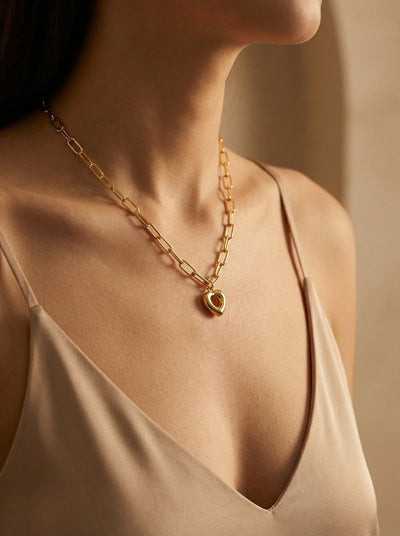
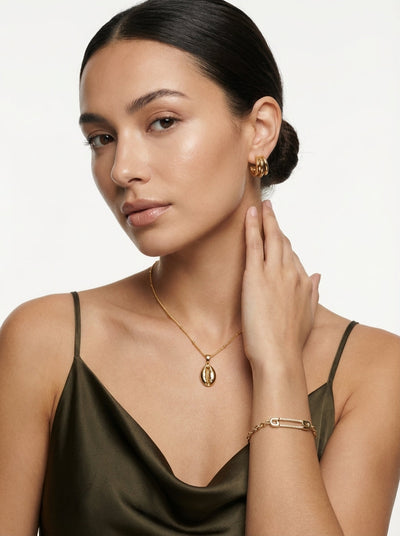
- Multiple photo angles. Front, side, on a model, on a plain background, close-up of the clasp. If they're showing you everything, they're proud of everything.
- Real customer reviews with photos. User-uploaded photos of the actual product on real people are the single most reliable quality signal.
- Clear return and exchange policy. 30-day returns, no-questions-asked. If they believe in their product, they'll let you send it back.
- Transparent about what they're NOT. Honest brands say "this is gold-plated, not solid gold" upfront. Scam brands let you assume.
- Responsive customer service. Send a message before buying. If they respond within 24 hours with a real answer, they're real.
- Consistent social media with real engagement. Not just posts — comments, replies, customer reposts. A living community.

The Gold Plating Hierarchy (What You're Actually Buying)
Not all "gold jewelry" is the same. Here's the honest breakdown, from worst to best:
| Type | What It Is | Durability | Typical Price |
|---|---|---|---|
| Gold-colored / Gold-tone | Paint or lacquer on base metal | Days to weeks | $1–5 |
| Gold flash / Gold wash | Ultra-thin electroplate (<0.175 microns) | Weeks to months | $3–10 |
| Gold plated | Electroplate (0.5+ microns) on brass/copper | 6–12 months with care | $8–25 |
| Gold vermeil | 2.5+ microns gold on sterling silver | 1–3 years with care | $25–80 |
| PVD gold plating | Vacuum-bonded gold on stainless steel | 2–5+ years | $10–35 |
| Gold filled | Mechanically bonded gold layer (5% weight) | 10–30 years | $30–100 |
| Solid gold (10K–18K) | Actual gold alloy throughout | Lifetime | $100–1,000+ |
The sweet spot for most women: PVD gold plating on stainless steel. It lasts years, handles water and sweat, and costs a fraction of solid gold. This is what HyraMode uses — because it's genuinely the best value-to-durability ratio in the market.
For the full science, read our guide to why some jewelry lasts forever.
How to Read a Jewelry Listing Like a Detective
Before clicking "add to cart," check these five things:
- Base metal: Stainless steel > brass > copper > "alloy" (unknown). Stainless steel won't tarnish or react with skin.
- Plating method: PVD > electroplate > dipped. PVD is bonded at molecular level. Dipping is the weakest.
- Measurements: Check chain length, pendant size, earring diameter in actual numbers (mm/inches). "One size" with no measurements = they don't want you to know.
- Clasp type: Lobster clasp > spring ring > no mention. The clasp is where lower-quality jewelry reveals itself.
- Weight: If listed, it tells you density. Heavier = more substantial construction. Ultra-lightweight "gold" = hollow or thin metal.

The Smartest Way to Shop for Jewelry Online
Here's the shopping strategy that saves you money AND disappointment:
- Start with one piece. Don't buy a haul from a brand you've never tried. Order one necklace or one pair of earrings. Test the quality, the packaging, the customer experience.
- Check the return window before buying. Know exactly how many days you have and what condition the item needs to be in.
- Pay with a credit card or PayPal. Both offer buyer protection. Debit cards and crypto don't. If the site only accepts wire transfer or crypto, run.
- Screenshot the listing. If the product arrives looking nothing like the photo, that screenshot is your evidence for a chargeback.
- Build a collection from brands you've vetted. Once you find a brand whose quality you trust, stick with them. Building your jewelry collection from one reliable source means everything matches and everything lasts.
What HyraMode Does Differently (Honest Transparency)
We're not going to pretend we're unbiased here — but we will be honest about what we do and why:
- Every product page lists the exact base metal and plating method. Stainless steel + 18K gold PVD. No mystery metals.
- Our photos are our actual products. Model shots, product shots, detail shots — all shot in-house with real pieces.
- Current prices and available styles are shown on each product page.
- Free U.S. standard shipping, with no minimum purchase. Clear, simple, no games.
We'd rather you know exactly what you're getting and love it than trick you into a purchase you'll regret. That's not just ethics — it's good business. A customer who trusts you comes back. A customer who feels scammed never does.

How to Spot Fake Customer Reviews
Reviews are your best friend when shopping online — if they're real. Here's how to tell:
- Check the dates. 50 five-star reviews all posted on the same day? Bought in bulk.
- Look for photos. Real customers take real (imperfect) photos. If all review photos look professional, they're not from customers.
- Read the 3-star reviews. These are the most honest. Customers who give 3 stars are rarely bots — they're people who liked some things and didn't like others. That nuance is where truth lives.
- Check multiple platforms. Is the brand reviewed on Google, Trustpilot, AND their own site? Consistent ratings across platforms = reliable. Amazing reviews only on their own site = suspicious.

Your Pre-Purchase Checklist
| Check | What to Look For | Pass/Fail |
|---|---|---|
| Material listed? | Base metal + plating type specified | No info = ❌ |
| Real photos? | Multiple angles, model + product shots | Stock only = ❌ |
| Return policy? | Clear, easy to find, 30+ days | Hidden/none = ❌ |
| Real reviews? | Specific details, customer photos, varied ratings | All 5-star generic = ❌ |
| Contact info? | Email, address, responsive support | Form only = ⚠️ |
| Social proof? | Active social media with real engagement | No presence = ❌ |
| Payment security? | Credit card, PayPal, secure checkout | Wire/crypto only = ❌ |
If a store fails 3 or more of these checks, don't buy. Your money deserves better.

According to Vogue, the most stylish women treat jewelry as an extension of their personality rather than a mere accessory.
Harper's Bazaar consistently highlights that quality jewelry styling is about intention and curation, not quantity.
As Who What Wear notes, the modern jewelry philosophy is about building a collection of versatile pieces that reflect your authentic style.
Frequently Asked Questions
How do you know if online jewelry is real gold?
Check the listing for specific material descriptions. Real gold will be described as "10K," "14K," or "18K solid gold" with a corresponding price ($100+). "Gold-plated" means a thin layer of gold over another metal. "Gold-tone" or "gold-colored" means no actual gold. Always look for the base metal and plating method.
Is it safe to buy jewelry from Instagram ads?
It can be — but verify first. Check the brand's website for material info, return policy, and real customer reviews. Many legitimate brands advertise on Instagram, but so do scammers. Never buy solely based on an ad without visiting the actual store.
What is PVD gold plating and why does it matter?
PVD (Physical Vapor Deposition) bonds gold to stainless steel at a molecular level in a vacuum chamber. Unlike regular electroplating, PVD creates a much harder, more durable coating that resists scratching, tarnishing, sweat, and water. It's the most durable gold plating method available in everyday jewelry.
How much should decent gold-plated jewelry cost?
$10–$35 for quality PVD gold-plated pieces. made for everyday styling usually means ultra-thin plating that won't last. Over $50 for gold-plated (not solid gold) means you're paying for brand markup. The $10–$35 range is where quality and value intersect.
What should I do if I receive fake or misleading jewelry?
Document everything (photos, screenshots of the listing), contact the seller for a refund, and if they refuse, file a dispute with your credit card company or PayPal. Both offer buyer protection for items that don't match their description. Leave an honest review to warn other shoppers.