











How to Layer Necklaces Without Tangling: A Complete Styling Guide (2026)
HyraModeOpen Instagram, search #necklacestacking, and you'll see over 2 million posts. Everyone from Hailey Bieber to your coworker Emily is layering necklaces right now. But scroll those same posts and you'll notice something: the ones that look effortless follow a pattern, and the ones that look like a tangled mess broke the same few rules.
Layering necklaces well isn't about piling on more chains. It's about understanding three things: length contrast, texture mix, and focal point hierarchy. Get those three right and any combination you put together will look intentional. Get them wrong and you'll spend half your day untangling chains in the office bathroom.
This guide gives you the exact framework — plus five specific layering combos you can build from the HyraMode collection right now.

The 3 Rules That Make Every Necklace Layer Work
Rule 1: Vary Length by at Least 2 Inches
This is the rule that separates "layered" from "cluttered." Each necklace in your stack needs to sit at a visibly different height on your chest. The minimum gap that reads as intentional is about 2 inches (5 cm) between each piece.
Celebrity stylist Jen Atkin told InStyle that the 2-3 inch gap is "non-negotiable" for a clean layered look. Anything closer and the chains visually merge into one confusing line.
The three standard positions:
- Choker length (14-16"): Sits at or just below the collarbone. This is your top layer.
- Princess length (18-20"): Falls on the upper chest. This is your middle layer — usually where your pendant lives.
- Matinee length (22-24"): Hits the mid-chest. This is your anchor layer — the longest chain that grounds the whole stack.
Rule 2: Mix at Least Two Chain Textures
Three identical cable chains at different lengths? Technically layered. Visually boring. The layers that look "editorial" combine different chain types — a flat herringbone next to a delicate cable chain next to a beaded station chain.
According to a Who What Wear styling guide, texture contrast is what creates the "I didn't try too hard" look that's actually the hardest to achieve. Smooth chains play off textured ones. Chunky plays off dainty. Solid plays off stations.
Rule 3: One Piece Gets to Be the Star
Every good layered stack has a focal point — one necklace that's louder, bigger, or more detailed than the others. The supporting layers frame it. If every piece is competing for attention, nothing stands out and the whole stack falls flat.
Think of it like a band: one lead singer, backup harmonies. Not five people all singing lead at the same time.
5 Layering Combos You Can Build Right Now
Combo 1: The Minimalist Three-Layer
For the woman who wants to look polished without looking "decorated."
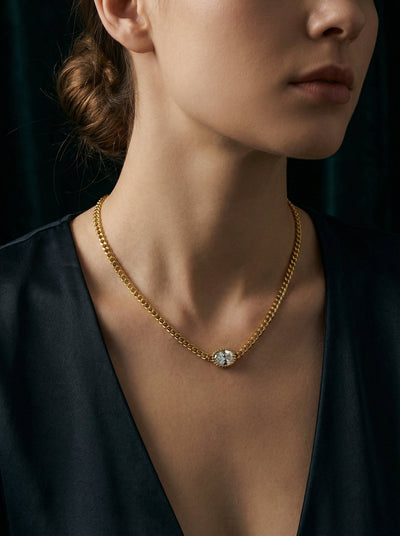
- Top (16"): Vela Oval CZ Pendant Necklace — the subtle sparkle sits right at the collarbone
- Middle: Stelle Multi-Star Station Necklace (16" + 2" extender, wear extended) — delicate star details create visual rhythm
- Longest pendant drop: Sola Sunburst Pendant Necklace — the sunburst medallion anchors the stack
Total: $29.70 for a three-piece layered look. A similar setup from Gorjana runs $180+.

Combo 2: The Romantic Date Night
Hearts and keys and a V-neck top. That's it. That's the whole strategy.
- Top (16"): Mevi Dainty CZ Pendant Necklace — tiny sparkle at the throat
- Longer pendant drop: Kaia Heart Key Pendant Necklace — the key and heart drop lower for a romantic focal point
Total: $25.80. Two layers sometimes hit harder than three. This combo works because the lengths have enough contrast (4 inches) and the pendants tell a visual story together.
Combo 3: The Bold Bohemian
For weekends, festivals, and any day when you want your necklaces to be the outfit.
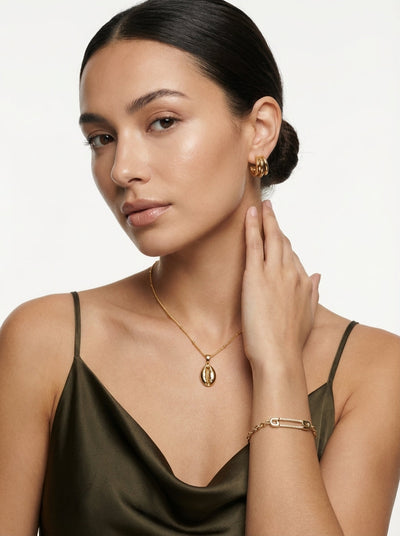
- Top (16"): Cora Cowrie Shell Pendant Necklace — natural texture, earthy vibes
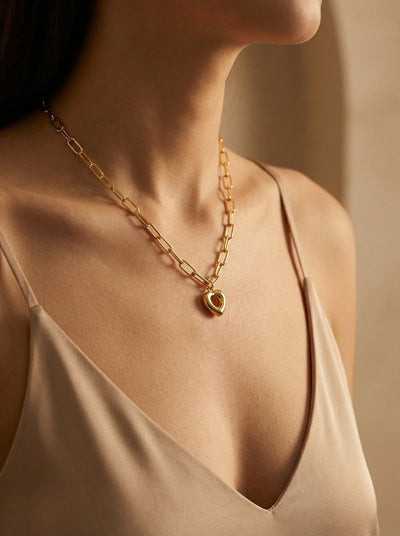
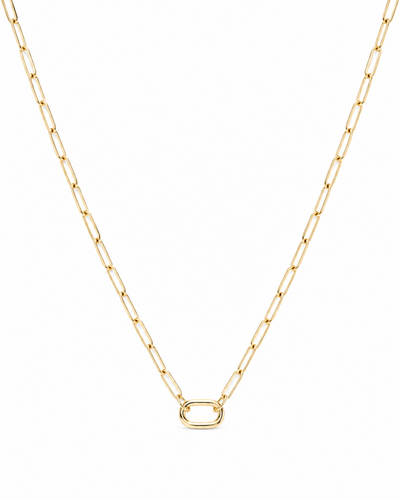
- Middle: Remy Paperclip Chain Heart Necklace — chunky paperclip chain adds visual weight
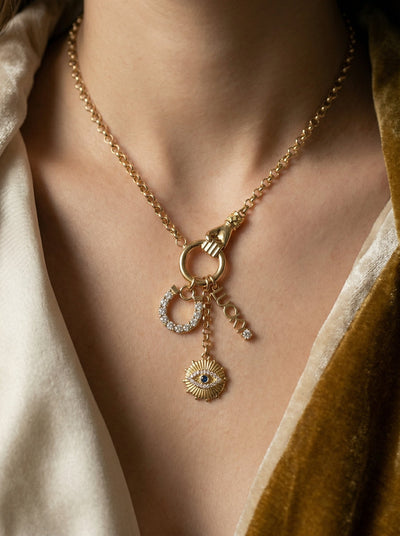
- Longest drop: Lena Talisman Necklace — the Victorian hand talisman is a conversation starter
Total: $33.70. Three completely different textures (shell, paperclip, and coin) at three different lengths. This one gets comments.

Combo 4: The Office-Safe Stack
Polished enough for a Zoom meeting with your VP. Interesting enough that you don't feel like you're wearing "work jewelry."
- Top (16"): Vela Oval CZ Pendant — CZ reads like a small diamond from across a conference table
- Longer pendant drop: Cruz Ornate Cross Pendant Necklace — adds visual weight without being flashy
Total: $23.80. Two layers, clean lines, zero risk of looking overdone in a professional setting.
Combo 5: The Full Stack (3+ Layers)
Go big or go home. This is your "getting photographed tonight" stack.
- Layer 1 (14"): Mevi CZ Pendant — tight to the throat
- Layer 2 (16"): Stelle Star Station — adds texture between the others
- Layer 3: Remy Paperclip Heart — chunky enough to hold its own
- Layer 4 (use extender): Kaia Heart Key Pendant — the anchor that everything else points to
Total: $49.60 for a four-layer stack. The same depth from fine jewelry would run well over $1,000.

How to Prevent Tangling (The Real Problem Nobody Talks About)
Layered necklaces look incredible — until they twist into a knotted rope five minutes after you put them on. Here's how to prevent it:
- Use a necklace detangler clasp. These small connectors clip all your chains together at the back of your neck, keeping them separated. You can find them on Amazon for made for everyday styling.
- Choose different chain weights. A heavy chain and a light chain naturally separate. Two chains of identical weight are magnetically attracted to each other (or at least it feels that way).
- Clasp positioning matters. Rotate each necklace so the clasp sits at the back center of your neck. Off-center clasps pull chains sideways and cause tangling.
- Put them on one at a time, shortest first. Starting with the shortest and adding longer layers on top keeps everything in order from the start.
Gold vs. Silver Layering: Does It Matter?
Short answer: it used to. Long answer: the rules have relaxed considerably.
Traditional styling advice said never mix metals. But in 2026, Vogue declared mixed-metal jewelry one of the year's defining accessory trends. The runway showed gold and silver layered freely, often in the same stack.
That said, if you're building your first layered look, we still recommend starting with one metal. It's simpler to get right. Once you've got the length-texture-focal point framework down, start introducing a silver chain into a gold stack (or vice versa). The easiest mix: two gold chains plus one silver accent piece as the middle layer.
Every necklace in the HyraMode collection comes in both gold and silver finishes, so you can experiment with mixed-metal layering without buying from different brands.
What Necklines Work Best with Layered Necklaces?
Not every top is created equal for necklace stacking:
- V-neck: The gold standard for layering. The V shape creates a natural frame that shows off each layer. Go for 2-4 layers.
- Crew neck: Works with shorter layers (choker + princess length). Skip the longer chains — they'll hide behind the neckline.
- Off-shoulder/strapless: Perfect for dramatic, longer layers. Let the necklaces be the focal point since there's no collar to compete with.
- Turtleneck: One long pendant or chain over the fabric. Don't try to layer multiple pieces over a turtleneck — it looks cluttered.

→ Browse all HyraMode necklaces and build your perfect stack

Common Layering Mistakes (and How to Fix Them)
Even experienced jewelry wearers fall into these traps:
- Same chain type at every layer. Three identical cable chains just look like you accidentally put on three necklaces. Mix textures — herringbone, paperclip, cable, station — so each layer is visually distinct.
- Too many pendants. One pendant is a focal point. Two can work if they're at very different lengths. Three or more pendants creates visual chaos. Let one piece be the star and keep the rest clean.
- Ignoring your neckline. A high crew neck with four long layers means nobody sees your middle chains. Match your layer count and lengths to what your outfit actually shows.
- Buying layers separately without testing together. A necklace that looks great solo might clash with your existing pieces in weight, texture, or tone. If possible, lay out your entire planned stack before committing to new additions.
Frequently Asked Questions
How many necklaces should you layer?
Two to three layers is the sweet spot for everyday wear. You can go up to four or five for special occasions, but each added layer increases the risk of tangling and visual clutter. Start with two and add from there.
Can you layer necklaces of different metals?
Mixed metals (gold and silver together) are trending in 2026, but it's a more advanced styling move. If you're new to layering, start with one metal tone. Once you're comfortable, try mixing by keeping 70% one metal and 30% the other for a balanced look.
What is the best necklace length for layering?
All HyraMode necklaces come in 16" + 2" extender, giving you a 16-18" range. For layering, vary the visual length by combining chokers with pendant necklaces — the pendant drop creates the layered effect even at the same chain length. The key is maintaining visual contrast betweenhes of separation between each layer so they read as distinct pieces rather than one tangled mass.
How do you layer necklaces without them tangling?
Use a necklace detangler clasp, choose chains of different weights, and always put them on shortest-first. Store them hanging separately rather than coiled together in a jewelry box.
Should layered necklaces match your earrings?
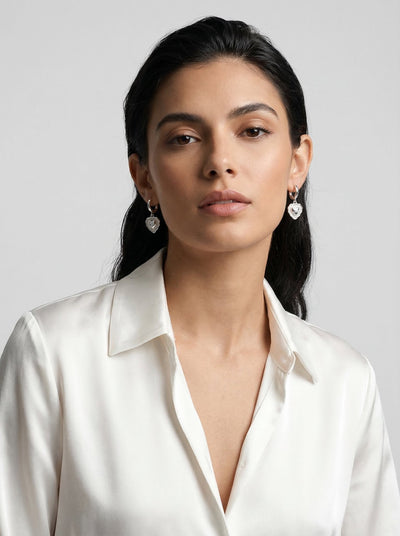
They should coordinate (same metal tone) but not match exactly. Wearing the identical design on your ears and neck looks costume-y. Choose earrings that complement — not copy — your necklace stack. Small huggies or studs work perfectly with busy necklace layers.