










How to Layer Gold Jewelry Like a Stylist — The Only Guide You'll Ever Need
HyraModeYou've seen it everywhere — on Pinterest boards, on your favorite influencer's Instagram, on that impossibly chic woman at the coffee shop. Layered gold jewelry is the look that separates "she woke up like that" from "she definitely tried too hard."
The good news? It's not as complicated as it looks. The bad news? Most guides overcomplicate it with rules that don't actually matter. This one won't. Here's everything you need to know about layering gold jewelry — no styling degree required.

The Golden Rule of Jewelry Layering: Odd Numbers Win
Three necklaces look better than two. Five bracelets look better than four. Our brains are wired to find odd-numbered groupings more visually interesting — it's a principle designers call the "rule of odds," and it applies to everything from flower arrangements to jewelry stacks.
Start with three pieces. If it feels like too much, remove one. If it feels like not enough, add one more. You'll almost always land on an odd number that feels right.
Necklace Layering: The Cascading Length Trick
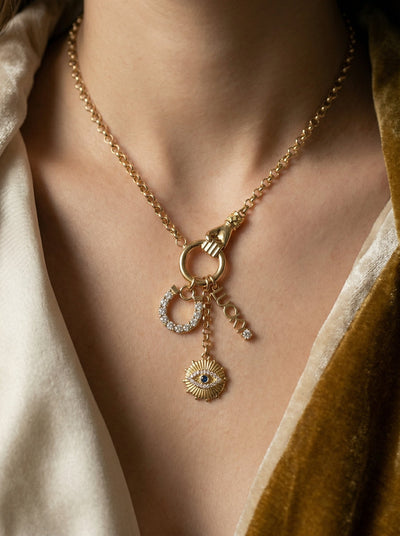
This is where most people get stuck. The secret is embarrassingly simple: different lengths, same metal, different textures.
Here's a formula that works every single time:
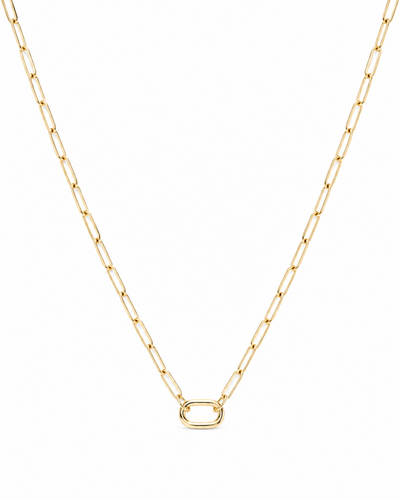
- Layer 1 (14-16"): A choker or short chain — this is your anchor. The Stelle Star Station Necklace is perfect here because the star details add visual interest without competing with longer pieces.
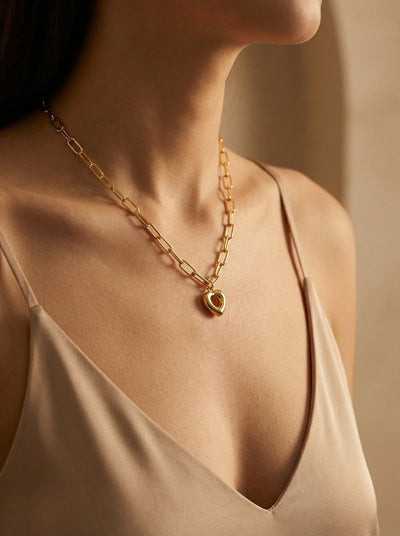
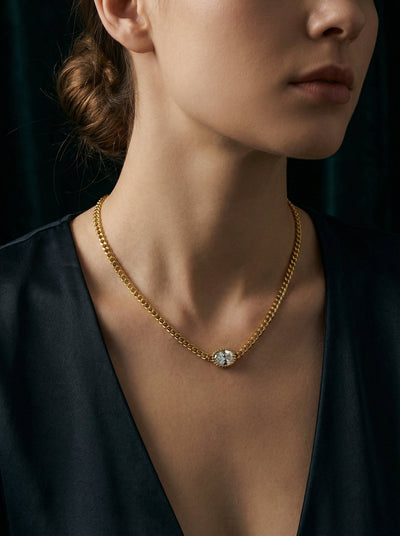
- Layer 2 (18-20"): A pendant or charm necklace — this is your statement. Try the Mevi CZ Pendant for a subtle sparkle that catches light at the perfect angle.
- Layer 3 (22-24"): A longer chain — this adds depth and movement. Look for something with a different chain style (think box chain vs. cable chain) to create visual contrast.
According to Who What Wear, the cascading length technique is the single most impactful styling trick for necklace layering.

The Texture Mix: Why Identical Chains Look Boring
Three gold chains of the same style at different lengths? That's not layering — that's just wearing three necklaces. The magic happens when you mix textures:
- A delicate cable chain + a flat box chain + a beaded chain
- A smooth pendant + a textured station necklace + a chunky link chain
- Something with stones + something with charms + something plain
The contrast between textures is what makes each piece pop. Without it, everything blends into one gold blur.

Bracelet Stacking: The Wrist Game Nobody Talks About
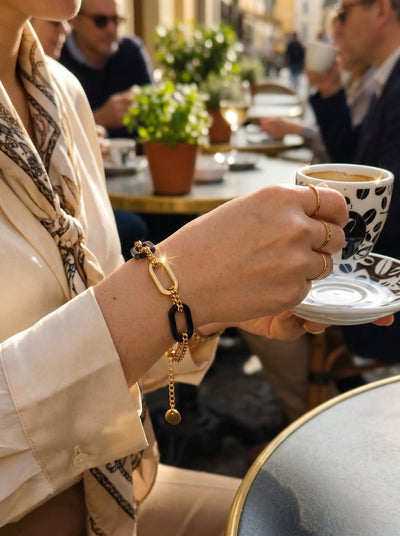
Necklace layering gets all the attention, but your wrist is prime real estate. A well-stacked bracelet arm can carry an entire outfit.
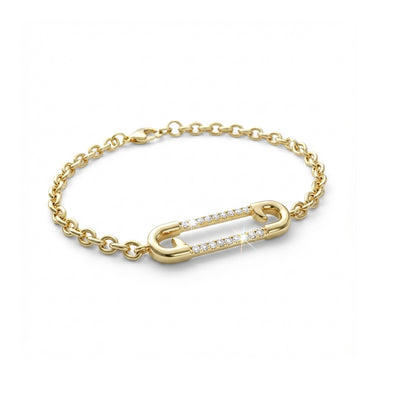
The formula: one chain bracelet + one bangle or cuff + one beaded or textured piece. The Arlo Slim Box Chain Bracelet is an ideal base layer — it sits flat, doesn't catch on anything, and plays well with bolder pieces on top.
Pro tip: stack your bracelets on the opposite wrist from your watch. It balances the visual weight and gives both wrists something interesting to say.

Earring Combinations: Beyond Matching Studs
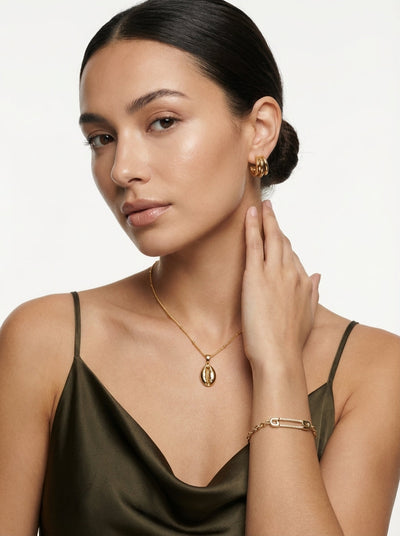
If you have multiple piercings, you're sitting on a goldmine of styling potential. The trend is intentional mismatch — not random chaos, but curated asymmetry.
Try this: Avi Huggie Earrings in your first hole, a smaller stud in your second, and an Orin Ear Cuff on the helix. Same gold tone, different scales. It looks editorial without trying.
The Vogue styling team calls this "ear stacking" — and it's been the fastest-growing jewelry trend on Pinterest for three consecutive quarters.
Mixing Metals: When (and How) to Break the Rules
The old rule was: never mix gold and silver. The new rule: mix them intentionally or don't mix them at all.
If you're going to mix metals, commit to it. Wear two gold pieces and two silver pieces — not one lonely silver chain drowning in a sea of gold. The Harper's Bazaar style guide suggests keeping a 60/40 ratio when mixing metals for the most harmonious look.
That said, if you're just starting out with layering, stick to one metal. Gold-on-gold is foolproof and always looks cohesive. Once you're comfortable, experiment with mixed metals.

The "Less Is More" Myth (And Why It's Wrong)
You've heard it a million times: less is more. And for most things in life, that's true. But jewelry layering is the one area where more is actually more — as long as it's done with intention.
A single dainty chain is beautiful. But three dainty chains at cascading lengths? That's a moment. Five thin bracelets stacked on one wrist? That's a vibe. The key isn't quantity — it's coherence. Every piece should look like it belongs.
How to Layer Without Tangling (The Real Problem)
Let's address the elephant in the room: tangled necklaces are the number one reason people give up on layering. Here's how to solve it:
- Use a layering clasp: These little magnetic clasps hold multiple chains together at the back of your neck
- Different chain thicknesses: A thin chain is less likely to tangle with a thicker one
- Put them on one at a time: Start with the shortest, end with the longest
- Store them separately: Hang them on individual hooks, never in a pile

Layering by Occasion: Office vs. Weekend vs. Date Night
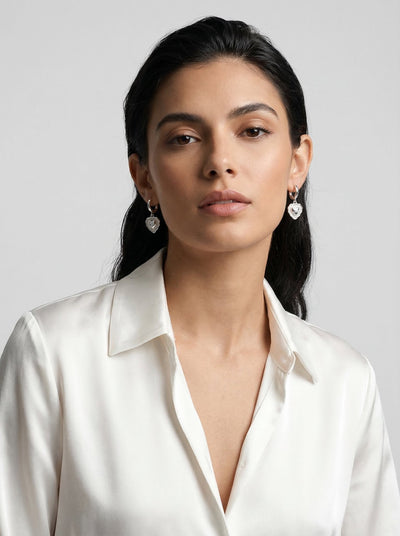
Office: Keep it to two pieces. A pendant necklace + small huggie earrings. The Amor Heart Hoop Earrings add personality without setting off HR alarms.
Weekend: Go for three necklaces + a bracelet stack. This is your playground — experiment, stack higher, layer bolder.
Date Night: One statement necklace layered with one delicate chain. Let the jewelry catch candlelight. Add drop earrings instead of huggies for drama.

The easy-to-wear Layering Secret
Here's what no luxury brand will tell you: you don't need expensive jewelry to nail the layered look. In fact, layering works better with affordable pieces because you can buy more of them without guilt.
Build a three-necklace stack from HyraMode by comparing the pieces in the necklace collection. Check product pages for current prices, materials, dimensions, and care. Remove jewelry before showering, swimming, or heavy exercise. Check each product’s listed materials and care instructions.
Your Starter Stack: The Exact Pieces to Buy First
If you're starting from zero, here's exactly what to buy:
- Stelle Star Necklace ($22.90) — your base layer, 16" with star details
- Mevi CZ Pendant ($29.90) — your mid layer, adjustable 16-18"
- Arlo Box Chain Bracelet ($20.90) — your wrist starter
- Avi Huggie Earrings ($22.90) — your everyday ear base
Total: made for everyday styling for a complete layering kit. That's four pieces that mix and match into dozens of combinations.

Common Layering Mistakes (And How to Fix Them)
- All the same length: Creates a tangled mess. Solution: 2-3 inch gaps between each layer.
- Too matchy-matchy: Looks costumey. Solution: mix at least two different chain styles.
- Ignoring your neckline: V-necks love longer pendants; crew necks love chokers. Match the necklace shape to the neckline shape.
- Forgetting your wrists and ears: Layering isn't just necklaces. A complete look includes all three zones.

Frequently Asked Questions
How many necklaces should I layer?
Start with 2-3. Odd numbers look better. Once you're comfortable, go up to 5 for a maximalist look.
Can I layer gold-plated jewelry every day?
Gold-finished pieces can be styled for everyday outfits. HyraMode materials and finishes vary; check each product page. Remove jewelry before showering, swimming, or heavy exercise. Check each product’s listed materials and care instructions. Finish life depends on materials, wear, and care; we do not guarantee a fixed lifespan or that jewelry will never fade or tarnish.
What's the best necklace length for layering?
Start with 16", 18", and 22" for three distinct layers with enough visual separation.
How do I prevent necklaces from tangling?
Use different chain thicknesses, put them on shortest-first, and store them on separate hooks.
Is it okay to mix gold and silver jewelry?
Yes — aim for a 60/40 ratio of one dominant metal to keep it looking intentional, not accidental.
Recommended Reading
- Best Mother's Day Jewelry Gifts made for everyday styling
- More Style Guides from HyraMode
- Shop Gold Necklaces
For product-specific care, see our Jewelry Care Guide.