











How Tight Should a Bracelet Fit? A Simple Sizing Guide for Women
HyraModeIf you have ever fastened a bracelet, stared at your wrist, and wondered, wait, is this supposed to sit here?—you are absolutely not alone. Bracelet fit is one of those tiny style details that changes everything. Too tight, and it feels distracting by lunch. Too loose, and it slides like it has its own social calendar.
The sweet spot is simple: a bracelet should feel secure, move a little, and never leave your wrist looking stressed. The best bracelet fit feels effortless—you notice how pretty it looks, not that you are wearing it.
In this guide, we are breaking down exactly how tight a bracelet should fit, how to measure your wrist at home, which styles need more room than others, and how to choose a fit that actually works for real life. Along the way, we will show you a few HyraMode favorites that make everyday styling feel easy.

What is the ideal bracelet fit?
For most women, the ideal bracelet fit means it sits close to the wrist while still allowing a little natural movement.
A good everyday rule is this: your bracelet should not pinch, twist uncomfortably, or leave deep marks. At the same time, it should not slide halfway down your hand every time you reach for coffee. The look you want is soft, easy, and intentional.
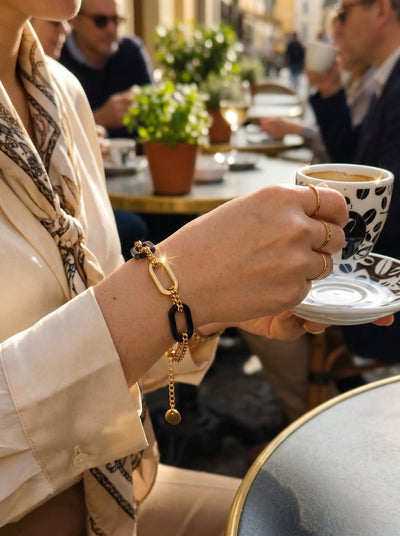
Many stylists use the “one- or two-finger rule,” meaning you should be able to slip one or two fingers between the bracelet and your wrist, depending on the style. Slim chain bracelets usually look best with a closer fit, while chunkier or layered designs often need a touch more breathing room. That balance is what makes a bracelet feel polished instead of fussy.
How tight should a bracelet fit for daily wear?
If you plan to wear a bracelet all day, comfort matters just as much as appearance.
For daily wear, a bracelet should stay in place without feeling restrictive as your wrist naturally changes throughout the day. Heat, movement, hydration, and even long hours at a desk can make your wrist feel slightly different by afternoon. That is why an ultra-snug fit that felt fine in the morning can suddenly feel annoying later on.
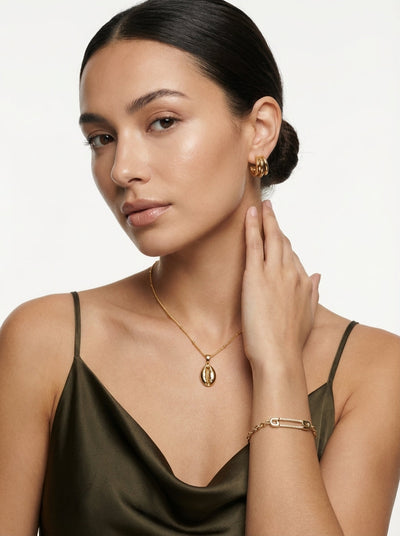
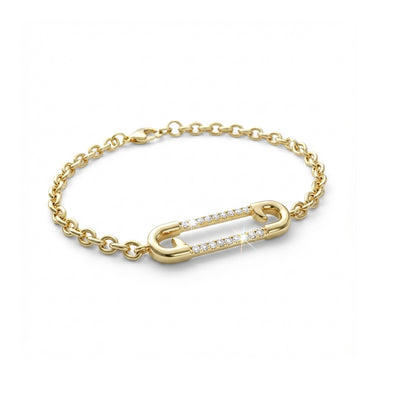
The American Academy of Dermatology notes that friction and irritation can worsen skin sensitivity, which is one more reason to avoid bracelets that constantly rub or squeeze. If you want an everyday piece that feels light and easy, styles like the Roux Bar Station Chain Bracelet or the Luna Dainty Safety Pin Chain Bracelet are lovely because they read delicate without feeling precious.
How to measure your wrist at home
The most accurate bracelet sizing starts with your actual wrist measurement, not a guess based on jewelry you already own.
Wrap a soft measuring tape around your wrist just above the wrist bone, where you naturally wear a bracelet. No tape measure? A strip of paper or string works too—just mark it, then lay it flat against a ruler. Keep it close to the skin without pulling tightly.
Once you have that number, add extra space depending on the fit you want. A close fit usually means adding about 1/4 to 1/2 inch. A standard comfortable fit is often around 1/2 to 3/4 inch more. If you like a looser, drapier look—especially for chain styles—you may want slightly more.
This matters because bracelet style changes the way size feels. A sleek chain can sit close and still feel graceful, while a wide flat style needs a bit more ease to move comfortably.


Why different bracelet styles fit differently
Not every bracelet should fit the same way, because shape changes how a piece sits and moves.
Chain bracelets usually feel best with a little drape. They are flexible, so a slightly looser fit keeps them from bunching awkwardly. Flat herringbone styles, on the other hand, often need a smoother lay against the wrist so the links can catch the light properly. Beaded bracelets can appear tighter because they hold more structure, while multi-strand designs may need room to settle naturally.
That is why it helps to shop by both size and silhouette. A style like the Hana Herringbone Flat Chain Bracelet looks chic when it skims the wrist, while the Dalis Multi-Strand CZ Station Bracelet feels more relaxed with a tiny bit of movement. Fit is not just technical—it is visual.
Signs your bracelet fits too tight or too loose
A bracelet fits well only when it feels comfortable and stays visually balanced on the wrist.
If it leaves deep marks, pinches when you bend your wrist, or makes you want to take it off by midday, it is too tight. You should not have to “break in” a fit that is wrong from the start. According to Cleveland Clinic, mild swelling in hands and wrists can happen for everyday reasons like heat and activity, so a little flexibility is practical, not indulgent.
If it constantly flips, slides onto the hand, or bangs into everything you touch, it is too loose. Some movement is beautiful; too much is distracting. A piece like the Evia Dainty Chain Snake Reversible Charm Bracelet should glide softly, not circle your wrist like a fidget spinner.
Style-wise, both extremes read off. Too tight looks stiff and cramped. Too loose looks accidental. The prettiest fit sits in the middle.

The one-finger rule vs the two-finger rule
Both rules work—the right one depends on the bracelet style and the look you want.
The one-finger rule is ideal for slim bracelets, structured designs, or minimal styling. It keeps the piece neat and refined. The two-finger rule works better for chunkier chains, layered stacks, or bracelets you want to feel a little more relaxed.
Fashion editors often lean closer for clean, elevated styling, while looser fits show up more in casual stacked looks. Vogue frequently highlights the appeal of balance in jewelry styling: the best accessories feel deliberate, never accidental. Think of these two rules as style tools, not laws.
How bracelet fit changes when you stack
When stacking bracelets, you need slightly more flexibility so the pieces can move together without tangling or bunching.
A single bracelet can sit closer to the wrist, but a stack needs room to breathe. If every bracelet fits snugly, the result can feel crowded fast. Mixing one close-fitting anchor piece with one or two looser styles usually looks better and feels better.
Try pairing the sleek Gova Wide Herringbone Chain Bracelet with the softer line of the Nilo Paperclip Star Charm Bracelet. If you love a more playful mix, our guide on how to stack bracelets is a great next read.
Stacking also depends on outfit mood. A close, glossy stack feels modern and polished. A slightly looser mix reads more effortless and weekend-ready.
Which bracelet styles flatter smaller or fuller wrists?
The most flattering bracelet is not about “correcting” your wrist—it is about choosing proportion that feels balanced.
On smaller wrists, slim chains, delicate stations, and medium-width herringbone styles often look beautifully intentional without overwhelming the arm. Fuller wrists can carry bold chains, layered looks, and textured styles with incredible ease. The key is to avoid a fit that looks visually strained.
If you have a petite wrist, the Mavi Chain Butterfly Bracelet or the Roux Bar Station Chain Bracelet will feel light and balanced. If you want more presence, the Gova Wide Herringbone Chain Bracelet gives a stronger statement without feeling bulky.

How to choose a bracelet that still feels good in real life
The best bracelet for real life is one you never have to constantly adjust.
If you type all day, go for smoother silhouettes that do not catch. If you love lots of hand movement, a secure but slightly flexible fit will feel better than something overly snug. If your style leans minimalist, a bracelet that stays elegantly in place will probably become your default piece.
That is also why material and design matter. Byrdie often points out that truly wearable jewelry earns its place by combining comfort and style, not by being “special occasion only.” If you want something you can actually reach for on a random Tuesday, comfort is part of the luxury.
Our favorite HyraMode bracelet fits for different moods
The right fit depends on the vibe you want: polished, relaxed, layered, or statement.
For a sleek close fit, the Hana Herringbone Flat Chain Bracelet is gorgeous when it sits neatly at the wrist. For soft everyday movement, the Evia Dainty Chain Snake Reversible Charm Bracelet feels easy and feminine. For a more styled stack moment, the Dalis Multi-Strand CZ Station Bracelet adds texture without looking overworked.
If you want a stronger look, the Gova Wide Herringbone Chain Bracelet gives that glossy fashion-editor finish. And if you like a playful detail piece, the Nilo Paperclip Star Charm Bracelet brings personality without sacrificing wearability.

The final bracelet sizing rule to remember
If you remember one thing, let it be this: a bracelet should feel secure, move slightly, and never distract you from your day.
That is the whole secret. Not too tight. Not too loose. Just easy. When the fit is right, your bracelet becomes part of your style instead of something you keep thinking about.
If you are building an everyday jewelry rotation, start with one bracelet that feels naturally comfortable and flattering on your wrist. Then layer from there. And if you are refining your full jewelry wardrobe, our guides on chain bracelet vs bangle and the capsule jewelry collection make the next step feel much easier.

Frequently asked questions
Should a bracelet be tight or loose?
A bracelet should be slightly loose, not tight. It should feel secure on the wrist but still move a little. Most women prefer enough space to slip one or two fingers underneath, depending on the design.
How do I know if my bracelet is too small?
If it leaves marks, pinches when you bend your wrist, or feels restrictive by the end of the day, it is too small. A properly fitting bracelet should never feel like something you need to remove for relief.
How much extra room should I add to my wrist measurement?
A close fit usually needs about 1/4 to 1/2 inch extra, while a comfortable standard fit often needs 1/2 to 3/4 inch. Chunkier or layered bracelets may need a little more room.
Do chain bracelets and herringbone bracelets fit the same way?
No—they usually do not. Chain bracelets often look best with a bit more drape, while herringbone bracelets tend to look better when they sit smoother and closer to the wrist.
Is it better to size up if I am between bracelet sizes?
Usually, yes. If you are between sizes, sizing up often gives a more comfortable fit, especially for daily wear. It is easier to style a bracelet with slight movement than one that feels too restrictive.
Recommended Reading
- How to Stack Bracelets: A Beginner's Guide to Arm Candy
- Chain Bracelet vs Bangle: Which Everyday Style Is Best?
- The Capsule Jewelry Collection: 10 Pieces for Endless Outfits
Sources: