










Gold Necklace Materials Guide: 14K, 18K, Bonded, Plated, and Solid Gold
HyraModeGold Necklace Materials Guide: 14K, 18K, Bonded, Plated, and Solid Gold
Gold necklace materials can sound almost identical on a product page: 14K, 18K, gold bonded, gold plated, gold finished, gold filled, vermeil, solid gold. The words are small, but they change the price, the care routine, and what you should realistically expect from the necklace after months of real wear.
The honest way to shop is simple: read the full material label, not just the karat number. A necklace described as 14K Gold-Finished Brass is not a solid 14K gold necklace. A bracelet described as 18K Gold-Bonded Finish over Premium Stainless Steel is not the same claim as a solid 18K gold chain. Those labels can still be beautiful and wearable; they just need to be understood clearly.
The short answer: read the material label before the karat number
If you only remember one thing, remember this: 14K and 18K describe gold content only when the item is actually solid gold or a defined gold alloy. On fashion jewelry, those numbers often describe the gold tone, finish, layer, or bonding process used over another base metal.
That is why a shopper can see “18K” on one page and be looking at solid 18K gold, then see “18K gold-bonded” on another page and be looking at a finish over stainless steel. Both phrases can be legitimate, but they are not interchangeable. The phrase after the karat number is where the truth lives.
For necklace shoppers, this matters because necklaces sit against skin, perfume, sunscreen, collars, sweat, and hair products. The right material choice is not always the most expensive one. It is the one whose label matches the way you plan to wear it.

What 14K and 18K mean when the necklace is solid gold
In solid gold jewelry, karat measures how much pure gold is in the metal alloy. The GIA 4Cs guide explains karat as a 24-part fineness system. Pure gold is 24K. A solid 18K gold necklace is generally 18 parts gold out of 24, or 75% gold. A solid 14K gold necklace is generally 14 parts gold out of 24, or about 58.3% gold. The remaining metal is alloy, added for color, strength, and workability.
That is why 18K gold usually looks richer and warmer, while 14K gold often feels a little more practical for everyday pieces. More pure gold can mean deeper color, but it can also mean a softer metal. Less pure gold does not automatically mean “bad”; in many everyday jewelry categories, 14K is popular because it balances gold content, durability, and price.
The key is the word solid. If the listing says “solid 14K gold” or “solid 18K gold,” you are shopping in fine jewelry territory. If the listing says “14K gold-finished brass,” “18K gold-bonded finish,” or “18K gold plated,” you are shopping a finished or layered material. That is a different category, with a different price and care expectation.
Solid gold vs gold-filled, vermeil, plated, finished, and bonded
Here is the easiest shopping translation:
- Solid gold: the whole piece is a gold alloy, such as solid 14K or solid 18K gold.
- Gold-filled: a thicker gold layer is mechanically bonded to a base metal, often with regulated minimum gold content by weight.
- Gold vermeil: gold layered over sterling silver, with thickness and silver-base requirements depending on the market standard.
- Gold plated: a thin layer of gold applied over another metal, often more delicate and more care-dependent.
- Gold finished: a broad product-description phrase that usually means a gold-tone finish over a base metal; always read the base metal.
- Gold bonded: a finish or layer bonded to a base metal; the meaning depends on the brand’s exact process and wording.
The FTC Jewelry Guides exist because jewelry words can easily become confusing or misleading. As a shopper, you do not need to memorize every regulation. You do need to slow down when a listing highlights “14K” or “18K” without making the base material clear.

What gold-bonded jewelry means
Gold-bonded jewelry usually means a gold layer or gold finish has been bonded to a base metal. The important part is not the marketing word by itself; it is the full phrase. “18K gold-bonded finish over premium stainless steel” tells you two things: the finish is described as 18K gold-bonded, and the structural base is stainless steel.
That can be a strong choice for daily-wear jewelry when the piece is made for real life, especially if the product page clearly explains the bonding or PVD process. But it should not be confused with solid 18K gold. A gold-bonded bracelet can be a practical, polished piece; a solid 18K necklace is a fine-jewelry investment. They solve different problems.
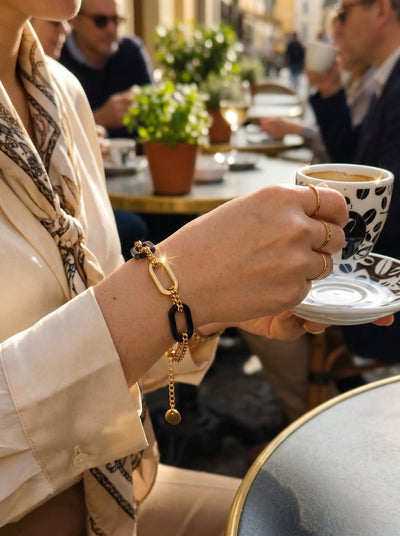
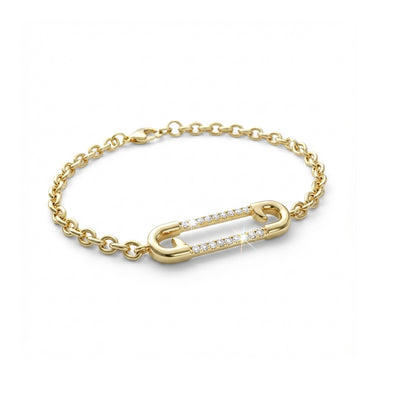
At HyraMode, the current product pages for Hana Herringbone Flat Chain Bracelet, Gova Wide Herringbone Chain Bracelet, Arlo Slim Flat Box Chain Bracelet, and Dalis Multi-Strand CZ Station Bracelet describe the gold option as 18K Gold-Bonded Finish over Premium Stainless Steel. That wording is different from the necklace examples below, which currently use 14K Gold-Finished Brass on gold variants.

What gold-finished brass means
Gold-finished brass means brass is the base metal and the visible surface is finished in a gold tone. It is not solid gold, and it should not be described that way. The upside is that gold-finished brass can give you expressive shapes, pendants, and trend pieces at a more accessible everyday-jewelry price point than solid gold. The tradeoff is that care matters more.
For necklaces, gold-finished brass is often used when the design is the main reason you are buying: a sunburst pendant, a heart chain, a talisman, a cowrie shell, a small CZ pendant. If you are buying the necklace because you want a certain look, symbol, or layer, the material can make sense as long as you understand the finish and avoid treating it like a forever solid-gold heirloom.
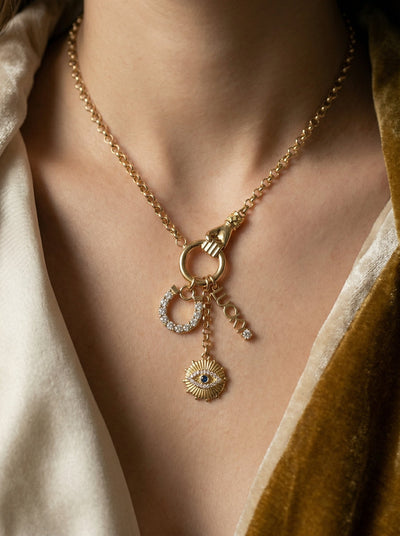
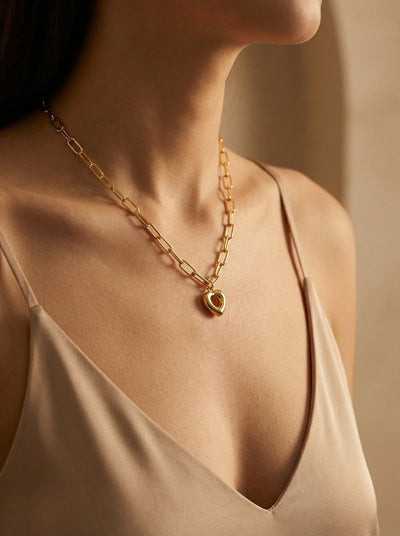
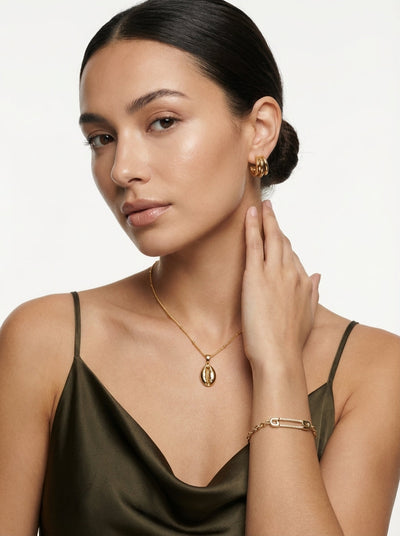
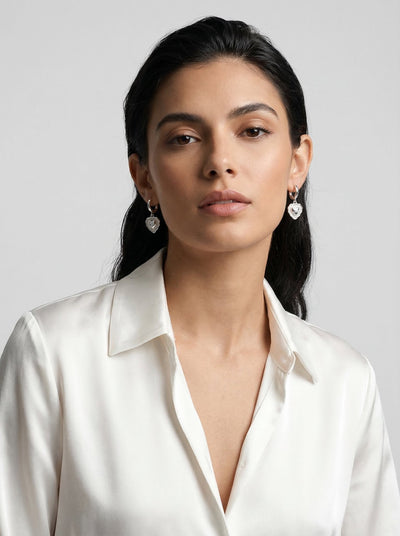
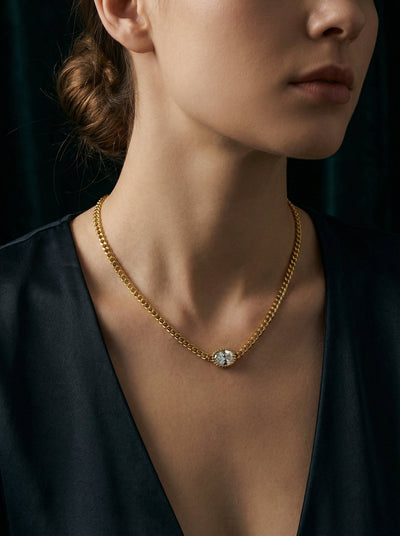
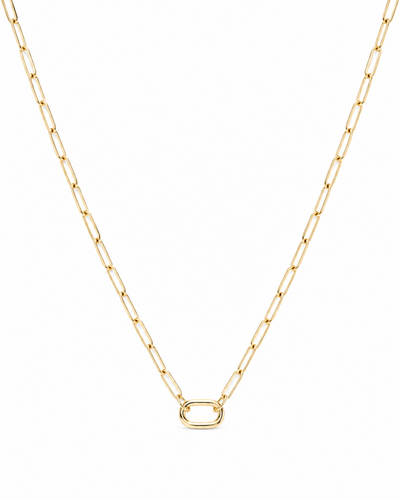
Current HyraMode necklace pages for Mevi Dainty CZ Pendant Necklace, Remy Paperclip Chain Heart Necklace, Sola Sunburst Pendant Necklace, Cora Gold Cowrie Shell Pendant Necklace, and Lena Victorian Hand Talisman Necklace list the gold material as 14K Gold-Finished Brass. That is the exact wording to use when comparing them.

14K vs 18K gold necklace: which is better?
If you are comparing solid gold necklaces, 14K and 18K come down to color, durability, sensitivity, and budget. 18K generally has a richer yellow tone because it contains more gold. 14K generally has more alloy, which can make it feel more practical for pieces that get worn often. Neither number automatically wins for every person.
If you are comparing finished or bonded jewelry, do not decide from the number alone. An “18K gold-bonded finish over stainless steel” bracelet and a “14K gold-finished brass” necklace are not simply an 18K-vs-14K matchup. They use different base metals, different construction, and different product purposes. One may be built around water-friendly stainless steel; the other may be built around a pendant shape and warm gold finish.
For a necklace, ask what job the piece has. If it is an everyday pendant you want to wear with tees and button-downs, a clear gold-finished brass label may be enough. If it is a lifetime chain, heirloom, or piece you never want to think about replacing, then solid 14K or solid 18K gold may be worth the investment.

How to check a gold necklace before buying
Before you fall for the photo, check five details:
- The complete material line: not just “14K” or “18K,” but the whole phrase after it.
- The base metal: brass, stainless steel, sterling silver, or solid gold alloy.
- The finish language: plated, finished, bonded, vermeil, filled, or solid.
- The chain and clasp: necklaces fail in small moving parts as often as they fade on the surface.
- The care promise: waterproof, tarnish-free, or daily-wear language should match the product material.
Also check whether the page gives practical specs. HyraMode necklace pages typically list pendant size, chain length, weight, closure, and material. For example, Sola is currently listed with a 15mm x 19mm pendant and 16"+2" chain, while Cora is listed with a 10mm x 20mm pendant and 16"+2" chain. Specs do not replace material truth, but they help you know what the necklace will actually feel like.

Which material fits everyday wear, gifting, and trend pieces?
For everyday wear, choose the material that matches your routine. If you are hard on jewelry, sleep in it, shower in it, and wear sunscreen daily, stainless steel with a clearly described bonded or PVD finish may be easier to live with than a delicate plated piece. If you rotate necklaces and remove them before water, a gold-finished brass pendant can be a beautiful style choice.
For gifting, clarity matters more than the most expensive material. A gift should not create confusion later. If the piece is gold-finished brass, say it plainly. If it is solid gold, say that plainly too. The recipient does not need a metallurgy lecture, but she does deserve to know whether the piece is a fine-jewelry investment or a pretty everyday fashion piece.
For trend pieces, gold-finished brass often makes sense because the shape is the point. A cowrie shell, sunburst, heart pendant, or talisman is about the moment it creates: linen on vacation, a white tee that needs warmth, a graduation gift with a little symbolism, a black dress that needs one focal point. The material should support that moment honestly.

HyraMode examples: exact material labels from current pages
Here is how to read the current HyraMode examples without overclaiming them:
- Mevi Dainty CZ Pendant Necklace: gold variant listed as 14K Gold-Finished Brass; silver variant listed as Silver-Finished Brass.
- Remy Paperclip Chain Heart Necklace: gold variant listed as 14K Gold-Finished Brass; silver variant listed as Silver-Finished Brass.
- Sola Sunburst Pendant Necklace: gold variant listed as 14K Gold-Finished Brass; silver variant listed as Silver-Finished Brass.
- Cora Gold Cowrie Shell Pendant Necklace: gold variant listed as 14K Gold-Finished Brass.
- Lena Victorian Hand Talisman Necklace: gold variant listed as 14K Gold-Finished Brass; silver variant listed as Silver-Finished Brass.
Those necklaces should be described as gold-finished brass pieces, not solid gold pieces. For the bonded-material comparison, HyraMode bracelet pages such as Hana, Gova, Arlo, and Dalis currently use the wording 18K Gold-Bonded Finish over Premium Stainless Steel. That is useful education, but it should not be copied onto necklace pages unless the necklace page itself says it.

Care expectations by material
Solid gold is generally the most forgiving over time, though it can still scratch and collect residue. Gold-filled and vermeil pieces can last well with proper care, but they still have a surface layer that deserves gentler handling. Gold-plated, gold-finished, and some fashion finishes need the most realistic expectations: avoid perfume directly on the piece, wipe after sweat or sunscreen, and store it dry instead of leaving it loose in a bathroom.
For HyraMode gold-finished brass necklaces, the best habit is simple: put the necklace on after lotion, perfume, and SPF; wipe it with a soft cloth after warm days; and store it separately so the pendant does not rub against other metals. The GIA jewelry care tips are a useful reminder that cleaning should match the specific metal and stones. For water-specific questions, read What Is Waterproof Jewelry? and Can You Really Wear Gold-Tone Jewelry in the Shower?. This guide is about material labels; those guides go deeper on water and finishing expectations.
If you want the easiest necklace decision, start with the label, then choose the style. A clear material description lets the piece be what it is: a delicate sparkle pendant, a warm heart chain, a beachy shell, a symbolic talisman, or a long-term solid-gold investment. The problem is not fashion jewelry. The problem is pretending every gold-looking necklace belongs to the same category.
Recommended reading
- Gold Necklace With Pendant: How to Choose the One You’ll Actually Wear
- Dainty Pendant Necklace: Everyday Gold Styling Ideas That Always Work
- What Is Waterproof Jewelry? The Ultimate Guide to Tarnish-Free Gold That Lasts
To shop by category, start with HyraMode necklaces, bracelets, or pendant necklaces, then read the material line on each product page before choosing your finish.
FAQ
What does 18K gold necklace mean?
If the necklace is solid 18K gold, it generally means the metal alloy is 75% gold. If the listing says 18K gold plated, 18K gold bonded, or 18K gold finish, it means the 18K wording refers to a surface layer or finish over another base metal, not a solid 18K necklace.
Is gold-bonded jewelry the same as gold-plated?
Not always. Gold-bonded usually describes a gold layer or finish bonded to a base metal, while gold-plated often refers to a thinner applied layer. The exact durability depends on the brand’s process, thickness, base metal, and care instructions, so read the complete material phrase.
Is 14K or 18K better for a necklace?
For solid gold, 18K has more gold and a richer tone, while 14K often balances gold content and everyday durability. For finished jewelry, do not choose by 14K vs 18K alone; compare the base metal and full finish wording.
What is gold-finished brass?
Gold-finished brass means the piece has a brass base with a gold-tone finish. It is not solid gold. It can be a good choice for expressive pendants and everyday fashion jewelry when the product page states the material clearly.
How do I choose a gold necklace for everyday wear?
Choose by routine first. If you want a long-term fine jewelry piece, consider solid 14K or 18K gold. If you rotate pieces and want style variety, a clearly labeled gold-finished brass pendant can work well with gentle care and dry storage.