










CZ vs Moissanite vs Lab Diamond: Which Stone Is Actually Worth It? (2026)
HyraModeLet's be honest — most of us aren't shopping for a diamond engagement ring every week. But we are shopping for jewelry that looks absolutely stunning without the five-figure price tag. And right now, the conversation around CZ vs moissanite vs lab diamonds is everywhere.
Your Instagram explore page is full of gorgeous pendants that shimmer like crazy, and you genuinely cannot tell if that necklace costs $15 or $1,500. That's the world we're living in, and honestly? It's a great one for anyone who loves jewelry without apology.
So I broke it all down — the real differences, who each stone is actually for, and which one deserves a spot in your rotation right now. No gemology lectures, no jargon. Just the honest take.

First, Let's Get Clear on What These Stones Actually Are
Before we compare them, you need to know what you're dealing with — because these three stones are very different at a chemical level, even if they look nearly identical in a delicate pendant setting.
Cubic zirconia (CZ) is a synthetic crystal made from zirconium dioxide. It's been the go-to diamond simulant since the 1970s and is used in the vast majority of fashion jewelry worldwide. Moissanite is a lab-created version of silicon carbide — a mineral that occurs naturally only in microscopic quantities (first discovered in a meteor crater in 1893). And lab-grown diamonds are chemically and physically identical to mined diamonds. Same carbon structure. Same hardness. Just grown in a controlled environment instead of pulled out of the earth.
The Gemological Institute of America (GIA) grades lab-grown diamonds using the exact same 4Cs criteria as natural diamonds — which says a lot about how seriously the industry takes them. The difference between these three stones isn't just price. It's sparkle behavior, durability, and what story you want the piece to tell.
CZ: The Original easy-to-wear Sparkler

If you've ever bought a piece of fashion jewelry and thought "wow, this sparkles way too well for what I paid," there's a very good chance it had CZ stones in it. And that's not a bad thing — not even a little bit.
CZ is the most accessible way to wear diamond-like sparkle at any finish and feel, full stop. It has a high refractive index (2.15–2.18), which means it throws light beautifully. It's colorless by default, which mimics the look of a high-grade diamond. And in the right setting — particularly pendants and earrings — it's genuinely hard to distinguish from the real thing at a glance.
The tradeoffs are real. CZ scores 8–8.5 on the Mohs hardness scale, meaning it can scratch with daily wear, and it can cloud over time from skin oils and product buildup. For rings that hit countertops twelve times a day, that matters. For a dainty pendant you take off before bed? Not so much.
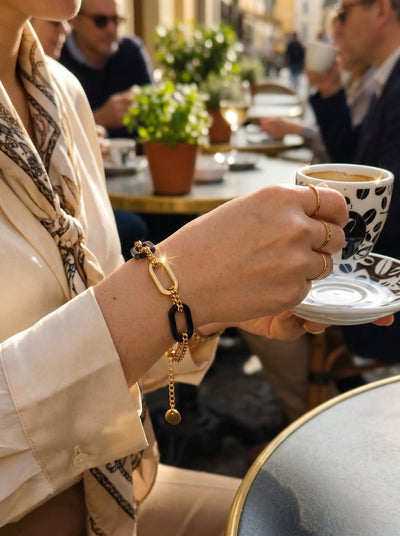
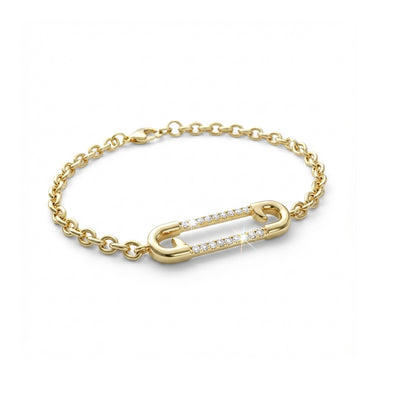
This is exactly why our Dalis Multi-Strand CZ Station Bracelet is such a consistent bestseller — precision-set CZ stones in a protected multi-strand design, gorgeous enough for a dinner party, priced to match real life. The flush setting shields each stone while maximizing the amount of light that enters. It layers beautifully if you want that stacked arm look that's everywhere right now.
Moissanite: The Stone That Confuses Jewelers (In a Good Way)
Here's something most people don't know: moissanite actually has more fire than a real diamond. Its refractive index of 2.65–2.69 beats diamond (2.42), which means it throws more rainbow light, more visibly. That's a feature or a flaw depending on your personal taste.
Moissanite is the best diamond alternative if you want something that lasts as long as fine jewelry without fine jewelry pricing. At 9.25 on the Mohs scale, it's the second-hardest gemstone on earth. You can wear moissanite daily for decades and it won't cloud or develop the surface scratches that can dull CZ over time.
The price reflects that durability — a moissanite stone typically runs $200–$800 per carat depending on cut and seller, versus CZ which might cost $5–$30. But when you're buying a piece you'll wear every single day for years, that math often works out strongly in moissanite's favor.
According to Charles & Colvard, the original creator of lab-grown moissanite, the stone carries a lifetime warranty on its brilliance — it won't cloud, yellow, or change over time. That's a genuine differentiator that CZ simply can't match for long-term pieces.
Lab-Grown Diamond: The Ethical Rock Taking Over 2026

If you'd told someone in 2018 that lab-grown diamonds would drop to 50–80% cheaper than mined diamonds while being physically identical, they would have called you a dreamer. But here we are in 2026, and that's just Tuesday.
Lab-grown diamonds are real diamonds. Same carbon structure. Same Mohs hardness of 10. Same optical properties. The only difference is origin — and that matters enormously to some buyers (ethical sourcing, no conflict mining, lower environmental impact) and not at all to others who just want the piece to be beautiful.
The price drop has been steep. A 1-carat lab-grown diamond that cost $3,000 in 2020 might run $800–$1,200 today. Vogue's jewelry editors noted in 2025 that lab diamonds have fundamentally shifted the fine jewelry market — and the shift is only accelerating. Resale value is lower than natural diamonds, but if you're buying jewelry to wear rather than hold as an asset, that's largely irrelevant.
For fashion jewelry — necklaces, earrings, stacking bracelets — lab-grown diamonds are increasingly being used at accessible fine-jewelry price points. They're the choice for someone who specifically wants to say "this is a real diamond" and have that be verifiable and provable.
The Sparkle Test: How Each Stone Looks in Real Life

Sparkle isn't just about the stone — it's about cut quality, setting design, and the lighting environment you're in. But there are real and consistent differences in how these three stones perform.
CZ delivers clean, white sparkle. In photos and at a distance, it's stunning. Up close and in harsh natural light, lower-quality CZ can read as slightly artificial — a bit too perfect, a bit glassy. Premium AAAAA-grade CZ is dramatically better and genuinely hard to distinguish without a loupe. The key is buying CZ that's been precision-cut and properly set.
Moissanite fires rainbow light. If you've ever seen a moissanite in direct sunlight, you know exactly what this means — the prism effect is intense and unmistakable. Some people love the drama. Others find it reads as "too sparkly" for certain minimalist aesthetics. In evening lighting and restaurant ambiance, it's absolutely breathtaking.
Lab diamond reads as naturally luxurious. The sparkle is slightly less fiery than moissanite but more "white" — it looks exactly like a mined diamond because it is, chemically. In side-by-side comparisons, lab diamonds tend to feel the most quietly expensive rather than dramatically sparkly.
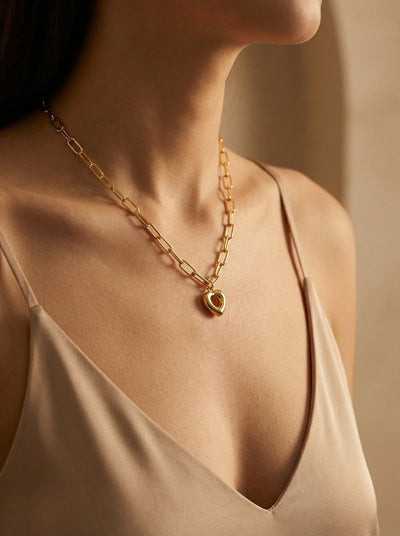
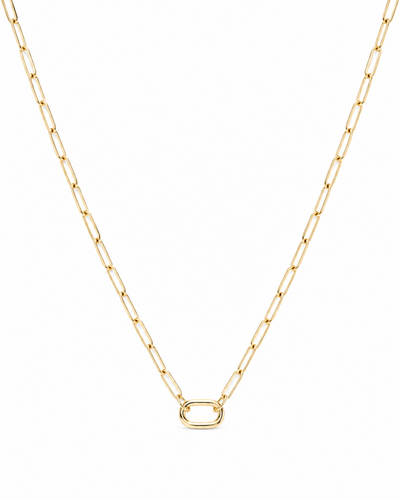
For everyday pendants like our Remy Paperclip Chain Heart Necklace, the CZ heart stone is cut specifically to maximize white light return — the result is a pendant that photographs beautifully and catches eyes across a room without screaming "look at my jewelry." That's the sweet spot for daily wear.
Durability: Which Stone Matches Your Actual Lifestyle
The Mohs hardness scale matters more than most people think, especially if you're buying a piece you plan to actually live in every day.
- Lab Diamond: 10 — essentially scratch-proof, wearable in almost any situation
- Moissanite: 9.25 — extremely durable, excellent choice for rings and daily wear pieces
- CZ: 8–8.5 — well-suited for pendants, earrings, and occasion-wear bracelets; more vulnerable in rings that face constant physical impact
Here's the honest take: for necklaces and earrings, CZ is more than durable enough for years of regular wear. The stones don't face the same physical abuse as rings — which hit countertops, car doors, gym equipment, everything. A CZ pendant worn daily will hold up beautifully. A CZ ring worn daily will show wear within a year.
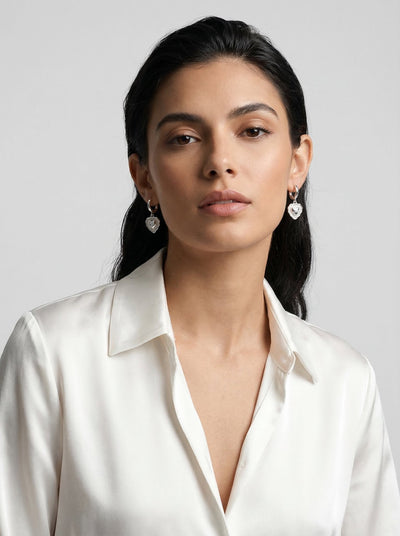
The design of the setting matters enormously too. Our Ciru Huggie Earrings pair a huggie design with CZ stones; check the listed materials if you have sensitive skin — the huggie housing protects the stones from the angles most likely to cause scratching. It's smart engineering that extends the life of the piece significantly without adding bulk.
The Price Breakdown Nobody Talks About Honestly

Let's put real numbers next to the feelings for a second. For a simple 0.5-carat solitaire pendant on a plain chain:
- Natural mined diamond: $800–$2,500+
- Lab-grown diamond: $250–$700
- Moissanite: $100–$300
- Premium CZ: $15–$60
When you're shopping necklaces, earrings, and bracelets — the category that covers 95% of everyday jewelry wear — premium CZ in a quality setting is genuinely undetectable to the naked eye at normal social distances. You can spend $15 and look like you spent $500. That's not a compromise; that's smart shopping, full stop.
This is the core philosophy behind pieces like our Kaia Heart Key Pendant Necklace — brilliant CZ stones set in a delicate key-heart pendant with a 16" chain and 2" extender. It photographs beautifully, layers flawlessly, and holds up to real daily life. The price doesn't have to feel apologetic when the quality is genuinely there.
For more on how to evaluate jewelry value over the long term, our Gold Plated vs Gold Filled vs PVD: Which Type of Gold Jewelry Actually Lasts? guide is worth reading before your next purchase.
When to Choose CZ (And Not Feel Weird About It)
Somewhere along the way, "it's CZ" became something people whispered. That's worth fixing, because the shame is entirely misplaced.
Choose CZ when: you're building a versatile jewelry wardrobe on a real-person everyday. You want pieces that photograph beautifully for events and occasions. You're buying pendants and earrings rather than daily-wear rings. You're gifting someone who loves sparkle but doesn't need a gemological certificate attached. Or you simply want to wear something beautiful without spending a week's paycheck on it.
There is no legitimate reason to feel embarrassed about owning and loving CZ jewelry. Style icons and celebrities wear cubic zirconia regularly — often without disclosing it, because there's genuinely nothing to disclose. Sparkle is sparkle, and the right piece on the right neckline makes an outfit. The stone's origin doesn't walk into a room before you do.
How to Style Each Stone Type for Maximum Impact

The stone matters far less than how you wear it. A beautiful moissanite in a clunky setting still looks off. A precision-cut CZ in a delicate pavé cup with a PVD-coated gold finish? That's a different conversation entirely.
For CZ: Lean into fine-chain pendants, stud earrings, and delicate multi-strand bracelets where the focus is on the light catching the stone itself. Minimal settings work best — they highlight the sparkle without exposing the stone to scrutiny at close range. Layering multiple small CZ pieces creates a compound effect that reads as genuinely luxurious.
For moissanite: Use it in pieces where fire and brilliance are the focal point — solitaire pendants, halo settings, statement earrings. The rainbow effect is absolutely a feature in the right lighting. Warm environments (candlelight, golden hour, restaurant lighting) make moissanite look spectacular.
For lab diamonds: Honestly, treat them exactly like you'd treat any fine jewelry. They're indistinguishable from natural diamonds, so engagement rings, anniversary pieces, and fine jewelry moments are all completely appropriate. Wear them with the confidence that comes from knowing the stone is verifiably the real thing.
For the full breakdown on how different jewelry types photograph and perform at events, our guide on What Jewelry Looks Good in Photos is essential reading before anything important on your calendar.
The CZ Pieces That Actually Look Like Fine Jewelry

The secret to CZ looking expensive isn't the stone — it's the quality of the setting and the precision of the metal finishing. A CZ stone in a poorly finished bezel will read lower-quality immediately. The same CZ stone in a flush pavé cup with a PVD-coated gold finish? That's the piece people ask you about.
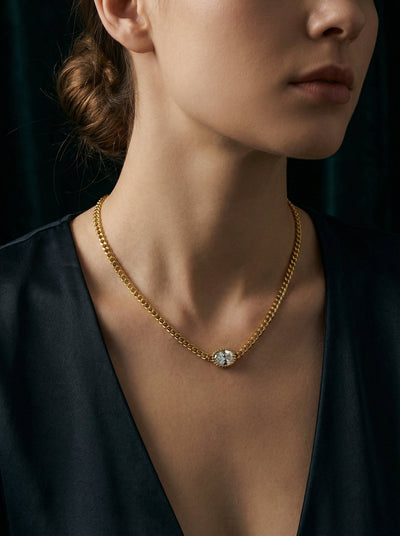
Every CZ piece at HyraMode is designed with this principle at its core. Our Mevi Dainty CZ Pendant Necklace uses a precision-cut center stone sized to the proportions of the pendant head — no light leakage at the sides, maximum brilliance facing forward. It sits on a 16" chain with a 2" extender, landing right at the collarbone where it catches the most light. The difference between this and a $5 CZ piece is entirely in those details.
Same philosophy behind the Dalis Multi-Strand CZ Station Bracelet — each stone sits in a protected station setting that shields it while letting light enter from every viable angle. The multi-strand format creates visual depth that a single-strand bracelet can't replicate. It's the kind of piece that looks equally at home at a beach brunch and a rooftop dinner.
If you want to go deeper on what separates the CZ jewelry that looks great from the CZ jewelry that doesn't, our full guide on CZ Jewelry vs Real Diamonds: Can Anyone Actually Tell the Difference? covers exactly that.
Frequently Asked Questions
Can you tell the difference between CZ and a real diamond?
Most people genuinely cannot — especially in pendants and earrings. Under a jeweler's loupe, CZ has a slightly different refraction pattern and less fire than a mined diamond, but in everyday social settings, a quality CZ in a precision setting is virtually indistinguishable. Even trained gemologists need their tools to be certain. The "is that real?" question is a compliment, not a test.
Is moissanite better than CZ?
For durability and long-term daily wear, yes — moissanite is significantly more durable and holds its brilliance indefinitely. For fashion jewelry pieces you rotate seasonally, or for necklaces and earrings rather than rings, premium CZ performs beautifully and costs a fraction of the price. The better question is: what are you buying it for?
How long does CZ jewelry last?
Pendants and earrings can look great for 3–5+ years with normal wear. The biggest enemies of CZ are harsh chemicals (perfume, bleach, chlorine) and abrasive surfaces. Take it off before heavy cleaning, let your perfume dry before putting it on, and store CZ pieces separately from harder metals and stones. Follow those three habits and your pieces will hold up impressively well.
Is lab-grown diamond worth the price?
If you want the genuine article — chemically real, gradeable by GIA, indistinguishable from mined — at 50–80% less, then absolutely yes. The tradeoff is lower resale value compared to natural diamonds. But if you're buying jewelry to wear and love rather than hold as a financial asset, resale value is irrelevant to your daily experience of the piece.
Which stone is best for everyday jewelry?
For necklaces, earrings, and stacking bracelets: high-quality CZ in a PVD-protected setting is the sweet spot — diamond-level sparkle, accessible price, and the setting absorbs most of the durability concern. For daily-wear rings that face constant physical impact: moissanite or lab diamond. The category you're buying for matters as much as the stone itself.
Recommended Reading
- CZ Jewelry vs Real Diamonds: Can Anyone Actually Tell the Difference?
- Gold Plated vs Gold Filled vs PVD: Which Type of Gold Jewelry Actually Lasts?
- How Long Does Gold Plated Jewelry Last? The Honest Answer
For product-specific care, see our Jewelry Care Guide.