










The Cost-Per-Wear Guide: How to Know If Jewelry Is Actually Worth It
HyraModeThat $200 bracelet you wore twice? It cost you $100 per wear. That $12 necklace you've worn every day for six months? It's at $0.07 per wear and dropping.
Welcome to cost-per-wear — the single most useful concept in fashion that almost nobody applies to jewelry. It's the math that separates women who have beautiful, cohesive collections from women who have expensive jewelry boxes full of regret.
The idea is simple: divide what you paid by the number of times you've worn it. The result tells you the real value of every piece you own — and it will permanently change how you shop.

What Is Cost-Per-Wear (and Why It Matters for Jewelry)
Cost-per-wear (CPW) is a formula fashion editors have used for decades:
CPW = Price ÷ Number of Times Worn
A $50 dress worn 50 times = $1 per wear. A $200 dress worn twice = $100 per wear. The lower-quality dress was the better investment.
For jewelry, CPW is even more powerful because jewelry gets worn more often than any other accessory. A pair of earrings you wear daily hits 365 wears in year one. A necklace you never take off could reach 1,000+ wears within three years. That $12 pendant at 1,000 wears? That's $0.012 per wear — literally a penny.
According to research from the Bureau of Labor Statistics, the average American woman spends about $600 per year on jewelry and watches. CPW thinking can stretch that everyday dramatically — or cut it in half while looking better.
The CPW Reality Check: What Your Jewelry Actually Costs
Let's do the uncomfortable math on common jewelry purchases:
| Piece | Price | Times Worn | Cost Per Wear | Verdict |
|---|---|---|---|---|
| Designer bracelet (birthday gift to self) | $350 | 12 (special occasions) | $29.17 | ❌ Expensive habit |
| Trendy statement earrings | $45 | 5 (then they felt dated) | $9.00 | ❌ Trend trap |
| Fast fashion necklace | $8 | 15 (then it tarnished) | $0.53 | ⚠️ lower-quality but short-lived |
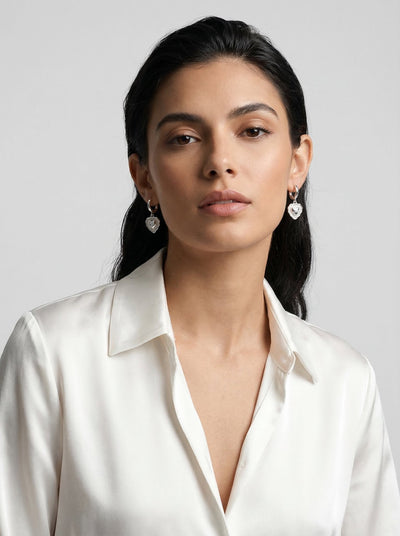
| Pilo Huggie Earrings | $12 | 300+ (daily, year one) | $0.04 | ✅ CPW champion |
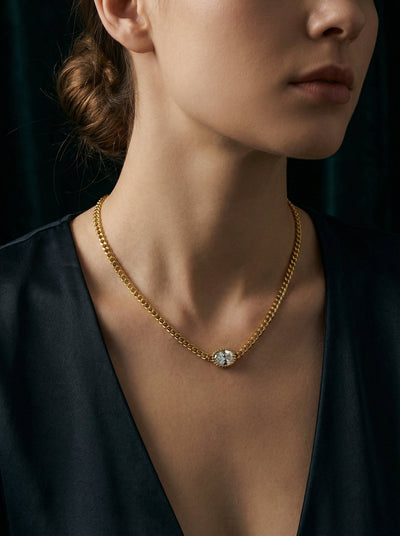
| Mevi CZ Pendant | $12 | 365 (never takes it off) | $0.03 | ✅ Best value in the drawer |
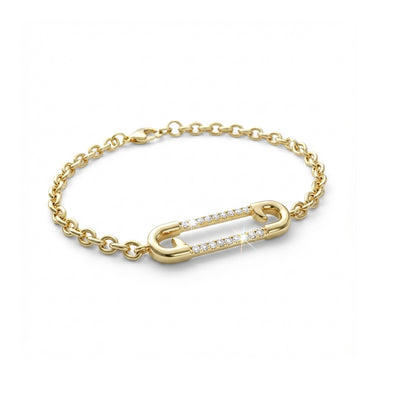
| Hana Herringbone Bracelet | $15 | 250+ (workdays) | $0.06 | ✅ Daily essential |
The pattern is clear: expensive jewelry worn rarely costs more per experience than everyday jewelry worn daily. Price tags lie. Cost-per-wear tells the truth.
The Three Categories of Jewelry (by CPW)
Once you start thinking in CPW, every piece in your collection falls into one of three categories:
Category 1: Workhorses (CPW made for everyday styling.10)
These are your daily pieces — the ones you put on without thinking every single morning. They do the most work for the least money.
- Everyday huggies: Pilo Huggies, Ciru Huggies
- Default necklace: Mevi CZ Pendant
- Daily bracelet: Hana Herringbone
Strategy: Spend the most attention (not money) choosing workhorses. They need to be comfortable, versatile, and durable. PVD-coated stainless steel is non-negotiable for workhorses because tarnishing ends the wearing streak.

Category 2: Versatile Players (CPW $0.10 – $1.00)
Worn 2-4 times per week. These pieces add variety to your rotation — they're not everyday automatic, but they show up regularly.
- Textured earrings: Caia Croissant Huggies, Fern Textured Huggies
- Second necklace: Stelle Star Station, Sola Sunburst
- Stack bracelet: Arlo Box Chain
Strategy: These should complement your workhorses. Same metal, compatible scale. If your workhorse earrings are gold huggies, your versatile player should be different gold earrings — not a conflicting style.
Category 3: Occasion Pieces (CPW $1.00+)
Worn for specific events — weddings, date nights, celebrations. Higher CPW is acceptable here because the impact per wearing is high.
- Statement earrings: Deva Water Drops, Sol Floral Drops
- Signature pendant: Lena Talisman
- The Crystal Elegance Set combination previously featured here is not currently available. A coordinated sparkle look can combine drop earrings, a CZ pendant, and a pearl-accent bracelet. Browse current styled sets and check each product page for the current components and price.
Strategy: Keep occasion pieces affordable so a high CPW doesn't sting. A $25 set worn to 5 events = $5/wear. A $250 set worn to 5 events = $50/wear. The photos look the same.
How to Calculate Your Personal Jewelry CPW
Try this exercise right now:
- Open your jewelry box or tray
- Pick up each piece and honestly estimate how many times you've worn it
- Divide the price by that number
- Sort them: lowest CPW to highest
You'll notice something immediately: your most expensive pieces probably have the worst CPW, and your cheapest daily pieces have the best. This isn't a coincidence — it's human nature. We "save" expensive pieces for special occasions that never come, while actually living in the affordable ones.
The lesson? Stop saving. Start wearing. If a piece isn't being worn, it's not an asset — it's dead inventory.

The 5 Rules of CPW Shopping
Rule 1: Spend More Attention on Daily Pieces, Not More Money
Your workhorse pieces deserve the most research — not the highest price tag. A $12 necklace you researched for 20 minutes and wear 300 times is a better purchase than a $200 necklace you impulse-bought and wore 3 times.
Rule 2: The 5-Outfit Test
Before buying any piece, mentally pair it with 5 outfits you already own. If it works with all 5, it'll have great CPW. If it only works with 1-2, it's destined for the back of the drawer.
Rule 3: Material Determines CPW Ceiling
A piece that tarnishes after 30 wears has a hard CPW ceiling — no matter how often you'd WANT to wear it. PVD gold on stainless steel removes the ceiling. It can be worn 1,000+ times without degrading. That's the material difference between a $0.04 CPW and a forced retirement at $0.50.
Rule 4: Trend Pieces Should Be lower-quality
Trends expire. By definition, trendy jewelry will stop being worn. Keep trend purchases made for everyday styling so when the trend ends, the CPW damage is minimal. Your timeless basics are where staying power lives.
Rule 5: Track It (Even Loosely)
You don't need a spreadsheet. But once a month, glance at your jewelry and ask: "What haven't I worn in 30 days?" Anything untouched for a month is a CPW warning sign. Either recommit to wearing it or pass it on to someone who will.

The CPW-Optimized Collection: 10 Pieces, Infinite Value
If you built a collection purely for CPW optimization, here's what it would look like:
| Piece | Our Pick | Price | Est. Year 1 Wears | Year 1 CPW |
|---|---|---|---|---|
| Daily earrings | Pilo Huggies | $12 | 350 | $0.03 |
| Daily necklace | Mevi CZ Pendant | $12 | 300 | $0.04 |
| Daily bracelet | Hana Herringbone | $15 | 250 | $0.06 |
| Rotation earrings | Caia Croissant | $12 | 150 | $0.08 |
| Signature necklace | Sola Sunburst | $14 | 100 | $0.14 |
| Layering necklace | Stelle Stars | $14 | 100 | $0.14 |
| Stack bracelet | Arlo Box Chain | $12 | 100 | $0.12 |
| Second rotation earrings | Aura Oval Hoops | $12 | 80 | $0.15 |
| Statement earrings | Deva Water Drops | $14 | 30 | $0.47 |
| Complete set | The Everyday Essentials Set combination previously featured here is not currently available. Browse current styled sets and check each product page for the current components and price. | Not currently available | — | — |
Total collection cost: ~$142
Total year-one wears: ~1,510
Average CPW across entire collection: $0.09
That's nine cents per wearing experience. For comparison, a single Starbucks latte costs $6. Your entire jewelry collection for a year costs made for everyday styling lattes.
Build this exact collection with our step-by-step collection guide.

CPW and the "Expensive vs. lower-quality" Myth
Here's what CPW reveals that price tags don't: expensive jewelry isn't automatically better, and lower-quality jewelry isn't automatically worse.
The real spectrum isn't lower-quality → expensive. It's:
- lower-quality + low quality = high CPW (tarnishes fast, can't wear it enough)
- lower-quality + high quality = lowest CPW possible (this is the sweet spot)
- Expensive + high quality = moderate CPW (if you actually wear it)
- Expensive + rarely worn = worst CPW (the $350 bracelet in the back of the drawer)
The winning strategy is lower-quality + high quality. That's PVD gold on stainless steel at the $10-$30 finish and feel — durable enough to be worn thousands of times, affordable enough that the CPW approaches zero.
Read more about quality signals in our online jewelry buying guide.
When High CPW Is Actually OK
Not every piece needs to be a workhorse. Some purchases are about the moment, not the math:
- Sentimental gifts: A necklace from your partner worn 10 times but treasured forever? The emotional value transcends CPW.
- Milestone markers: Graduation jewelry, anniversary pieces — they represent moments, not wearing frequency.
- Confidence pieces: That one pair of earrings that makes you feel invincible at job interviews? Even at $5/wear, the ROI on your confidence is infinite.
CPW is a tool, not a religion. Use it to make smarter default decisions — but leave room for pieces that matter for reasons math can't measure.

The CPW Mindset Shift
Once you start thinking in cost-per-wear, three things happen:
- You stop impulse buying. "This is cute" becomes "this is cute, but will I wear it 50 times?" Most impulse buys fail that test.
- You stop feeling guilty about everyday jewelry. A $12 necklace worn daily isn't "lower-quality" — it's the smartest purchase in your entire wardrobe.
- You start wearing what you own. Every unworn piece is wasted money. CPW thinking motivates you to actually use your collection — which means you look better every day without spending more.
The women with the best style aren't the ones with the most expensive jewelry. They're the ones who wear their jewelry the most. CPW proves it mathematically. But you already knew it intuitively — because the piece you reach for every morning was never the most expensive thing you own. It was the one that felt right.
And that feeling? It doesn't cost a thing.

According to Vogue, the most stylish women treat jewelry as an extension of their personality rather than a mere accessory.
Harper's Bazaar consistently highlights that quality jewelry styling is about intention and curation, not quantity.
As Who What Wear notes, the modern jewelry philosophy is about building a collection of versatile pieces that reflect your authentic style.
Frequently Asked Questions
What is cost-per-wear for jewelry?
Cost-per-wear (CPW) is the price of a piece divided by the number of times you've worn it. A $12 necklace worn 300 times = $0.04 per wear. A $200 bracelet worn 5 times = $40 per wear. CPW reveals the true value of every piece you own.
Is expensive jewelry always a better investment?
No — and CPW proves it. A $350 bracelet worn rarely has a worse return than a $15 bracelet worn daily. The best jewelry investment is affordable + durable + versatile, not expensive + aspirational + rarely worn.
What's a good cost-per-wear for jewelry?
made for everyday styling.50 is excellent. made for everyday styling.10 is exceptional. Daily pieces should aim for made for everyday styling.10 — which is easily achievable with $10-15 pieces worn 150+ times per year. Occasion pieces at $1-5 per wear are still reasonable.
How do I improve the cost-per-wear of my jewelry collection?
Two approaches: wear more or spend less. First, commit to wearing your existing pieces daily. Second, replace rarely-worn expensive pieces with affordable versatile ones you'll actually use. Both reduce CPW simultaneously.
Does quality affect cost-per-wear?
Quality is the single biggest factor in CPW. A lower-quality piece that tarnishes after 30 wears has a hard CPW ceiling. A durable PVD-coated piece can be worn 1,000+ times, driving CPW toward zero. Material quality doesn't just affect durability — it determines how many wears are even possible.