










Bracelet Stacking 101: Build Your Perfect Arm Party This Spring
HyraModeYou know that feeling when you glance down at your wrist mid-conversation and think, wow, I actually pulled this together? That's the arm party effect. And right now, in spring 2026, it's officially the move.
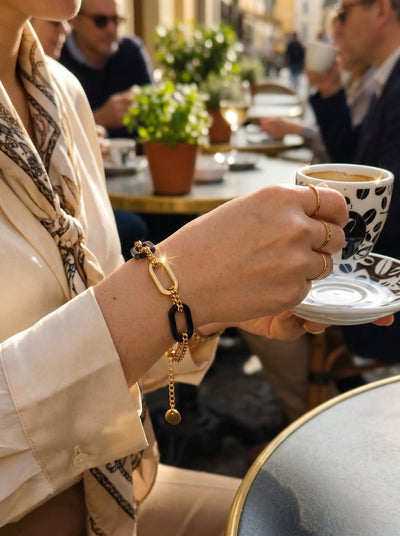
Bracelet stacking isn't new — but the way we're doing it this season is different. Forget the maximalist pile-on from a few years back. The Spring 2026 version is more intentional: three to five pieces, a mix of textures and shapes, and this layered look that reads expensive even when your entire stack cost less than dinner. (Ours start at $9.99, for the record.)
Whether you've never stacked a day in your life or you just want to upgrade your current wrist situation, this guide walks you through exactly how to do it — no jewelry background required. Just a wrist, some gold, and a little bit of intention.

Why Bracelet Stacking Is Spring 2026's Most-Pinned Jewelry Trend
If your Pinterest feed looks anything like ours right now, you've seen it everywhere: wrist after wrist of effortlessly layered gold bracelets, mixed textures, tiny charms sitting alongside sleek chains. According to Glamour's Spring 2026 jewelry trend roundup, the season's biggest accessories story is all about layering and intentional stacking — and that energy runs from the necklace line straight down to the wrist.
ELLE reported that spring 2026 runway accessories are "anything but an afterthought," with designers leaning into organic shapes, layered silhouettes, and pieces that feel more personal than polished. Town & Country described the cord-and-pendant trend that defined the Spring/Summer 2026 runways as jewelry that "tells a story" — and the wrist is where that story picks up where the neckline leaves off. Meanwhile, Cosmopolitan rounded up crystals, shell motifs, and stacking pieces as the season's can't-miss accessories.
Translation: there's no wrong way to do this. But there are definitely some approaches that make the whole thing look more considered. Here's the breakdown.
The 3 Bracelet Types That Build Any Great Stack
Think of your bracelet stack the way you'd think about a great outfit: you need a foundation piece, a texture layer, and a wildcard. Miss any one of those three and the whole thing falls a little flat.
The Foundation (your anchor piece): This is usually your most structured bracelet — something with clean lines, a little weight, and enough presence to ground everything around it. A multi-strand or CZ-accented piece works perfectly here because it has visual substance without being loud.
The Texture Layer (your depth piece): A dainty chain, a snake link, anything that adds movement and visual interest without competing with your anchor. This one does the quiet work of making your whole stack look curated rather than accidental.
The Wildcard (your personality piece): A charm bracelet. A shell detail. Something that makes someone look twice. This is the piece that makes your stack yours — not just a generic wrist pile, but something that actually says something about you.

Step 1: Anchor Your Stack with a Statement Piece
Your anchor bracelet sets the tone for everything else on your wrist. It doesn't need to be the boldest piece — it just needs to be the most settled one. Something with presence that gives your other pieces something to lean against.
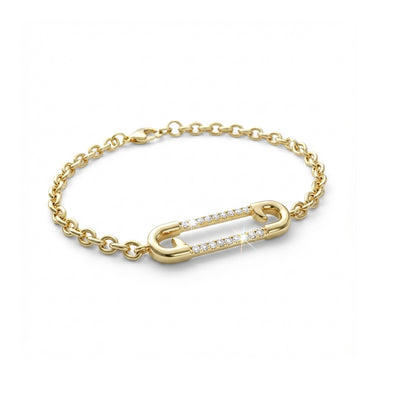
The Dalis Multi-Strand CZ Station Bracelet is exactly this energy: three delicate strands with CZ stones that catch light without screaming for attention. Stack it against a plain chain or a charm piece and the contrast just works. It's the kind of bracelet you put on, forget about, and then someone across the table goes, "Wait — where is that from?" and you have to actually think about it for a second because it just feels like part of your arm now.
Worn alone it's understated. Worn as part of a stack, it holds the whole thing together.
Step 2: Layer In Texture — This Is Where the Magic Happens
Here's the part most people skip, which is exactly why their stacks never quite look like the ones on Pinterest. The texture layer creates the visual depth that makes a stack look like something a stylist built — rather than just bracelets you threw on because they were sitting next to each other on the dresser.
The trick is contrast. If your anchor is structured and sparkly, your texture layer should be more fluid. A dainty snake chain, a cord-style link, a thin twisted design — something that moves differently against your wrist.
The Evia Dainty Chain Snake Reversible Charm Bracelet is a perfect example. The snake link has this satisfying, liquid-metal quality — it lays flat, drapes naturally, and the reversible charm is the kind of detail people always notice first. It's also the bracelet someone will tap your wrist and ask about. Every single time.

Step 3: Add the Wildcard — Charms, Shells, and the Details That Make It Yours
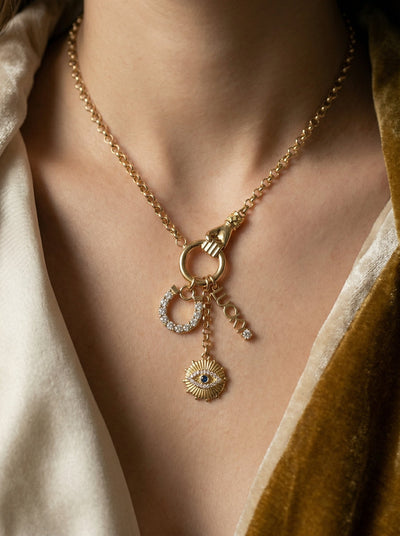
This is the fun part. Your wildcard is what takes a bracelet stack from "nice" to "I need to know where you shop." For spring 2026, the motifs showing up everywhere are organic shapes, natural materials, and anything with that beachy-but-refined energy that's been dominating the runways since February.
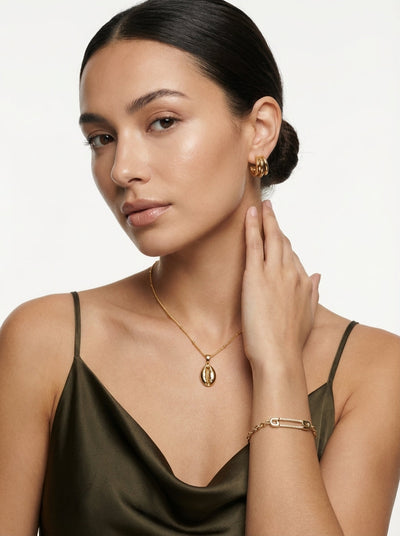
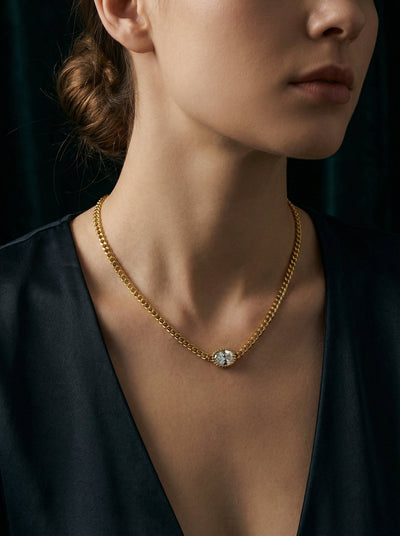
Cowrie shells are a huge moment right now. Cosmopolitan specifically called out shell jewelry as one of spring 2026's can't-miss trends, and there's a reason they keep cycling back: shells have this instant coastal, sun-warmed feeling that makes everything around them look more relaxed and effortlessly stylish. The Cora Gold Cowrie Shell Pendant Necklace bridges the necklace and wrist story beautifully — wear it alongside a two-bracelet stack and the shell motif connects your whole look from collar to wrist in a way that feels genuinely intentional, not coordinated.
If you want to keep the wildcard energy strictly on your wrist, look for something with a charm, an unexpected clasp, a hammered surface, or a single dangling element. Just one. You don't need three wildcards in a stack — one is charming, three is chaotic.
Mixing Metals: The Rule You're Actually Allowed to Break
The old school jewelry rule was: don't mix gold and silver. The current reality is that everyone does it, it looks great, and the people who told you not to were wearing matching jewelry sets from 2003.
That said, mixing metals works best when one is clearly dominant. Pick a "main metal" and let the other be the accent. One silver chain in an otherwise gold stack reads as intentional and cool. A 50/50 split just looks accidental. For spring, warm gold is the overwhelming choice — the sun is back, skin tones are warming up, and gold against that transition-to-tan look is genuinely unbeatable.
If you want to mix, keep it one piece: a single silver chain alongside your gold stack, or one rose-gold element that bridges the two. The rule isn't "don't mix" — it's "mix with intention."

How Much Is Too Much? Finding Your Bracelet Sweet Spot
Three to five bracelets is the sweet spot for most people. Three feels intentional. Five feels maximal but still controlled. Six and above requires a level of jewelry confidence that most of us are still building — and frankly, even jewelry stylists rarely go above five for an everyday look.
A quick gut check for your stack:
- Can you still move your wrist naturally without bracelets sliding into each other constantly? Good.
- Does your stack shift slightly when you move? That natural motion is actually what makes a stack look effortless — bracelets that are too tight look uncomfortable and read as staged.
- Does anything catch on your sleeve or dig in uncomfortably when you type? Edit that one out. Comfort is not negotiable.
- If you removed one piece, would the whole look fall apart? That's your anchor. Never leave home without it.
If you're new to stacking: start with two. Dalis plus Evia is genuinely all you need to start. Wear those two together long enough to understand where more contrast belongs, then build from there.
What to Wear Your Arm Party With This Spring
A bracelet stack works harder than almost any other piece of jewelry because it's visible constantly — every time you reach for something, gesture, or rest your hand anywhere. Here's what we're pairing ours with right now:
White linen button-down, sleeves rolled: This is the move. Gold bracelets against warm skin peeking out from white linen is the spring outfit that requires basically zero additional effort to look good. Add a simple necklace and you're done.
Off-the-shoulder tops: An exposed shoulder and a layered wrist stack create this beautiful balance — minimal jewelry on the body, concentrated at the wrist. Very intentional, very spring.
Denim shorts + cropped tee: The California-girl look that never ages. Your arm party is what elevates this from basic to actually stylish. Keep the rest of the outfit simple and let your wrists do the talking.
Flowy midi sundresses: A stack of three to four bracelets adds structure and intention to a soft, flowy silhouette. The contrast between something delicate and something that jangles a little is exactly the tension that makes an outfit feel alive.

The Ear Party That Completes Every Arm Party
Here's what the best-dressed people already know: your ear stack and your wrist stack should talk to each other. Not match — just rhyme. Same metal family, similar scale, a shared detail that connects them without looking like you ordered a set.
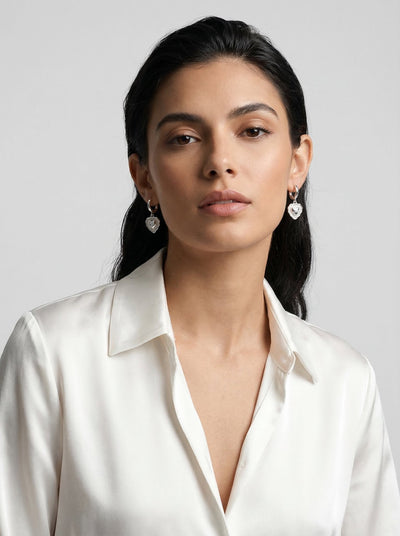
If your wrist stack leans gold and sparkly, the Avi Huggie Earrings give your ears the same clean-gold-with-presence energy your wrist has. Huggies are still the reigning queen of the ear stack — small enough not to compete with anything else you're wearing, present enough to actually matter.
For a more playful look, the Amor Heart Hoop Earrings bring a delicate heart motif that pairs beautifully with spring's softer, more romantic energy. If your wrist stack includes anything with organic or nature-inspired shapes, a heart hoop on your ear keeps that vibe going without being too literal. And if you prefer something more textured at the ear, the Caia Croissant Stud Earrings have this rich, grooved finish that echoes a hammered-gold bracelet perfectly.
Already wearing statement earrings? Keep your wrist stack quieter — one or two pieces maximum. Competing stacks at both ears and wrists is a lot. The trick is balance: amp one up, dial the other back. We have a full guide on this exact balance: How to Style Gold Earrings with Every Outfit in Your Closet.

The everyday Breakdown: Build Your Full Stack for made for everyday styling
One of the biggest myths about bracelet stacking is that you need a collection built over years — or a serious everyday — to pull it off. Not even close. Our three-piece starter stack runs made for everyday styling total and looks like it cost triple.
The math:
- Dalis Multi-Strand CZ Station Bracelet — your anchor sparkle piece
- Evia Dainty Chain Snake Reversible Charm Bracelet — your texture and personality layer
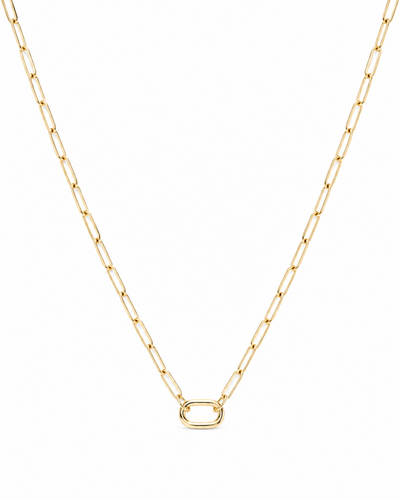
- A simple gold dainty chain for depth — or add the shell necklace as your third element if you want to bring the coastal motif into your full look
That's it. Less than your last dinner out, and you'll wear these on rotation for the entire season and beyond. Everything at HyraMode is made for everyday styling per piece — because beautiful jewelry should never require a second thought about whether you can afford it. The goal has always been pieces that feel like they belong on you, not pieces that feel like a commitment.

Keeping Your Stack Looking Good All Season
A bracelet stack that sees daily wear needs just a little bit of attention. Nothing complicated — a few small habits that keep your pieces looking the way they did on day one.
Take your stack off before you sleep. Chain bracelets get twisted and kinked overnight in ways that are genuinely annoying to fix and can stress the links over time. Leave them on a small tray or ring dish by your bed and put them back on in the morning. Five seconds, every day, and your bracelets will thank you six months from now.
Apply perfume and lotion before your bracelets go on, not after. Spray first, wait thirty seconds, then stack your wrists. This one change extends the life of plated jewelry significantly — and since you're wearing multiple pieces together every day, it really does add up.
Store them loosely, side by side rather than piled on top of each other. Less friction between pieces means less wear on the finish. A simple ring dish or small ceramic tray is all you need. Our full guide on layering necklaces like a stylist covers care for plated jewelry in detail — everything there applies equally to your bracelets and is worth reading before spring properly kicks in.

Frequently Asked Questions About Bracelet Stacking
How many bracelets should I stack?
Three to five is the sweet spot for most people. Start with two if you're new to stacking — one structured anchor piece and one dainty chain — then build from there once you understand where more contrast belongs on your wrist. More than five requires a very specific eye for balance that takes practice to develop.
Can I mix gold and silver bracelets in the same stack?
Yes, and it can look great — but let one metal dominate. Choose a "main metal" and make the other the accent. One silver piece in a mostly gold stack reads as intentional and modern. A 50/50 split tends to look accidental rather than deliberate. For spring 2026, warm gold is the dominant metal of the season.
What is the best starter bracelet for stacking?
Start with your anchor: something slightly more structured, multi-strand, or sparkly that gives everything else a foundation to lean against. The Dalis Multi-Strand CZ Station Bracelet is a perfect starting point — it has visual presence without being overwhelming, and almost every other style pairs well alongside it.
How do I keep stacked bracelets from tangling?
Choose bracelets with similar diameters so they move together naturally on your wrist. Avoid mixing very lightweight delicate chains with heavy bangles — the weight difference causes constant sliding and tangling. Dainty chains work best alongside other dainty pieces, with one slightly weightier piece for contrast. Sizing matters too: bracelets that fit well (snug enough to stay put, loose enough to move a little) tangle far less than pieces that are too large for your wrist.
Are stacked bracelets appropriate for the office?
Absolutely. Two or three pieces in gold or silver read as polished and professional, especially when you lean toward sleek chains rather than loud charm pieces. The key for office wear: keep the total volume lower and avoid pieces that make noise when you type or gesture. A two-bracelet stack in quiet gold is actually a subtle power move — it reads as intentional and put-together without trying too hard.