









Art Deco Jewelry Trend April 2026: 10 Geometric Layering Formulas to Try Now
HyraModeThe Art Deco jewelry trend in April 2026 is everywhere because it solves a real styling tension: we want pieces that feel expressive, but still clean enough for everyday outfits. Deco-inspired lines—arches, ovals, ridges, and high-polish metal—add structure fast. You can wear a basic tee, a blazer, or a slip dress and still look styled on purpose.
Trend coverage across major fashion and jewelry outlets points to the same direction: statement geometry, polished metal texture, and personality-first layering. See Marie Claire, Who What Wear, National Jeweler, and InStyle.
This guide translates those signals into wearable formulas you can repeat all week. Every formula is built around under-$20 pieces and practical outfit contexts, so you can get the look without overthinking every morning.

Why Art Deco Is Surging in April 2026
Deco styling hits the sweet spot between nostalgia and precision. It feels vintage in spirit, but modern in execution. People are moving away from flat, one-note accessorizing and toward layered looks that communicate taste in one glance.
Geometric jewelry also performs well visually on social platforms. Distinct silhouettes read faster in photos and short video than tiny undifferentiated pieces. When your earring or pendant has a clear shape language, your whole outfit looks intentional from a distance.
There is also a wardrobe-fit reason: geometric pieces pair easily with neutral staples. You can rotate the same jewelry through office looks, weekend denim, and dinner outfits without buying separate collections.
The 70/20/10 Rule for Deco Layering
Use 70% clean base, 20% geometric statement, 10% light-catching accent. In practice, that means one focal shape, one supporting line, and one small reflective detail. This structure keeps your stack elevated instead of noisy.
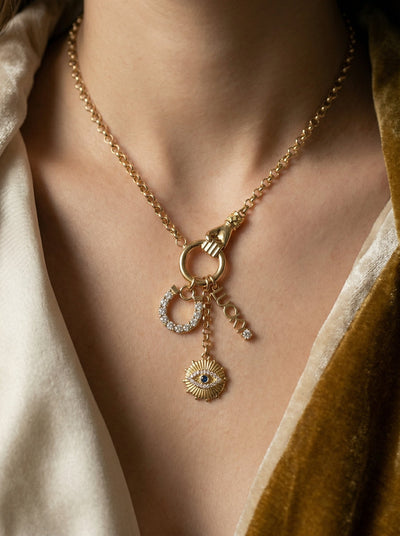
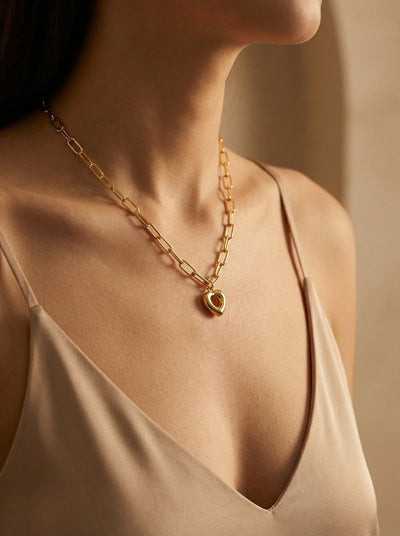
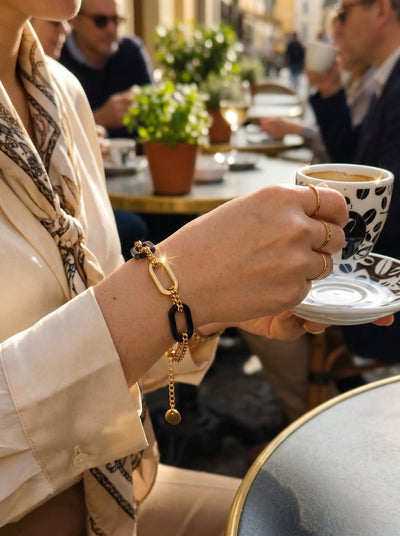
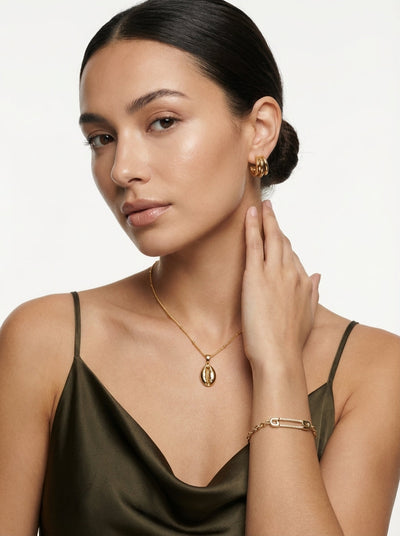
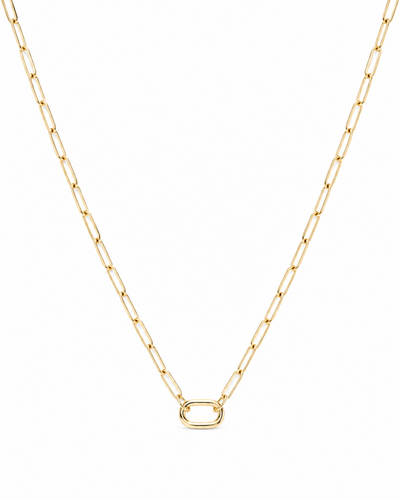
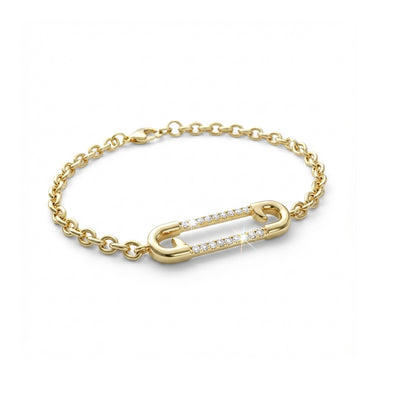
Try starting with a sculptural hoop earring as the focal point, add a slim pendant for vertical structure, and finish with a narrow chain bracelet for movement at the wrist. You get dimension without visual clutter.
When in doubt, reduce one item before adding one. Deco looks best when shape hierarchy is obvious within one second.

Formula 1: Office-Ready Deco (Blazer + Compact Geometry)
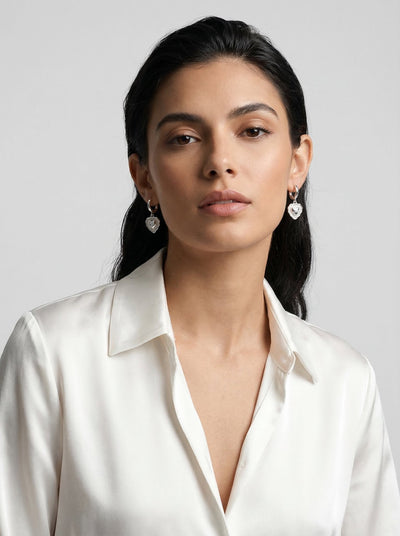
For work, focus near the face. Pair compact geometric huggies with one short pendant and skip heavy neck stacks. This creates polish without pulling attention away from your expression in meetings.
Keep clothing textures matte—poplin, knit, wool blend—so metal lines stay crisp. If your blazer has strong shoulders, choose rounded deco curves to soften the overall silhouette.
The result is professional but not generic: clean tailoring with enough personality to feel current.
Formula 2: Weekend Denim (Ribbed Metal + Easy Layers)
Weekend dressing benefits from low-effort structure. Start with a white tee and straight denim, then add ribbed or ridged earrings plus one bracelet. You immediately get depth, even if the outfit itself is minimal.
If you want extra interest, bring in a second metal through a tiny accent rather than a second large focal piece. Small contrast reads intentional; equal-weight contrast reads chaotic.
This is the formula to repeat when you want “put together” in under two minutes.

Formula 3: Date-Night Deco (One Hero Zone Only)
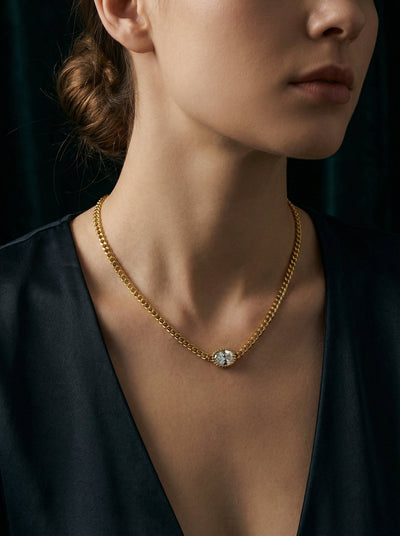
Pick one hero zone: ear, neck, or wrist. If earrings lead, keep necklaces minimal. If necklace leads, keep ears compact. A streamlined chain plus one statement earring shape is usually enough.
Deco styling wins at night because polished surfaces catch low light beautifully. But too many reflective pieces can flatten into visual noise. Negative space is your friend.
Think cinematic, not crowded. One strong geometric silhouette will always beat four competing details.
Formula 4: Silver-First Deco for Cool-Tone Outfits
Charcoal, navy, and optic white outfits pair naturally with silver-dominant deco pieces. Use silver-forward huggies as your anchor and add one warm accent at the wrist if you want contrast.
This placement strategy keeps the look coherent while still feeling fresh. Face-adjacent silver gives clarity; warm accents near the wrist add warmth without breaking the palette.
For more cross-metal balancing, see our latest layering guide and this trend styling breakdown.

Formula 5: Vacation-to-City Deco Transition
Use lightweight geometric pieces that move from daytime sun to city dinner. A versatile pendant with compact earrings and one bracelet gives you travel-ready flexibility.
During the day, keep stacks airy. At night, add one additional ear or wrist accent. The same core pieces can cover both settings when shape language stays consistent.
This is where under-$20 jewelry is powerful: you can build multiple looks with minimal packing volume.
10 Copy-Paste Art Deco Looks made for everyday styling
- Compact huggie + short pendant + slim chain bracelet (workday minimal)
- Ribbed hoop + no necklace + one wrist accent (denim weekend)
- Statement earring + clean collarbone + single bracelet (date night)
- Silver huggie + gold wrist line + white shirt (balanced contrast)
- Curved hoop + geometric pendant + black knit (soft structure)
- Ear cuff + small huggie + no necklace (ear-focused edit)
- Pendant hero + mini studs + clean wrist (neckline-led look)
- Two compact hoops + one slim bracelet + crew neck tee
- Textured earring + chain pendant + open blazer silhouette
- Minimal ring stack + geometric earring pair + no extra shine

Mistakes That Make Geometric Jewelry Look Overdone
First, stacking too many hero pieces at once. Geometry already has strong visual presence. Keep one focal, then support with quieter shapes. Second, ignoring outfit texture. If clothing is already glossy or highly patterned, reduce jewelry complexity.
Third, skipping proportion checks. Tall earrings with long pendants can over-elongate the look. Balance long with short, curved with straight, and polished with matte.
Finally, buying isolated pieces instead of a small system. Think in repeatable combinations, not one-off impulse picks.

5-Day Art Deco Rotation Plan
Monday: compact hoop + pendant + blazer. Tuesday: silver huggie + bracelet line + knit set. Wednesday: ear-focused stack + open collar. Thursday: pendant hero + clean ears + tailored trousers. Friday: statement earring + slip dress + minimal wrist.
Save photos of your best formulas and reuse them. Personal style grows from repetition and refinement, not endless novelty.
If a combination works once, it will likely work again with small outfit swaps. That repeatability is the entire point of a smart under-$20 jewelry capsule.

How to Build a Small Deco Capsule That Feels Expensive
Choose one angular earring, one curved earring, one slim pendant, one textured bracelet, and one mixed-metal accent. That five-piece foundation can produce a dozen looks if you keep shape hierarchy consistent.
Use a three-outfit test before adding anything new: can it work with office, weekend, and evening looks? If not, skip it. Under-$20 shopping stays smart when every piece has multiple jobs.
Care matters too. Wipe pieces after wear, store separately, and avoid spraying fragrance over metal. Good maintenance is what keeps easy-to-wear jewelry looking premium.

Advanced styling tip: match jewelry geometry to outfit lines. Structured blazers pair with rounded hoops to soften edges, while fluid dresses pair with sharper angular pieces to add definition. This push-pull balance creates editorial contrast without extra volume.
Another useful rule is proximity layering. Keep your contrast pieces near each other—ear plus neck, or neck plus wrist—so the eye can connect them instantly. When contrast is scattered too far apart, the look feels accidental. When it is grouped, it feels curated.
For content creators, establish one signature Deco silhouette and repeat it: for example, compact silver huggies plus one warm bracelet line. Repetition builds recognizability and makes your style feel intentional across multiple posts.
If you are starting from scratch, buy fewer pieces with stronger shape identity rather than many generic basics. Distinct silhouettes carry outfits further and reduce decision fatigue. That is how a small under-$20 collection can outperform a crowded drawer.
Finally, run a mirror distance test. Step back three feet and check whether your focal piece is still clear. If not, remove one layer. Great Deco styling is about hierarchy, not quantity.
One more practical filter is texture pairing. If your outfit includes rib knits, tweed, or structured cotton, polished Deco metal gives beautiful contrast and keeps the look from feeling heavy. If your outfit is satin or high-shine, scale the jewelry down so surface reflections do not compete with each other.
Use a simple decision ladder when getting dressed: choose your focal shape first, choose one support line second, then add one motion detail last. That sequence prevents over-stacking and makes your choices repeatable. The best personal style systems are the ones you can execute quickly on busy weekdays.
Over time, this approach builds a recognizable signature: fewer pieces, better proportion, stronger visual identity. You spend less time deciding and get more repeat wears from every under-$20 purchase.
Frequently Asked Questions
What defines the Art Deco jewelry trend in April 2026?
Sharp geometric lines, mixed scale, and polished metal contrast styled with modern basics.
How can I wear geometric jewelry without looking overdressed?
Use one focal shape, then keep the rest of your jewelry slim and low-contrast.
Can Art Deco-inspired stacks work for office outfits?
Yes. Pair compact earrings with one pendant and one bracelet for a clean professional finish.
Should I mix gold and silver in this trend?
Yes, but keep one metal dominant and use the second as a controlled accent.
What is the best starter set made for everyday styling?
Start with one angular hoop, one minimal pendant, and one slim chain bracelet.