










Sculptural Cuff Jewelry Trend April 2026: 10 Elevated Everyday Looks to Wear on Repeat
HyraModeIf your Pinterest feed looks more "quiet armor" than sparkle overload this month, you're seeing the same signal stylists are watching: sculptural cuff jewelry is accelerating in April 2026. Not because people suddenly want louder accessories, but because cuffs do one specific thing better than almost any other piece—they add shape. In an era of soft tailoring, plain tees, and low-noise makeup, shape is the shortest path to looking intentional.
Trend coverage from ELLE and Marie Claire points to statement metal, sculptural forms, and personality-led styling. Industry coverage like National Jeweler echoes Pinterest's 2026 demand shift toward expressive accessories. Meanwhile, search behavior across Google Trends keeps rewarding practical style queries: wearability, layering, and how to make trend pieces feel everyday.
That's exactly where cuff styling wins. A single cuff can give your whole outfit a point of view in made for everyday styling seconds. And if you choose durable under-$20 pieces, it stays in your real wardrobe instead of becoming a one-night trend purchase. Below are 10 formulas built for actual life—commute, coffee, office, date night, and weekend travel—with a clean HyraMode finish.

Why Sculptural Cuffs Are the Fastest Style Upgrade in April 2026
Cuffs create silhouette, and silhouette reads before detail. Most necklaces and rings reward close distance; cuffs reward first glance. That matters for modern dressing where people are often seen in motion—video calls, quick mirror selfies, walking into meetings, or dinner under low light. A cuff gives that immediate "finished" signal.
They're also forgiving. You don't need a perfect neckline the way statement necklaces often require. Put on a white shirt, black tank, lightweight knit, or denim button-up and the cuff still works. It's flexible styling with a strong visual return.
If you're ear-stacking too, a clean combination is Orin Ear Cuff plus minimalist hoops. Keep one side stronger than the other and your stack looks edited, not crowded.
Formula 1: The One-Cuff Uniform (Daily Minimal, Zero Overthinking)
Start with one cuff and keep every other piece deliberately quiet. This is the easiest system for weekdays when you want to look polished without making style a project. Use one smooth necklace, one small huggie, and let the cuff be the shape driver.
For this formula, avoid adding another high-texture piece near the same zone. If your cuff is ribbed or molten, keep your bracelet and ring profile cleaner. Visual breathing room makes affordable pieces read significantly more premium.
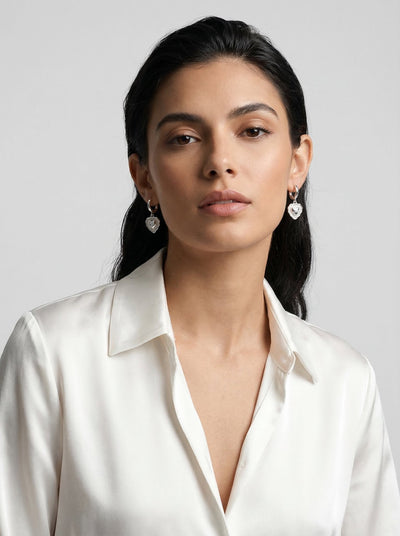
Pair this with Piru Huggie Earrings and a slim chain for a Monday-through-Friday default you can actually repeat.

Formula 2: The Soft-Armor Office Stack
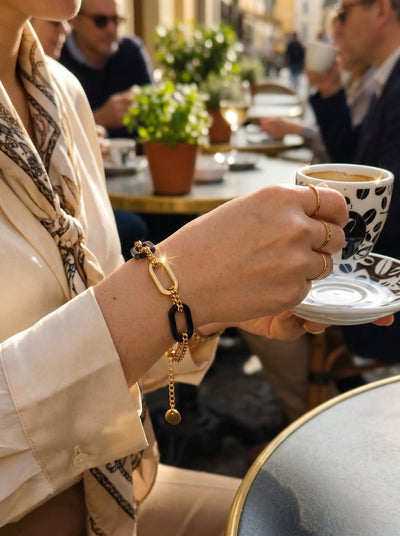
Office styling in 2026 isn't about hiding personality; it's about controlling volume. The soft-armor approach means one structured accessory against relaxed clothing. Think oversized blazer, fluid trousers, and one sculptural cuff that adds edge without noise.
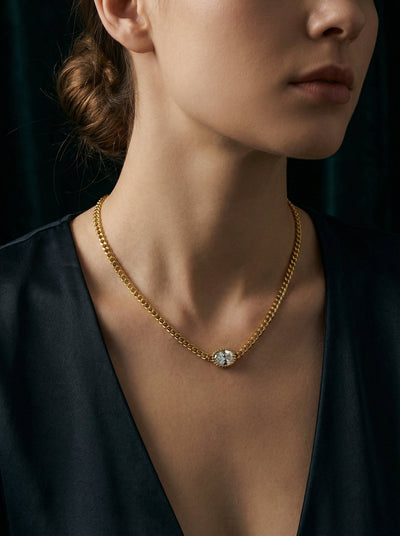
To keep it work-appropriate, stay inside a limited metal family and use one subtle sparkle point only. A discreet pendant like Mevi Dainty CZ Pendant Necklace gives light at the center while the cuff handles shape at the side.
If your workplace is conservative, wear the cuff over a cuffed sleeve at mid-forearm. It reads like styling, not statement dressing.

Formula 3: Ear-Cuff Echo (Balance Left/Right for Editorial Polish)
Cuff styling gets instantly elevated when the ear tells a matching story. Use one bracelet cuff and one ear cuff with related geometry. Not identical—related. The effect is subtle coordination that looks intentional in photos and in person.
Try Savi Ear Cuff with a stronger hoop like Bora Chunky Square Hoop Earrings. Keep the necklace minimal so the profile doesn't compete across three zones.
For deeper layering strategy, our guides on snake-chain spacing and liquid-metal contrast are useful references for keeping stacks clean.

Formula 4: Story Piece + Cuff (Sentimental Without Looking Busy)
You can absolutely wear meaningful jewelry with trend-forward cuffs. The rule is hierarchy: story at the neckline, structure at the wrist. Let one sentimental pendant carry emotion while the cuff carries form.
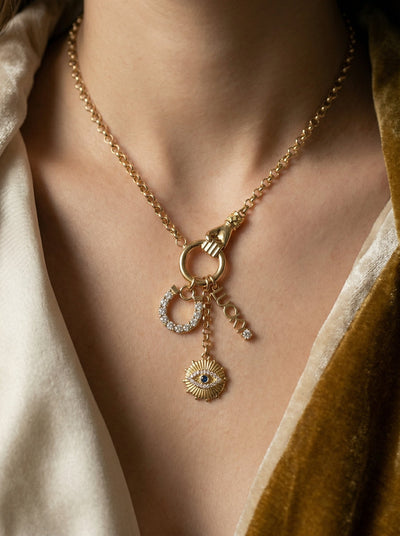
A piece like Lena Victorian Hand Talisman Necklace gives narrative depth. Add one sculptural cuff and remove everything else that feels decorative for decoration's sake.
This formula is powerful for gifting season too—your gift looks personal, not generic, and still fits modern styling language.

Formula 5: Mixed-Metal Restraint (One Leads, One Accents)
Mixed metal is still strong, but the modern version is restrained. Choose a lead metal (usually gold for warmth), then add one accent piece in silver. A cuff is the best place to introduce that accent because it reads as intentional contrast rather than mismatch.
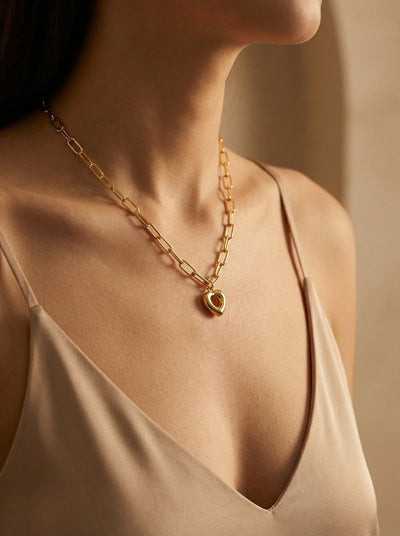
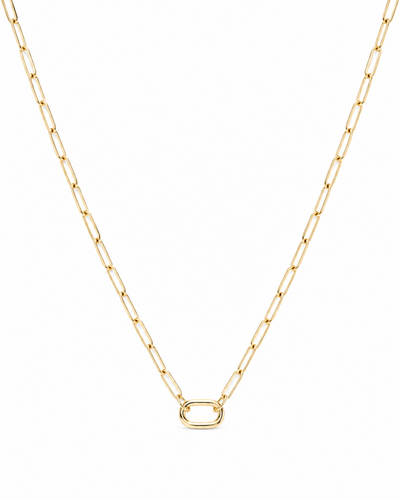
If you're new to mixed metals, use a silver chain like Remy Paperclip Chain Heart Necklace with a warm-toned ear stack and one neutral cuff profile. Keep finishes similar—both polished or both brushed—to unify the look.
Our cool-blue styling guide shows how metal contrast plays with denim, navy, and white for spring wardrobes.

Formula 6: Weekend Stack That Survives Real Life
Weekend jewelry needs to survive movement: city walks, coffee lines, grocery stops, and spontaneous plans. Build a three-piece formula: cuff + huggie + slim bracelet. No dangling complexity, no fragile over-layering.
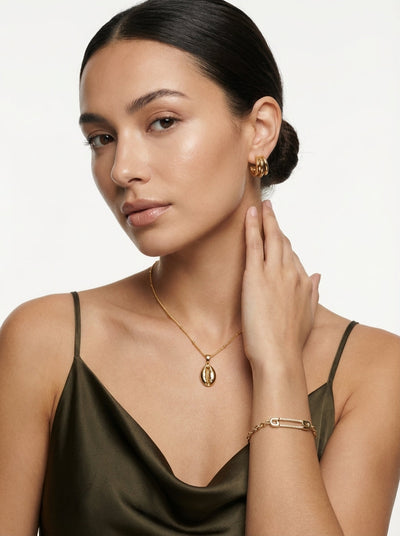
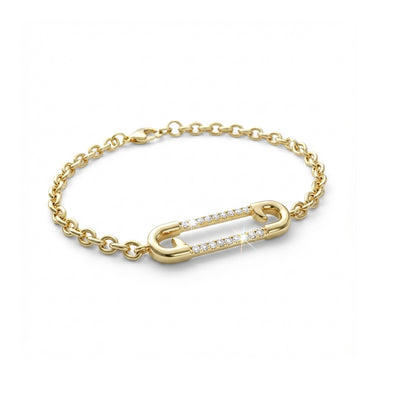
A simple wrist combo using Luna Dainty Safety Pin Chain Bracelet plus one sculptural cuff gives enough contrast without feeling heavy. Add one ear piece and you're done.
This is where price and practicality meet: under-$20 pieces that look thought-through and still feel low-risk to wear often.

Formula 7: Texture Stacking (Ribbed + Smooth + Spark)
The easiest way to make cuffs look expensive is texture layering. Start with one ribbed or molten surface, then add one smooth chain and one pinpoint sparkle. Different textures create dimension even when color stays neutral.
Use Mara Ribbed Open Hoop Earrings to echo texture near the face. Then anchor the wrist with a cleaner cuff and optional micro-spark from Dalis Multi-Strand CZ Bracelet.
When texture is doing the work, reduce quantity. Three thoughtful pieces will outperform seven random pieces every time.

Formula 8: Date-Night Contrast Without Over-Accessorizing
For evening, most people add too much. Better move: keep your daytime cuff, then only switch one element—earring scale or neckline depth. That single shift keeps continuity while increasing impact.
If your top is minimalist, larger hoops can do the lift. If your top has detail, keep ears clean and let the cuff stay central. This one-change method prevents the look from feeling "styled twice."
The result is confidence with less effort: same identity, slightly sharper finish, and a look that still feels like you.
Formula 9: Capsule Wardrobe Math (How 5 Pieces Make 20+ Looks)
If you're building from scratch, start with five anchors: one sculptural cuff, one slim bracelet, one small huggie, one bolder hoop, and one necklace with meaning. With just these, you can build over twenty combinations by changing only one variable per day.
Example weekly plan: Monday one-cuff uniform; Tuesday add ear-cuff echo; Wednesday story pendant; Thursday mixed-metal accent; Friday texture stack; weekend reset to two-piece minimal. You never feel repetitive because the silhouette rotates even when your pieces repeat.
This is the real value of modern jewelry strategy: lower spend, higher outfit yield, less decision fatigue.
To make the capsule system even easier, tie each formula to a recurring part of your week. Meetings day gets the soft-armor office stack. Social day gets mixed-metal restraint. Errand day gets weekend durability. This tiny planning step removes the morning "what should I wear" spiral and keeps your look aligned with your schedule, not your stress level.
You can also style by fabric category. Structured fabrics like denim, poplin, and suiting can handle bolder cuff geometry because the clothing itself provides visual order. Softer fabrics—jersey, satin, lightweight knits—usually look better with smoother cuff lines and fewer competing details. When texture logic is clear, your accessories feel intentional instead of random, even if you're wearing affordable pieces.
Another useful trick is distance testing. Stand one meter from your mirror and ask what reads first: shape, shine, or clutter. If clutter reads first, remove one item. If shine reads first but shape disappears, choose a cuff with a stronger profile. If shape reads first and your face still feels bright, you're done. This test is fast, objective, and surprisingly effective for daily styling decisions.
Finally, think in terms of repetition rather than reinvention. Repetition builds signature style. Reinvention every day creates wardrobe fatigue. A recognizable cuff silhouette worn across different outfits can become part of your personal identity—the same way a fragrance or lip color does. That's why this trend has staying power in 2026: it supports consistency without feeling boring.
If you want your under-$20 jewelry to read elevated, maintenance matters too. Wipe cuffs after wear, store them flat, and avoid throwing mixed textures into one pouch where surfaces rub against each other. A two-minute care routine protects shine and keeps sculptural edges crisp. Styling and care are part of the same equation: when your pieces stay clean and intentional, your whole look feels higher-end regardless of price.
Formula 10: The 30-Second Mirror Check for Cuff Styling
Before you leave, run this quick check:
- Shape: Is one sculptural element clearly leading?
- Spacing: Do your necklace and earrings have visual breathing room?
- Balance: If one side is heavy, is the other side intentionally quiet?
- Surface: Are textures complementary instead of competing?
- Emotion: Does one piece feel personal, not just pretty?
If you can answer yes to four out of five, your look will read polished in almost any setting. This system is why sculptural cuff styling keeps growing: it's expressive, fast, and realistic for everyday routines.
And that's the April 2026 takeaway—quiet shape beats loud clutter. One good cuff, thoughtfully paired, can carry your whole look from morning coffee to late dinner without a full reset, even on back-to-back busy days for weeks.
Frequently Asked Questions
1) Are sculptural cuffs still wearable for everyday outfits?
Yes. Keep the rest of your stack minimal and let the cuff be the only strong shape. It reads polished, not overdressed.
2) Should I wear a cuff with a watch?
You can, but separate zones help. Put the watch on one wrist and the cuff on the other so each piece has room to read clearly.
3) How do I stop cuff styling from looking too heavy?
Use one cuff only, then pair it with slimmer pieces at the neck and ears. Contrast in thickness creates visual balance.
4) Can I mix gold and silver with sculptural cuffs?
Absolutely. Choose one lead metal and one accent metal. Keep finishes similar so the mix feels intentional.
5) What's the easiest starter set for this trend made for everyday styling?
Start with one ear cuff, one small hoop, one slim bracelet, and one simple necklace. Add a sculptural cuff as your shape anchor and rotate combinations through the week.