










Earrings for Newly Pierced Ears: What to Look For
HyraModeYou just got your ears pierced (or you're about to), and now comes the question nobody prepared you for: what earrings can you actually wear during the healing process? Your piercer might have given you some advice, the internet has a thousand conflicting opinions, and your friend who got pierced last year swears by something completely different.
Here's the straightforward guide to what materials are safest for newly pierced ears — based on what actually matters for healing, not marketing buzzwords or old wives' tales.
Why Material Matters So Much for New Piercings
A fresh piercing is an open wound. Your body is actively working to heal around that hole, and whatever metal is sitting inside it during the healing process is in direct contact with raw tissue, blood, and lymph fluid.
If the metal is reactive — meaning it contains allergens like nickel or chemicals that irritate skin — your body's healing process gets disrupted. Instead of forming healthy tissue around the earring post, you get inflammation, prolonged healing time, infection risk, and that crusty, angry look that makes you regret the whole decision.
The metal you start with literally sets the stage for how your piercing heals, how it feels, and whether you'll be happily wearing earrings for years or dealing with ongoing sensitivity issues.
This isn't about being precious or dramatic — it's basic wound care applied to jewelry.
The Safest Materials for New Piercings (Ranked)
1. Implant-Grade Titanium (ASTM F136)
This is the gold standard — or rather, the titanium standard. Implant-grade titanium is the same material used in surgical implants (hip replacements, bone screws), which means it's been tested for long-term compatibility with human tissue.
Why it's the best:
- Completely material-transparent
- The lowest reaction rate of any earring material
- Lightweight (your ear barely notices it's there)
- Can be anodized to different colors without adding reactive coatings
- Recommended by the Association of Professional Piercers (APP)
If you have any history of metal sensitivity, or if you just want to give your new piercing the absolute best chance of healing quickly and cleanly, implant-grade titanium is the move.
2. Surgical skin-friendly (skin-friendly or skin-friendlyVM)
Surgical steel is the most commonly used material for initial piercing jewelry worldwide. It's what most piercing studios offer as the default option, and for good reason — it works well for the vast majority of people.
Important caveat: Despite its safety record, skin-friendly does contain a small amount of nickel — it's just bound within the alloy in a way that prevents most of it from leaching into your skin. For people with mild to moderate nickel sensitivity, this is usually fine. For people with severe nickel allergies, titanium is the safer bet.
Why it's a good choice:
- Widely available and affordable
- Durable and resistant to corrosion
- Safe for the vast majority of people
- Available in polished finishes that are easy to clean
3. 14K or 18K Solid Gold
Solid gold (not gold plated — we'll get to that) is another safe option for healing piercings, particularly in higher karats. The key word is "solid."
What to know:
- 14K gold is 58.3% pure gold; 18K is 75% pure gold
- The higher the karat, the less filler metal (and less potential for nickel)
- Yellow gold tends to contain less nickel than white gold (white gold often uses nickel to achieve its color)
- Solid gold is biocompatible and safe for healing tissue
The downside? Price. Solid gold earrings suitable for initial piercings can cost $50-$200+. If everyday is a consideration, titanium or skin-friendly offer excellent safety at a fraction of the cost.
4. Niobium
Niobium is less well-known but equally safe — some piercers argue it's even more biocompatible than titanium. It's skin-conscious, material-transparent, and can be anodized to beautiful colors.
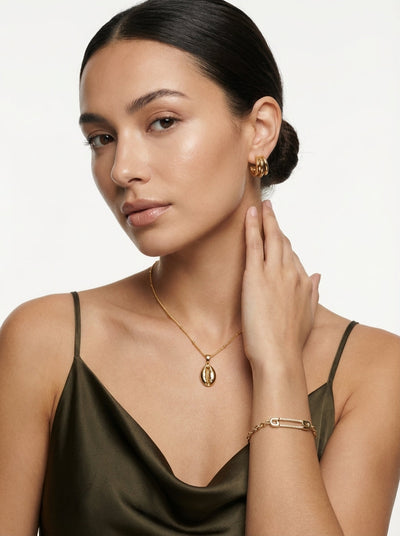
Our Pick: The Caia Croissant Huggie Earrings ($24.90) is perfect for this look.
It's harder to find commercially, which is its main drawback. If your piercer offers niobium, it's an excellent choice. If they don't, titanium is essentially equivalent in safety.
Materials to AVOID for New Piercings
This is critical. Wearing the wrong material in a healing piercing can turn a simple ear piercing into months of problems.
❌ Gold plated jewelry. The gold layer is too thin and can wear away during the healing process, exposing the base metal underneath to your raw tissue. Save gold plated pieces for fully healed piercings only.
❌ Sterling silver. Silver oxidizes (tarnishes) and can actually stain the tissue inside a healing piercing permanently. It's also softer than titanium or steel, meaning it scratches easily and those scratches harbor bacteria. Never wear sterling silver in a healing piercing.
❌ Nickel or nickel-containing alloys. Obvious, but worth stating: any material that contains significant nickel is a no-go for healing piercings. This includes most "fashion jewelry" and many pieces labeled simply as "alloy."
❌ Plastic or acrylic. While these might seem safe because they're not metal, plastic earrings can harbor bacteria in micro-pores, are harder to sterilize, and can degrade inside the piercing. Some piercers use PTFE (a specific medical-grade plastic) in rare situations, but this should be a professional recommendation, not a DIY choice.
❌ "skin-conscious" mystery metals. "skin-conscious" is not a regulated term. Any manufacturer can slap it on any product. If the material isn't specifically identified (titanium, skin-friendly, solid gold), don't trust a vague "skin-conscious" claim for a healing piercing.
How Long Before You Can Wear Other Materials?
This is the question everyone wants answered: "When can I switch to my cute earrings?"
Earlobe piercings: Typically healed enough to switch jewelry after 6-8 weeks, but full healing takes 3-4 months. Many piercers recommend waiting the full healing period before introducing non-implant-grade materials.
Cartilage piercings: Much longer — 6-12 months for full healing. Cartilage has less blood flow than the lobe, so it heals slower and is more susceptible to complications from reactive materials.
Once your piercing is fully healed, you have much more freedom with materials. Healed piercings can generally handle gold plated jewelry, fashion earrings, and a wider variety of metals — though material-transparent options will always be the most comfortable.
Signs Your Earring Material Isn't Working
Even with the right material, watch for these signs during healing:
- Persistent redness that isn't improving after the first week
- Itching around the piercing (different from normal healing tenderness)
- Green or discolored skin around the piercing site
- Excessive crusty buildup that doesn't improve with cleaning
- Swelling that increases rather than decreasing over time
If you notice these signs, the first step is switching to a confirmed implant-grade titanium piece. If symptoms continue after switching, see a medical professional — it may be an infection rather than a material reaction.
Aftercare Basics (Because Material Alone Isn't Enough)
Even the safest earring material needs proper aftercare support:
Our Pick: The Tria Triple Hoop Huggie Earrings ($24.90) is perfect for this look.
Clean twice daily with sterile saline solution (pre-made wound wash from any drugstore). Spray it on, let it sit, gently pat dry with non-woven gauze.
Don't touch your piercing with unwashed hands. Every time you fiddle with it, you introduce bacteria.
Don't twist or rotate the earring. This old advice has been debunked — twisting actually tears the healing tissue forming around the post.
Keep hair products, makeup, and skincare away from the piercing area.
Sleep carefully. Try not to sleep directly on a healing piercing. A travel pillow with the ear positioned in the hole can help side sleepers.
When You're Ready for Your Next Pair
Once your piercings are fully healed and happy, the whole world of earrings opens up. Gold plated, fun styles, statement pieces, dainty studs — your healed piercings can handle the variety.
For your first switch from healing studs to "real" earrings, start with something material-transparent and comfortable. Stud earrings are a great first step because they're low-profile and won't catch or pull on your still-relatively-new piercings.
Explore our stud earrings collection for current prices and available styles.
Take care of the healing. Be patient with the process. And know that once you're through it, a whole collection of beautiful earrings is waiting for you on the other side.
According to Vogue, earrings are the single most impactful accessory for framing your face and expressing personal style.
As Harper's Bazaar notes, the right pair of earrings can transform any outfit from basic to polished.
Who What Wear editors consistently recommend investing in versatile earring styles that transition from day to night.